
When the world turned remote, our homes became offices, our kitchens turned into conference rooms, and the line between “work” and “well‑being” blurred into a single, endless scroll of tasks. I’ve spent the last decade helping product teams build software that scales, but the most valuable scaling I’ve witnessed lately isn’t in code—it’s in the human body. The secret? Simple, science‑backed habits that slip easily into a day‑to‑day routine, no fancy equipment required.
Beyond the Gym: Redefining What Health Looks Like for Knowledge Workers
We all know the classic health checklist: cardio, weights, a balanced diet, and enough sleep. Yet for many remote professionals, those items feel like distant goals, reserved for weekends or “after the big release.” The reality is that health for a brain‑heavy job is less about pounding the treadmill and more about managing the subtle, cumulative stressors that silently degrade focus, mood, and long‑term resilience.
Think of health as a three‑layer shield:
- Physiological foundation – breathing, movement, nutrition, and posture.
- Neurological optimization – light exposure, sound, and micro‑breaks that reset the nervous system.
- Emotional hygiene – rituals that create psychological distance from work demands.
When any one layer is neglected, the whole shield weakens. The good news? Each layer can be fortified with a handful of intentional actions that take under five minutes a day.
The Power of Breath: An Under‑Utilized Superpower
Breathing is the only autonomic function we can voluntarily control—yet most of us treat it like background noise. Research shows that purposeful breathing patterns can lower cortisol, improve heart‑rate variability, and sharpen mental clarity. The technique I favor most is the “Box Breath”: inhale for four counts, hold for four, exhale for four, and hold again for four. Repeat three cycles before a video call or after a stressful email thread.
Why does this work? The pause between inhale and exhale activates the parasympathetic nervous system, essentially hitting the “reset” button on stress. It also forces the diaphragm to engage fully, delivering more oxygen to the brain and improving focus.
Give it a try right now: sit upright, place one hand on your chest and the other on your belly, and notice which hand rises more during the inhale. Over time, you’ll train a deeper, diaphragmatic breath that feels effortless.
Green Screens: Bringing Nature Inside the Home Office
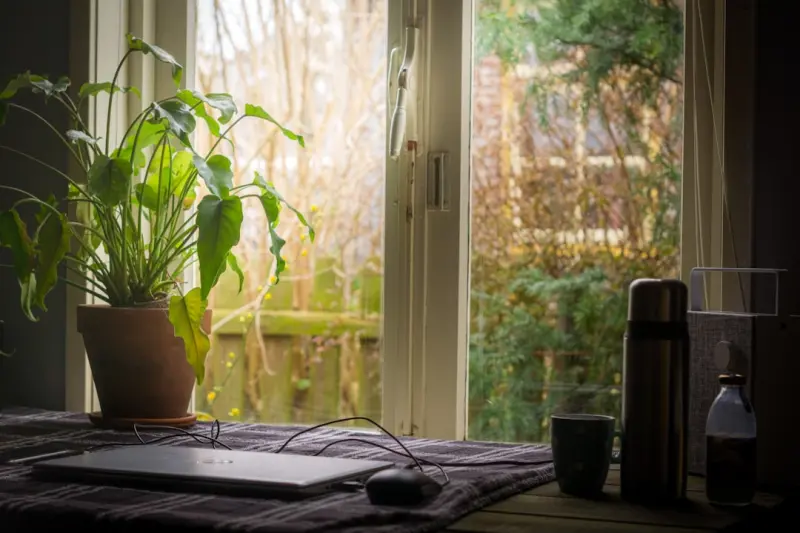
There’s a reason the phrase “green office” has gained traction. Indoor plants do more than brighten a space; they improve air quality, reduce indoor CO₂ levels, and have a measurable impact on mood. A study by the University of Queensland found that simply viewing a plant for a few seconds can boost concentration by up to 15%.
Choosing the right greenery is key. Low‑maintenance varieties like snake plant, pothos, or ZZ plant thrive in low‑light environments and require watering only once a week. Pair them with a desk lamp that mimics natural daylight to counteract the blue‑light fatigue that builds up from long screen sessions.
For those who lack floor space, hanging planters or a vertical garden wall can transform a bland wall into a living backdrop that subtly reminds you to breathe deeper and relax your shoulders.
Nutrition Hacks for Brain Power: Eat to Perform, Not Just to Survive
When deadlines loom, the temptation to reach for sugary snacks or stale coffee is strong. While caffeine gives a short‑term spike, it often leads to an energy crash that leaves you more scattered. Instead, focus on steady, nutrient‑dense fuel that stabilizes blood sugar and fuels cognitive function.
- Omega‑3 rich foods – salmon, walnuts, and chia seeds support neuronal membrane health.
- Complex carbs with fiber – quinoa, sweet potatoes, and oats provide a slow‑release energy source.
- Protein punch – Greek yogurt, eggs, or a handful of legumes keep neurotransmitter synthesis humming.
A practical habit is the “30‑Minute Power Meal”: set a timer, assemble a bowl with leafy greens, a protein source, a drizzle of olive oil, and a sprinkle of seeds. It takes less time than a microwave pizza, and the nutrient profile keeps you alert for the next few hours.
Micro‑Movements Without the Buzzword
Most of the recent buzz around “micro‑zones” or “micro‑detox” focuses on structured, timed rituals. While those can be helpful, there’s an even simpler approach: embed tiny movements into existing workflows. For example, stand up to stretch every time you receive a new Slack notification, or do a set of shoulder rolls while waiting for a build to finish.
These incidental movements keep blood circulating, reduce the risk of stiffness, and break the mental loop that often accompanies long periods of sitting. Over a day, the cumulative effect is comparable to a short walk, without the need to schedule a dedicated “exercise block.”
Creating a Calm Workspace: Light, Sound, and Air Quality
A well‑lit workspace can dramatically influence circadian rhythms. Natural light is ideal, but when that’s not possible, opt for a daylight‑balanced lamp (around 5,000–6,500 K). Position the screen to minimize glare, and consider a subtle, ambient soundscape—like a gentle rain or forest hum—to mask distracting household noises.
Air quality is often overlooked in home offices. A small desk‑size air purifier can capture dust, pollen, and volatile organic compounds (VOCs) that accumulate from prolonged screen time and indoor heating. The result is cleaner breathing and fewer headaches, which translates directly into better focus.
Emotional Hygiene: Rituals That Separate You From Work
Just as athletes have pre‑game warm‑ups, knowledge workers need emotional “warm‑downs.” A simple practice is to write a one‑sentence “win” at the end of each day, then list a single “next step” for tomorrow. This externalizes achievement and reduces the mental clutter that often lingers after the last meeting ends.
Another effective ritual is a short digital sunset: set a timer for 30 minutes before you intend to log off, and during that window, turn off all notifications, dim the lights, and engage in a non‑screen activity—reading a physical book, journaling, or preparing a healthy snack. This transition signals to your brain that it’s time to shift out of “work mode.”
Leveraging Existing Resources: Linking Knowledge to Action
Our community has already explored several complementary topics that can deepen the health conversation. For a deeper dive into how a structured evening routine can improve sleep quality, see the article on the evening wind‑down routine. If you’re looking for quick, office‑friendly resets, the guide on quick workplace reset rituals offers practical steps you can adopt instantly. Finally, explore how subtle upgrades to air, light, and sound can create a healthier home environment in the piece about home environment tweaks.
Putting It All Together: A Daily Blueprint
Here’s a sample day that weaves these habits together without feeling forced:
- Morning light exposure (5 minutes) – Open the blinds, sip coffee near a window, or step outside briefly.
- Box Breath before the first meeting (1 minute) – Reset nervous system, boost focus.
- Power Meal at lunch (30 minutes) – Balanced plate with protein, complex carbs, and healthy fats.
- Plant gaze break (2 minutes) – Look at a desk plant, take a slow breath, and stretch shoulders.
- Incidental movement every notification (throughout the day) – Stand, roll shoulders, or do a quick calf raise.
- Evening wind‑down routine (30 minutes) – Dim lights, journal one win, set next‑day intention, and avoid screens.
Even if you adopt only two or three of these actions, the compound effect over weeks can be remarkable: fewer mid‑day crashes, steadier mood swings, and a noticeable lift in creative output.
Final Thought: Health as a Competitive Advantage
In the high‑velocity world of SaaS, teams that prioritize health unknowingly build a competitive moat. Better focus means fewer bugs, clearer communication reduces rework, and sustained energy translates into faster delivery cycles. By treating health not as a side‑quest but as an integral part of the product development workflow, you empower every teammate to show up at their best—every single day.
So the next time you reach for that extra espresso, consider swapping it for a few conscious breaths, a glance at your thriving plant, or a bite of omega‑rich salmon. Small choices add up, and the ripple effect will be felt across code, customers, and culture alike.

Paul Flynn is a versatile freelance writer equipped with a diverse skillset and a portfolio that reflects his wide-ranging interests and expertise. From crafting compelling website copy and engaging blog posts to delivering in-depth articles and meticulously researched reports, Flynn demonstrates a remarkable ability to adapt his writing style to suit various audiences and purposes.
Related Posts

Reimagining Workplace Wellness: AI‑Powered Personal Health Dashboards
Explore the rise of AI‑powered personal health dashboards that blend wearable data, ambient sensor... Read More

Digital Detox: Reclaiming Health in an Always‑On World
A digital detox isn’t about abandoning technology—it’s about resetting your relationship with ... Read More
Why Ambient Light Is the Secret Weapon for Remote Worker Health
A deep dive into how dynamic ambient lighting and color temperature can align remote workers' circad... Read More
Top Posts

Solo Trekking: How One‑Person Adventures Sharpen Executive Decision‑Making
Explore how solo trekking develops unstructured thinking, resilience, deep listening, and empathy—key traits that translate into sharper decision‑making and...Read More
The Voice Search Playbook for SaaS: Winning Rankings in a Conversational World
Voice assistants are reshaping how B2B buyers discover SaaS solutions. This post outlines a step‑by‑step playbook—covering conversational intent, structur...Read More
Beyond Google: SEO Strategies for TikTok, Amazon, and Voice Assistants
Explore a fresh SEO playbook that extends beyond traditional search, focusing on TikTok, Amazon, and voice assistants. Learn practical tactics to capture traffi...Read More
Turn Your Home Into a Sound Sanctuary: Simple Acoustic Hacks for Every Room
Learn how to transform any room into a sound sanctuary using simple, affordable acoustic upgrades—from plush rugs and DIY panels to plants and sealing gaps—...Read More
0 Comments
Post Comment
You will need to Login or Register to comment on this post!