
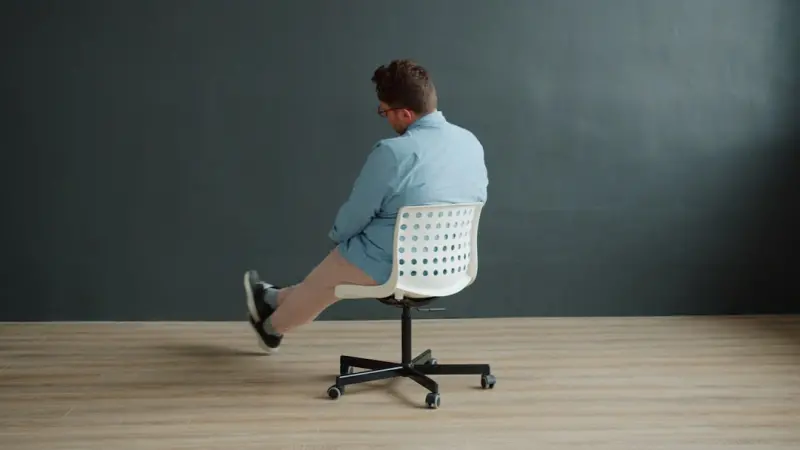
Why Micro‑Movements Matter in the Modern Office
We spend hours—sometimes days—in front of screens, glued to a chair that was never designed for human anatomy. The result? Stiff necks, cramped shoulders, and a circulation system that feels more like a stagnant pond than a flowing river. While the tech world raves about cloud latency and AI ethics, the real latency we experience is in our own bodies, and it’s silently eroding productivity.
Enter micro‑movements: tiny, intentional motions you can perform without leaving your desk, disrupting the static posture that most professionals default to. Unlike a full‑blown workout, these actions require seconds, not minutes, and they can be woven into the natural rhythm of meetings, code reviews, and brainstorming sessions.
Research from occupational health experts shows that integrating micro‑movements every 30‑45 minutes can improve blood flow, reduce muscle fatigue, and even sharpen cognitive performance. Think of them as “software patches” for your musculoskeletal system, keeping the hardware (your body) running at optimal speed.
The Science Behind Tiny Motions
When you sit for long periods, your muscle pump—the mechanism that pushes blood back to the heart—slows dramatically. This leads to reduced oxygen delivery to the brain and a buildup of metabolic waste in the lower limbs. Micro‑movements act as a reset button, briefly re‑activating the muscle pump and stimulating the endothelial cells that line blood vessels, which in turn release nitric oxide, a natural vasodilator.
Moreover, brief bouts of movement trigger the release of brain‑derived neurotrophic factor (BDNF), a protein that supports neuroplasticity. In plain English: your brain becomes more adaptable, learning faster, and retaining information longer. This is why you might notice a sudden surge of clarity after standing up to stretch.
If you’re skeptical, consider the findings from a 2020 study published in Occupational Health Journal. Participants who performed a set of 30‑second micro‑exercises every hour reported a 22 % reduction in perceived fatigue and a 15 % increase in self‑rated focus compared to a control group that remained seated.
Getting Started: The Core Micro‑Movement Routine
Below is a core routine you can adopt immediately. Each movement takes less than a minute, requires no equipment, and can be done in a standard office chair. Perform the sequence at least three times a day, ideally after each major meeting or at the top of the hour.
- Neck Release (30 seconds) – Gently tilt your head toward your right shoulder, using your right hand to apply a light stretch. Hold for 15 seconds, then switch sides. Finish by slowly turning your head left‑right, 5 times each direction.
- Seated Cat‑Cow (45 seconds) – Sit tall, place hands on knees. Inhale, arch your back, lift your chest (cow). Exhale, round your spine, tuck your chin (cat). Repeat, syncing breath with movement.
- Wrist Waves (30 seconds) – Extend both arms forward, palms down. Rotate wrists in circles, 10 times clockwise, then 10 times counter‑clockwise. This counteracts repetitive mouse use.
- Leg Extensions (45 seconds) – While seated, straighten your right leg, hold for 3 seconds, then lower. Perform 8‑10 reps, then repeat with the left leg. This activates the quadriceps and promotes venous return.
- Shoulder Blade Squeezes (30 seconds) – Pull your shoulder blades together, as if trying to hold a pencil between them. Hold for 5 seconds, release, and repeat 6 times.
- Deep Diaphragmatic Breath (optional, 60 seconds) – Place one hand on your chest, the other on your belly. Inhale through the nose, expanding the belly, then exhale slowly through the mouth. This not only oxygenates cells but also engages the parasympathetic nervous system, calming stress. For more breathing techniques, see simple practices to boost health and performance.
These movements are deliberately simple so you can repeat them without feeling self‑conscious. In fact, many high‑performing teams have normalized “movement breaks” as part of their meeting etiquette, turning what could be a productivity dip into a collaborative energizer.
Customizing Micro‑Movements for Your Role
Not every job description is the same, and neither are the postural challenges you face. Below are role‑specific adjustments to the core routine.
Developers & Engineers
Extended coding sessions often lead to tight hip flexors and lower back strain. Add the following:
- Hip Flexor March (30 seconds) – While seated, lift one knee toward your chest, hold for 2 seconds, then lower. Alternate legs for a minute. This gently stretches the hip flexors.
- Thoracic Rotations (45 seconds) – Sit upright, place hands behind your head, rotate torso to the right, then left. Perform 8 rotations per side.
Product Managers & Marketers
Frequent switching between laptops, tablets, and whiteboards can cause neck and eye fatigue. Incorporate:
- Eye Palming (20 seconds) – Rub your palms together, then gently cup them over closed eyes. The warmth relaxes ocular muscles.
- Desk‑Level Stretch (30 seconds) – Place palms on the edge of your desk, walk your feet back, and lower your chest, feeling a stretch across the shoulders and upper back.
Executives & Leaders
High‑stakes decision making often triggers chronic tension in the jaw and shoulders. Try:
- Jaw Release (15 seconds) – Open your mouth wide, then gently move the jaw side‑to‑side. This reduces clenching that builds up during intense discussions.
- Power Pose (30 seconds) – Stand, feet hip‑width apart, hands on hips. Hold for a full minute. This posture has been shown to boost confidence and lower cortisol levels.
Integrating Micro‑Movements into Your Workflow
Consistency is the secret sauce. Here are three strategies to embed micro‑movements without disrupting your flow:
- Calendar Nudges – Set a recurring 5‑minute block titled “Micro‑Movement Reset.” Treat it like any other meeting; your calendar will remind you, and you’ll have a dedicated slot to move.
- Team Rituals – Start each stand‑up or sprint review with a quick stretch. When the habit becomes a shared expectation, accountability rises organically.
- Tech‑Assisted Prompts – Use a simple script or browser extension that flashes a subtle icon every 30 minutes, prompting you to pause and move. The visual cue is low‑key yet effective.
Pairing movement with mental resets can also enhance creativity. After a micro‑movement break, try a brief mind‑mapping exercise or jot down a fresh idea. You’ll often find that the brief physical shift unlocks a new perspective.
Micro‑Movements and Mental Resilience
Physical health and mental health are inseparable. Micro‑movements stimulate the vagus nerve, a key component of the parasympathetic nervous system responsible for “rest‑and‑digest” responses. Activating this system reduces heart‑rate variability (HRV) stress markers, making you more resilient to pressure.
One practical tip: combine a micro‑movement with a mental cue. For example, while performing shoulder blade squeezes, silently repeat a word like “focus” or “calm.” Over time, the brain learns to associate the physical action with the mental state, creating a rapid self‑regulation tool.
Nutrition Hacks to Complement Micro‑Movements
Movement alone isn’t a silver bullet. Pair it with simple nutrition tweaks to fuel the gains:
- Hydration – Aim for at least 2 liters of water daily. Keep a bottle at your desk and sip during every micro‑movement break.
- Omega‑3 Rich Snacks – A handful of walnuts or a serving of chia pudding supports neuronal health, complementing the BDNF boost from movement.
- Low‑Glycemic Meals – Choose whole grains and legumes to avoid energy crashes that can negate the focus benefits of micro‑movements.
If you struggle with consistent sleep, which directly influences recovery, consider reading sleep hacks for the always‑on professional. Better rest amplifies the benefits of each micro‑movement session.
Measuring Impact: Simple Metrics to Track
To convince yourself (or your leadership) that micro‑movements are worth the effort, track these low‑effort metrics:
- Energy Levels – Use a 1‑10 scale at the start and end of each day. Over a month, you’ll likely see a steady upward trend.
- Focus Duration – Record how long you can work uninterrupted before feeling the need for a break. Expect a 10‑15 % increase after a few weeks.
- Physical Discomfort – Log any neck, back, or wrist pain. A reduction signals that micro‑movements are mitigating strain.
Even a modest improvement in these areas translates to higher output and fewer sick days—a win for both individuals and the organization.
Case Study: A SaaS Startup’s 30‑Day Micro‑Movement Challenge
When PixelPulse, a growing SaaS startup, piloted a 30‑day micro‑movement challenge, the results were striking:
- Productivity Boost – Sprint velocity increased by 12 %.
- Reduced Absenteeism – Unplanned sick days dropped from 5 % to 2 % of total workdays.
- Employee Sentiment – Anonymous surveys showed a 25 % rise in “energy at work” ratings.
The key was leadership modeling the behavior: founders performed the movements on camera during all‑hands calls, normalizing the practice. The initiative also leveraged a simple Slack bot that posted a friendly reminder every 45 minutes, linking back to a quick guide.
Potential Pitfalls and How to Avoid Them
Even well‑intentioned practices can backfire if executed poorly. Here are common mistakes and fixes:
- Rushing Through Movements – Speed defeats purpose. Take a breath, move deliberately, and hold each stretch for the recommended time.
- Skipping Warm‑Up – Jumping straight into a leg extension without loosening the hips can cause strain. Begin with neck and shoulder rolls.
- Over‑Compensating – Trying to do too many movements at once can lead to fatigue. Stick to the core set; add extras only as you become comfortable.
Future Outlook: Micro‑Movement Technology
Wearable tech is evolving to detect prolonged sitting and prompt micro‑movements automatically. Imagine a smart chair that vibrates subtly when it senses you’ve been stationary for more than 30 minutes, or a computer vision algorithm that offers a visual cue on your screen. While these gadgets are still emerging, they underscore a broader industry shift: health is becoming a core performance metric, not an afterthought.
In the meantime, the most powerful tool remains your own intention. By consciously integrating micro‑movements into the fabric of your day, you’re not only safeguarding your health—you’re engineering a sharper, more resilient mind capable of tackling the most demanding challenges.
Take the First Step Today
Pick one movement from the core routine, set a timer for the next hour, and give it a try. Feel the difference in your posture, notice a subtle lift in your mood, and let that momentum carry you into the next micro‑movement break. Your body is the original hardware platform for every SaaS product you build—keep it running at peak performance.

Dale Peterson is a freelance writer with a passion for technology, travel, law and personal finance. With 10 years of experience crafting compelling and informative content, he's dedicated to delivering high-quality writing for Blogging Fusion that engages audiences and achieves specific goals.
Related Posts

Hydration Hacks: How Strategic Water Intake Supercharges Health and Productivity
Strategic hydration—drinking water at specific times aligned with your body’s rhythms—can boos... Read More
Beyond the Gym: Designing an Integrated Health Ecosystem for Modern Professionals
A new blueprint for workplace wellness that moves past gym memberships, focusing on adaptable spaces... Read More
Mastering Your Body Clock: A Remote Worker’s Guide to Peak Energy
Discover how to synchronize your circadian rhythm with daily work habits, using light exposure, time... Read More
Top Posts
Micro-Movements: Unlocking Health Benefits in Everyday Tiny Actions
Learn how tiny, intentional movements woven into daily routines can elevate energy, improve posture, and protect your health, all with minimal effort and no spe...Read More
Semantic Clusters: The New Frontier of SEO for B2B SaaS
An in‑depth guide on using semantic clusters to transform B2B SaaS SEO, with practical steps, tools, and real‑world examples that boost visibility and leads...Read More

Decentralized Identity: The Quiet Revolution for Enterprise SaaS
Decentralized identity offers a new trust model for SaaS, giving users control over credentials while boosting security, compliance, and onboarding speed. This ...Read More

Google Workspace AI: The Quiet Engine Powering SaaS Teams
This article explores how SaaS teams can leverage Google Workspace’s AI tools—Smart Compose, Meet summaries, and Looker Studio insights—to save time, acce...Read More
0 Comments
Post Comment
You will need to Login or Register to comment on this post!