
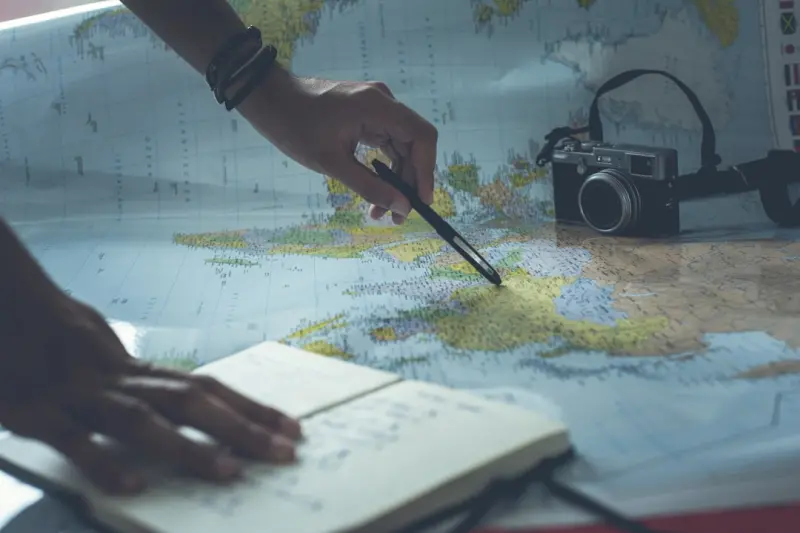
Turning Travel Downtime into a Personal Innovation Lab
There’s a strange alchemy that happens when you step out of the familiar office walls and into a new city, a mountain town, or even a remote countryside. The change of scenery forces the brain to rewire, the schedule loosens, and the everyday grind gives way to unexpected moments of clarity. I’ve started treating every trip—not just the “big” ones—as a portable laboratory where ideas can be tested, habits can be refined, and creative sparks can be ignited.
In this post I’ll walk you through the mindset shift that turns ordinary travel into a strategic advantage, share a handful of low‑tech tactics that keep the momentum going, and point you toward a few resources that have helped me sharpen the process. Whether you’re a founder hopping between pitch meetings, a product manager scouting user research sites, or simply a curious explorer, these practices can make the road your most productive coworker.
The Core Premise: Travel as a Structured Play Session
Think of travel not as a break from work but as a structured play session. Play, in the psychological sense, is purposeful, rule‑guided, and intrinsically rewarding. When you apply that lens to a trip, you get three immediate benefits:
- Contextual Insight – New environments surface problems and opportunities you’d never see behind a desk.
- Neural Flexibility – Switching settings stimulates neuroplasticity, making it easier to connect disparate ideas.
- Motivation Boost – The novelty factor fuels dopamine, keeping you energized for deep work.
The trick is to embed intentional “play blocks” into an itinerary that already feels busy. Below are the steps I follow, each designed to be lightweight enough to fit into any travel schedule.
Step 1: Define a Micro‑Goal Before You Pack
Large goals like “grow revenue” get lost in the noise of airports and hotel check‑ins. Instead, I set a micro‑goal that can be tackled in a single day or even a single coffee break. Examples include:
- Sketch a new onboarding flow on a napkin during a train ride.
- Interview three locals about how they solve a specific pain point.
- Test a hypothesis about pricing elasticity by observing street market dynamics.
Because the target is tiny, the goal feels achievable and you avoid the paralysis that often follows vague “big picture” objectives.
Step 2: Capture the Ambient Data Stream
Every city is a living data set. The sounds of a bustling market, the rhythm of a tram, the layout of a co‑working space—these are all signals you can capture and later translate into actionable insights. I keep a pocket‑size notebook (or a digital note app if the battery lasts) and jot down three things each hour:
- Observation – What’s happening around you?
- Emotion – How does it make you feel?
- Question – What does this spark in your work?
This triad creates a feedback loop that forces you to reflect instead of drift.
Step 3: Leverage “Micro‑Movement” Breaks for Thought Experiments
While the post Micro‑Movements guide shows how tiny physical tweaks can boost office health, the same principle works on the road. A 5‑minute stretch in a hotel lobby, a short walk to the nearest bakery, or even a quick stair climb can reset your mental state, making it easier to dive back into abstract thinking. I schedule these micro‑movement breaks right after a data‑capture session to give the brain a momentary “reset” before I start synthesizing notes.
Step 4: Turn Every Interaction into a Mini‑Interview
Travel forces you into countless conversations—taxi drivers, baristas, fellow travelers, locals. Instead of small talk, I frame each exchange as a mini‑interview:
- Purpose: “I’m learning how people in different cultures handle X.”
- Prompt: “Can you tell me about a recent challenge you faced with Y?”
- Follow‑up: “How did you solve it, and what would you do differently?”
These short, targeted chats generate authentic user insights you can’t get from surveys alone. They also help you build a global network of informal advisors.
Step 5: Synthesize on the Move, Not When You Return
Many travelers wait until they’re back home to make sense of the data they collected. By then, the emotional resonance has faded. I use the evenings in my hotel room (or a quiet café) to create a “travel insight board”—a visual collage of photos, sketches, and notes. Tools like a simple whiteboard app or even a physical corkboard work well. The goal is to see patterns emerge in real time, allowing you to adjust the next day’s micro‑goal based on what you’ve already learned.
Step 6: Share a “Travel Insight Snapshot” With Your Team
Keeping the rest of the organization in the loop transforms a solo experiment into a collaborative effort. I send a concise email—or a quick Slack thread—summarizing the day’s findings, attaching a photo of the insight board, and proposing a single action item. This not only validates the work but also invites feedback that can sharpen the next iteration.
When you make sharing a habit, the entire team starts treating your trips as shared R&D rather than isolated escapades.
Case Study: From a Train Ride to a New Feature Concept
Last month I boarded a night train from Berlin to Prague. The carriage was half full, the lights dimmed, and the rhythmic clatter of wheels set a meditative backdrop. I set a micro‑goal: Identify friction points in the way people schedule spontaneous meet‑ups while traveling.
During the journey I struck up a conversation with a fellow passenger who was a freelance photographer. He told me he often missed out on last‑minute gigs because his calendar app didn’t support “flexible time blocks.” I jotted down his pain point, sketched a quick wireframe for a “flex‑slot” feature, and later that night refined the concept on my laptop. By morning, I had a prototype ready for internal review—something that would have taken weeks of planning back at the office.
Tools That Keep the Process Light Yet Effective
While the philosophy is low‑tech, a few digital helpers keep the workflow smooth:
- Voice Memo Apps – Capture thoughts when your hands are full.
- Simple Diagram Tools – Quick sketches of workflows or user journeys.
- Cloud‑Based Note Sync – Ensure you can access observations from any device.
If you’re looking for deeper inspiration on curating the perfect ambient vibe while you work, the post Curate the Perfect Travel Soundtrack offers a curated list of playlists that boost focus without overwhelming the senses.
Why This Approach Works for SaaS Professionals
SaaS products thrive on user empathy, rapid iteration, and data‑driven decisions. Travel gives you a constant flow of fresh data points and emotional contexts that you can’t replicate in a static office. By turning each trip into a personal innovation lab, you:
- Accelerate hypothesis testing with real‑world users.
- Surface hidden pain points that existing analytics miss.
- Build a mental habit of “learning on the go,” which aligns perfectly with the agile mindset.
In short, travel becomes a strategic lever, not a luxury.
Getting Started: Your First 48‑Hour Experiment
Ready to try it out? Here’s a quick starter kit for a weekend getaway:
- Pick a Destination – Choose a place you’ve never visited, even if it’s just a neighboring town.
- Set a Micro‑Goal – Define one concrete question you want answered.
- Pack a Notebook – Keep it simple; a small spiral notebook works fine.
- Schedule Micro‑Movements – Set alarms for 5‑minute stretch breaks.
- Plan a Sharing Moment – Draft an email template to send the next morning.
After the trip, review what worked, tweak the process, and repeat. Over time you’ll develop a personal playbook that feels as natural as checking your email.
Conclusion: Make Every Journey Count
The world is full of untapped insights, and every mile you travel is an opportunity to collect them. By treating travel as a structured, low‑friction innovation lab, you turn ordinary downtime into a catalyst for product breakthroughs, team alignment, and personal growth. The next time you book a flight—or a train, or even a road trip—bring a notebook, a micro‑goal, and an open mind. Your next big idea might be waiting at the airport coffee shop.

David Moore is a freelance writer specializing in two dynamic and ever-evolving fields: gambling and the tech industry. With a keen eye for detail and a knack for unraveling complex topics, David delivers insightful and engaging content that keeps readers informed and entertained.
Related Posts

Why Tiny Escapes Are the Next Big Thing in Travel
Micro‑escapes—brief, focused trips—are reshaping travel by offering intense cultural immersion... Read More
Hybrid Work Retreats: Redefining How We Travel and Produce
Hybrid work retreats merge high‑speed connectivity, curated local experiences, and purposeful coll... Read More
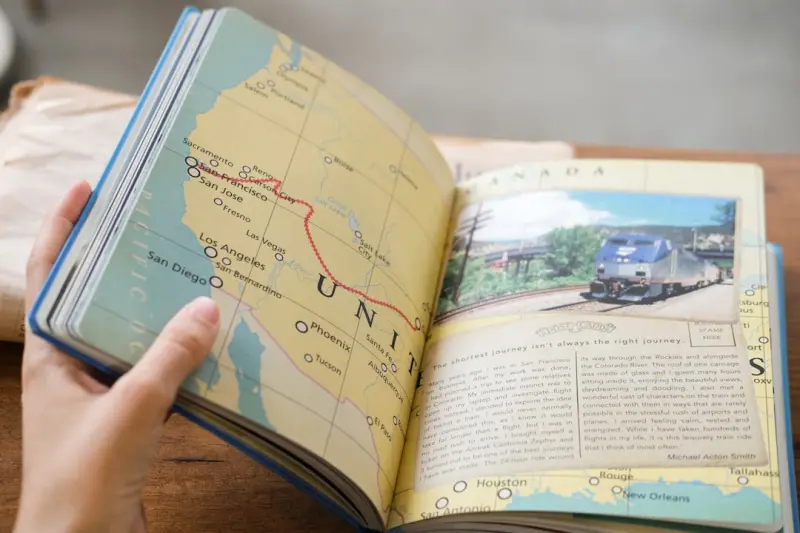
The Sensory Journal: Turning Travel Moments into Tangible Memories
A travel journal isn’t just a notebook—it's a sensory archive that deepens presence, encourages ... Read More
Top Posts

Unlocking Google’s Hidden APIs: A SaaS Playbook for Real‑World Differentiation
A practical guide showing SaaS founders how to leverage Google Maps, Google Pay, and Cloud Run to create differentiated products, reduce friction, and accelerat...Read More

Synthetic Data: The Quiet Revolution Powering Smarter AI
Synthetic data unlocks limitless, privacy‑safe training sets, letting AI models learn faster, become more robust, and stay compliant—discover why it’s the...Read More
Micro‑Influencer Partnerships: How Niche Creators Fuel Sustainable Growth
Explore the power of micro‑influencer partnerships, from authentic relationships to AI‑enabled creator matching, and learn how they can become a sustainable...Read More

Navigating Google’s AI Wave: Rose DesRochers’s Insider Playbook
Rose DesRochers breaks down Google’s AI surge, from Gemini’s authenticity tools to actionable strategies for marketers, offering a forward‑looking playboo...Read More
0 Comments
Post Comment
You will need to Login or Register to comment on this post!