

Why AI Belongs on Your Product Roadmap, Not Just in Your Tech Stack
When I first started tinkering with generative models, I imagined them as a cool side‑project—a chatbot that could answer support tickets or a prototype that could churn out copy. Fast forward a few months, and I’m convinced that AI should sit at the heart of the strategic planning process itself. In SaaS, where product velocity and market relevance are the lifeblood, the ability to predict, prioritize, and iterate on features faster than competitors is no longer a luxury; it’s a survival skill.
The Blind Spot: Traditional Roadmapping Is Too Human‑Centric
Classic roadmaps rely heavily on intuition, stakeholder opinion, and historical data that is often stale by the time it reaches the planning table. Product managers spend weeks—sometimes months—sifting through user surveys, sales feedback, and support tickets, trying to distill a coherent story. By the time a feature lands in the backlog, the market context may have shifted, rendering the effort partially obsolete.
Enter AI. With the explosion of large language models (LLMs) and multimodal analytics, we now have tools that can ingest massive, real‑time streams of data—customer usage patterns, churn signals, competitor releases, even macro‑economic indicators—and surface insights that are both granular and forward‑looking.
Three Ways AI Can Supercharge Your Roadmapping Process
- Signal Amplification: AI can detect subtle usage trends that would otherwise be lost in the noise. For example, a spike in API calls for a particular endpoint could indicate an emerging integration demand, prompting a proactive feature.
- Predictive Prioritization: By marrying historical delivery velocity with market momentum, generative models can suggest which items will deliver the highest ROI in the next quarter.
- Dynamic Alignment: AI‑driven dashboards can continuously re‑balance the roadmap as new data arrives, ensuring that the plan stays relevant without the need for a massive quarterly overhaul.
From Data to Decision: The Role of Prompt Engineering
One of the biggest misconceptions about AI is that you just feed it data and it magically spits out a roadmap. In reality, the quality of output hinges on Prompt Engineering. By crafting precise, context‑rich prompts, you guide the model to consider the nuances that matter most to your business—pricing tiers, customer segments, regulatory constraints, you name it.
For instance, a well‑structured prompt might read: “Given the last 90 days of usage logs for enterprise customers, identify the top three feature gaps that correlate with a >15% churn risk, and suggest a minimum viable product (MVP) solution that can be built in under eight weeks.” The model then returns a concise, actionable list that can be fed directly into your sprint planning tool.
Building Trust: Ethical Guardrails for AI‑Powered Roadmaps
AI can be a game‑changer, but it can also amplify bias if left unchecked. When the model leans too heavily on historical data that reflects past inequities—say, under‑representing smaller firms in feature prioritization—the roadmap can inadvertently reinforce those gaps.
That’s why a robust ethical AI playbook is essential. It should cover data provenance, fairness audits, and transparent documentation of how AI recommendations are derived. In practice, this means setting up regular “bias reviews” where cross‑functional teams validate that the AI‑suggested priorities align with your inclusive product vision.
Case Study: A Mid‑Size SaaS Company Cuts Feature Cycle Time in Half
Consider Acme Analytics, a B2B SaaS firm with a product suite used by finance teams worldwide. Their product team struggled with a six‑month lag between idea generation and feature release. By integrating an AI‑augmented roadmapping layer, they achieved the following:
- Real‑time usage clustering: AI identified a group of power users who were consistently building custom dashboards, indicating a demand for a native dashboard builder.
- Predictive ROI modeling: The model forecasted a 22% increase in renewal rates if a dashboard builder were shipped within Q2.
- Automated sprint sizing: Using historical velocity data, the AI suggested a two‑sprint rollout plan that balanced engineering capacity with market urgency.
Result? The dashboard builder launched in just eight weeks, slashing the previous six‑month timeline by more than 50% and contributing to a 7% uptick in net revenue retention.
Practical Steps to Embed AI in Your Roadmapping Workflow
Below is a pragmatic roadmap you can adopt today, regardless of the size of your product org:
- Data Consolidation: Pull together usage logs, CRM notes, support tickets, and competitor intelligence into a unified data lake.
- Model Selection: Choose an LLM that supports fine‑tuning or a purpose‑built analytics model that can handle both structured and unstructured data.
- Prompt Library Creation: Draft a set of reusable prompts for common scenarios—risk detection, opportunity surfacing, ROI estimation.
- Human‑in‑the‑Loop (HITL) Review: Establish a cadence (weekly or bi‑weekly) where product leads evaluate AI suggestions, adjust for strategic fit, and approve for execution.
- Feedback Loop Integration: Capture post‑release performance metrics and feed them back into the model to improve future predictions.
When AI Becomes Your Decision Co‑Pilot
It’s tempting to think of AI as a “nice‑to‑have” add‑on. In reality, once you have the right data pipeline and prompt framework, AI functions as a decision co‑pilot, surfacing the “what if” scenarios that would otherwise be missed in a static roadmap. The model can simulate the impact of adding a new feature on churn, expansion revenue, and engineering load—all in seconds.
Imagine a dashboard that not only shows you the current roadmap but also lets you ask, “What if we delayed Feature X by two sprints?” The AI instantly recalculates projected ARR loss, churn impact, and resource utilization, giving you a data‑driven answer before you even schedule the meeting.
Overcoming Common Objections
“Our product is too niche for AI.” Even niche products generate micro‑signals—API call patterns, support ticket keywords—that AI can mine for insights.
“We don’t have the talent to build AI models.” Many SaaS platforms now offer pre‑built AI modules or low‑code environments that let product managers craft prompts without deep ML expertise.
“AI will replace product managers.” Not at all. AI excels at data synthesis and scenario modeling; the human element—strategic judgment, empathy, and market storytelling—remains irreplaceable.
The Future: AI‑Driven Portfolio Management
Beyond single‑product roadmaps, AI can orchestrate an entire portfolio. By analyzing cross‑product usage patterns, it can recommend bundling strategies, identify cannibalization risks, and even suggest new product ideas that fill gaps in your suite. The next frontier is a holistic AI‑driven portfolio canvas that aligns all product lines with corporate growth objectives in real time.
Takeaway: Make AI the Compass, Not Just the Engine
In the fast‑moving SaaS world, the ability to pivot quickly is a competitive moat. By integrating generative AI into the heart of your product roadmapping, you turn raw data into a living, breathing guide that evolves with the market. The technology itself is powerful, but its true value emerges when it amplifies human insight, safeguards ethical considerations, and keeps the product team aligned on what truly matters.
So, the next time you open your roadmap tool, ask yourself: Am I merely plotting a static line, or am I navigating with an AI‑infused compass that points toward the most valuable horizons?

Sanji Patel has dedicated 25 years to the SEO industry. As an expert SEO consultant for news publishers, he emphasizes providing both technical and editorial SEO services to news publishers worldwide. He frequently speaks at conferences and events globally and offers annual guest lectures at local universities.
Related Posts

AI Co‑Pilot: Supercharging B2B Sales Conversations
An AI co‑pilot blends data ingestion, contextual reasoning, and actionable prompts to turn every s... Read More

AI as a Personal Language Coach: Turning Everyday Moments into Fluent Conversations
Explore the future of language learning where AI acts as a personal coach, seamlessly integrating pr... Read More

Synthetic Data: The Secret Weapon Empowering AI in SaaS
Synthetic data lets SaaS companies train and test AI models at scale without compromising privacy, o... Read More
Top Posts
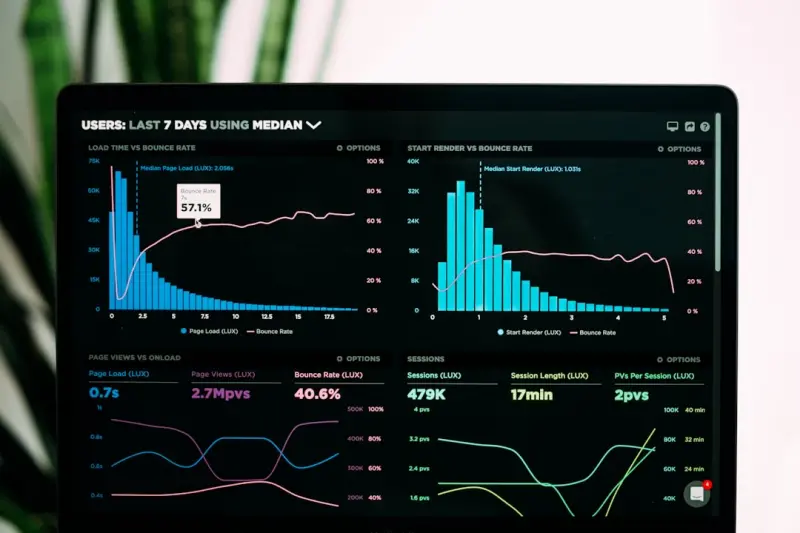
Turn Data Into Stories: A Narrative‑First Playbook for B2B SaaS Marketing
Transform your B2B SaaS marketing by weaving data into a narrative arc that resonates with buyers—discover a step‑by‑step playbook that humanizes metrics,...Read More

Crafting a Sensory Sanctuary at Home: Sound, Texture, and Aroma
Learn to create a multisensory home sanctuary using acoustic fixes, textured décor, and curated scents, turning everyday spaces into soothing retreats for body...Read More

Flavor Trails: Turning Every Meal Into a Travel Story
Explore a fresh travel approach that centers on local cuisine, turning each meal into a vivid cultural story and a skill‑building adventure....Read More

Why Subscription Services Are Redefining How We Vacation
Subscription travel is turning vacations into curated experiences, blending AI personalization, modular packages, and community benefits to meet the needs of to...Read More
0 Comments
Post Comment
You will need to Login or Register to comment on this post!