
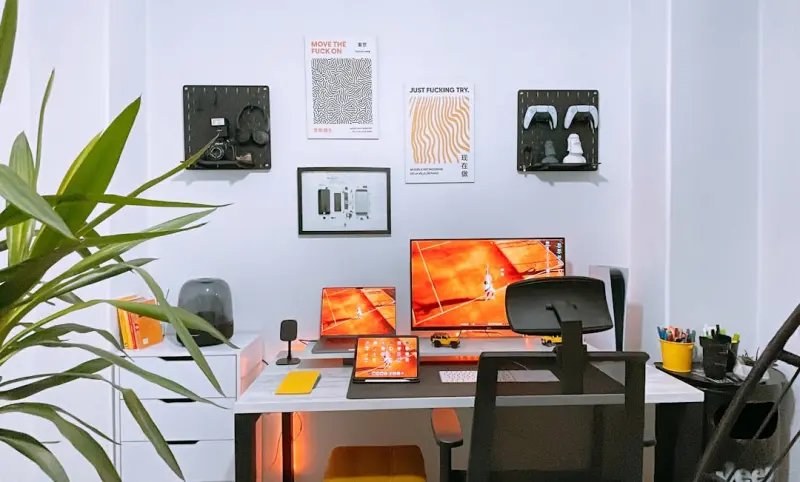
Why Your Home Office Is Secretly Sabotaging Your Brain—and How to Fix It
When I first set up my “productivity cave” during the pandemic, I imagined a sleek desk, a high‑resolution monitor, and a playlist of lo‑fi beats that would turn me into a relentless output machine. What I didn’t anticipate was that the very space I built to enhance my work would end up draining my mental stamina, fogging my focus, and nudging me toward burnout.
Fast forward to today, and I’ve learned that the home office is far more than a piece of furniture; it’s an ecosystem that can either amplify cognitive performance or silently erode it. In this deep‑dive, I’ll unpack three overlooked environmental levers—light, air, and micro‑movement—and show you how to rewire your workspace for mental resilience.
The Light Factor: Not Just About Brightness
Most of us equate good lighting with “bright enough to see the screen.” But the brain cares about spectral composition, timing, and directionality. Natural daylight is a powerhouse of circadian cues that regulate hormone release, alertness, and mood. When we replace that with harsh, blue‑heavy LED fixtures, we’re essentially shouting at our hypothalamus, “Stay awake forever.”
- Blue light in the morning: Boosts cortisol just enough to get you moving, but excessive exposure after 10 p.m. stalls melatonin, making sleep elusive.
- Warm amber light in the afternoon: Signals a gentle wind‑down, priming the brain for focused work without the jittery edge of pure blue.
- Full‑spectrum daylight simulators: Mimic the sun’s natural shift and can be a game‑changer for those whose windows face north or live in low‑light climates.
My personal experiment? I installed a smart lighting strip that transitions from cool blue at 7 a.m. to warm amber by 5 p.m. The result? A 15‑minute reduction in my “first‑hour fog” and a smoother transition into evening relaxation. If you’re skeptical, start small: place a desk lamp with a warm hue on the far side of your monitor to balance the cool glare.
The Air Factor: Breathing Life Into Your Brain
Air quality is the silent partner in cognitive performance. While many focus on air purifiers for allergens, fewer consider CO₂ buildup as a culprit for sluggish thinking. Studies show that a rise from 400 ppm to 1,000 ppm can impair decision‑making as much as a night of poor sleep.
Here’s how to keep your office atmosphere crisp:
- Ventilation: Open a window for at least 5 minutes every hour. If that’s not feasible, invest in a low‑noise exhaust fan that pulls fresh air from outside.
- Plants: While the quiet power of sensory hygiene post highlighted greenery for calm, certain species—like snake plant and pothos—also absorb VOCs and modestly lower CO₂.
- Humidity control: Aim for 40‑60 % relative humidity. Too dry, and nasal passages irritate; too humid, and mold thrives. A smart hygrometer can automate adjustments.
In my own office, a simple desk‑top CO₂ monitor became my “brain‑fuel gauge.” When levels crossed 800 ppm, I’d stand, stretch, and open the balcony. The habit not only refreshed my oxygen intake but also gave my mind a brief, restorative “mental reset.”
Micro‑Movement: The Tiny Habit That Packs a Punch
We’ve all heard the mantra “move every hour,” but the nuance lies in how you move. Traditional “micro‑breaks” often involve looking away from the screen, but research suggests that dynamic micro‑movements—small, intentional shifts in posture and muscle activation—can boost blood flow to the prefrontal cortex, the seat of executive function.
Here are three micro‑movement protocols that fit seamlessly into a workday:
- The 20‑20‑20 Twist: Every 20 minutes, look 20 feet away for 20 seconds, then perform a gentle torso twist toward the opposite side of your dominant hand. This engages spinal erectors and re‑orients visual focus.
- Desk‑Push‑Up Pulse: Place both hands on the desk, lean forward, and perform 5‑second holds followed by a quick push‑up. It activates the core and upper back, counteracting slouch.
- Foot‑Roll Drill: Keep a small massage ball under your foot. Every hour, roll it for 30 seconds to stimulate the plantar fascia and improve circulation to the brain via the vagus nerve.
When I first incorporated these movements, my “post‑lunch slump” evaporated. I no longer needed a second cup of coffee; a quick twist was enough to reboot my alertness.
Integrating the Three Levers: A Blueprint for a Resilient Workspace
Individually, light, air, and movement each contribute to mental clarity. Together, they form a synergistic loop that can transform a drab cubicle feel into a neuro‑optimizing sanctuary. Below is a step‑by‑step guide to redesigning your home office without a full remodel.
- Assess Your Baseline: Use a light meter app to gauge current lux levels, a CO₂ sensor for air quality, and a posture tracker (many smartwatches have this) to note how often you slouch.
- Upgrade Lighting: Install a tunable LED panel or smart strip. Set it to a cool blue schedule in the morning (6‑9 a.m.) and transition to warm amber by late afternoon.
- Ventilate Strategically: Pair a window fan with a timer. If you have a balcony, schedule a 5‑minute “air burst” after each major meeting.
- Introduce Greenery: Add at least one VOC‑absorbing plant within arm’s reach. Rotate its position weekly to evenly distribute the benefits.
- Embed Micro‑Movements: Place a sticky note on your monitor reminding you of the 20‑20‑20 Twist. Set a gentle alarm on your phone for hourly foot‑roll drills.
- Iterate & Measure: After a week, re‑measure light and CO₂ levels, and note any change in perceived focus. Adjust the timing of light transitions or the frequency of ventilation as needed.
By treating your office as a living system, you’ll notice subtle yet powerful improvements: faster idea generation, fewer “brain fog” episodes, and a more sustainable work rhythm that respects your natural energy cycles.
Beyond the Office: Carrying the Habit Home
The benefits of an optimized workspace don’t have to stop at the desk. Apply the same principles to other rooms—your living area, kitchen, even the bedroom. For instance, using warm light in the evenings throughout the house can reinforce the body’s natural wind‑down process, while ensuring proper ventilation in the kitchen reduces indoor pollutants that can affect cognition.
Remember, resilience isn’t a one‑off project; it’s an ongoing practice. The next time you sit down to tackle a high‑stakes presentation, ask yourself: “Is my environment supporting me, or am I fighting against it?” If the answer leans toward the latter, you now have a clear, evidence‑backed roadmap to turn the tide.
In the era of remote work, we’re granted unprecedented control over our surroundings. Let’s use that power wisely, shaping spaces that not only enable productivity but also nurture mental health.

Shawn DesRochers is a certified Microsoft technician and Programmer with 30+ year's experience. He has written many reviews on computer related products, software, and SEO related topics. When he's not writing reviews he can be found at one of the Oldest Directories Online Business Directory USA which he is the CEO of.
Related Posts

How Biofeedback Wearables Are Redefining Stress Management for Remote Workers
Remote work has blurred the lines between personal and professional life, leading to chronic stress.... Read More
Turning Wearable Data into Daily Wellness Wins
Discover how to convert wearable metrics into simple, actionable habits. This guide walks you throug... Read More

Gut Feelings: How Your Microbiome Shapes Mood and Immunity
Explore the powerful link between your gut microbiome and overall well‑being. Learn science‑back... Read More
Top Posts

Micro‑Nature Breaks: How Tiny Outdoor Moments Transform Office Health
Micro‑nature breaks—short, intentional encounters with outdoor elements—offer a powerful, science‑backed way to reduce stress, sharpen focus, and streng...Read More
Gut Feelings: How Your Microbiome Shapes Mood and Immunity
Explore the powerful link between your gut microbiome and overall well‑being. Learn science‑backed habits, foods, and tech tools to boost mood, immunity, an...Read More

When AI Becomes Your Strategic Partner: Redefining Decision‑Intelligence in SaaS
Discover why AI is shifting from a tool to a strategic partner that enhances decision‑making in SaaS, with actionable steps to embed collaborative intelligenc...Read More
Augmented Reality Experiences: The Next Frontier for Digital Marketers
Explore why AR is essential for modern marketers, learn a step‑by‑step framework, and see real‑world examples that turn virtual try‑ons into measurable ...Read More
0 Comments
Post Comment
You will need to Login or Register to comment on this post!