
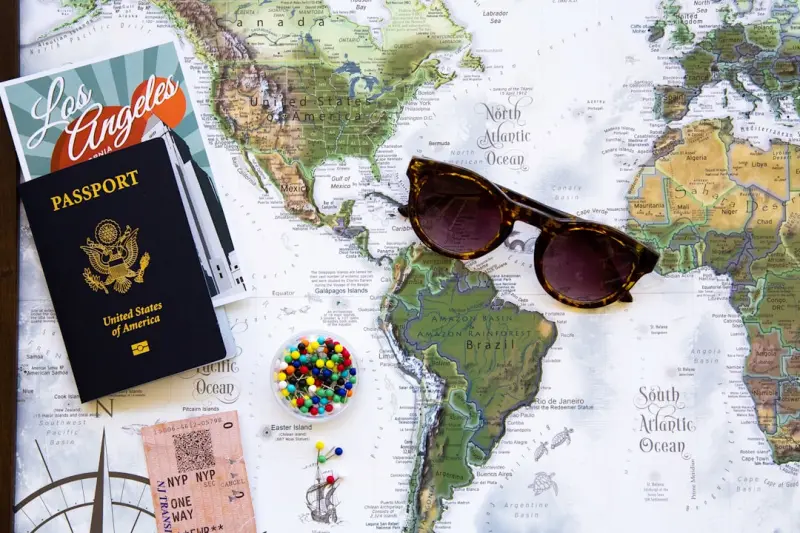
Why Travel Should Feel Like a Personal Innovation Lab
When I first booked a train ticket to the misty hills of the Pacific Northwest, I wasn’t just chasing scenic views—I was chasing a question that had been nagging me for months: What if every journey I take becomes a deliberate experiment in creativity, resilience, and growth? The answer, I discovered, is that travel can be far more than a break from the grind; it can be a structured, intentional laboratory where you test ideas, refine habits, and return home with actionable insights.
The Old Tourist Mindset vs. The Innovation Mindset
Most travel guides still whisper the same mantra: “see the landmarks, eat the local cuisine, snap the perfect photo.” While there’s undeniable joy in ticking off famous sights, that approach treats the traveler as a passive consumer of experiences. The innovation mindset, by contrast, asks how each moment can be leveraged to answer personal or professional questions.
Imagine arriving in a bustling market not just to taste a new spice, but to observe how vendors negotiate under pressure, how crowds self‑organize, and how supply chains adapt in real time. Those observations can inform everything from product design to team dynamics back at the office.
Designing Your Trip as a Lab: The Blueprint
1. Define a Core Hypothesis. What are you trying to learn? It could be as simple as “I want to improve my focus after long flights” or as ambitious as “I want to prototype a new service model inspired by local co‑working hubs.” Write it down, just like you would a research question.
2. Identify Variables. These are the elements you’ll tweak: schedule flexibility, level of digital connectivity, types of social interactions, or even the sensory environment (think biophilic hacks you can bring along).
3. Choose Measurement Tools. In a lab you have instruments; on the road, you have journals, voice memos, and simple wellness trackers. I love using a pocket notebook for rapid observations and a meditation timer to note how often I naturally drift into a calm state.
4. Set a Timeline. Even if you’re on a week‑long trip, allocate dedicated “experiment blocks.” For instance, two mornings spent without any screen time, followed by a reflective debrief.
5. Plan for Iteration. The best experiments evolve. If you discover that a particular café’s ambiance fuels your brainstorming, double down on similar environments for the rest of the journey.
Tools & Practices to Keep Your Lab Running Smoothly
Travel can be chaotic, but a few disciplined habits keep the experimental spirit alive.
Strategic Breathwork on the Move
Long flights and endless layovers are notorious for draining mental clarity. I incorporate strategic breathwork whenever I feel my attention slipping. A simple 4‑7‑8 pattern—inhale for four seconds, hold for seven, exhale for eight—acts like a reset button, sharpening focus and reducing the stress that naturally spikes when you’re out of routine.
Digital Detox Rituals (Without Going Full‑Caveman)
Being constantly connected can dilute the very insights you’re trying to capture. I employ digital detox rituals that are short but potent: a 30‑minute “phone‑free walk” after lunch, or a “no‑screen sunrise” on the balcony. These micro‑breaks create mental space for reflection, allowing patterns and ideas to surface organically.
Biophilic Touchpoints
Our brains are wired to respond positively to natural elements. Whether you’re staying in a city loft or a mountain cabin, I bring a small piece of nature—a sprig of rosemary, a pocket‑size succulent, or even a reusable bamboo water bottle. These biophilic hacks anchor you to the present and subtly cue your nervous system to relax, making it easier to observe without judgment.
Curating Environments That Spark Insight
Just as a scientist selects a controlled environment, a traveling innovator curates spaces that amplify learning.
- Co‑Working Cafés. Look for places with natural light, communal tables, and a steady hum of conversation. The ambient noise level of about 50‑70 dB is proven to boost creative thinking.
- Local Maker Spaces. Many cities now have community workshops where artisans build, tinker, and collaborate. Spending a few hours there can reveal grassroots problem‑solving tactics you can adapt for your own products.
- Public Parks and Gardens. Outdoor settings reduce cortisol, making the brain more receptive to pattern recognition. A simple bench‑side sketchpad session can yield more ideas than a coffee shop laptop marathon.
Leveraging Technology—But Not Letting It Lead
Travel tech is a double‑edged sword. Mapping apps, translation tools, and instant booking platforms are invaluable, yet they can also keep you tethered to a screen. Here’s how I strike a balance:
- Pre‑Trip Digital Planning. Set up all logistics before departure. Use a single “trip hub” app that aggregates flights, accommodations, and local transport. Once you’re on the road, close that app and treat it as a reference, not a command center.
- Offline‑First Exploration. Download offline maps and language packs. This reduces the impulse to constantly check data, encouraging you to engage more fully with the environment.
- Data Capture for Insight. Use a lightweight voice recorder or a note‑taking app with a single button to capture moments of inspiration instantly. Keep the recording length under 30 seconds—just enough to seed later analysis.
Case Study: Turning a Coastal Retreat Into a Service Blueprint
Last autumn, I spent ten days on a secluded island known for its artisanal fishing cooperatives. My hypothesis: “Community‑driven resource sharing can inform a SaaS onboarding experience.”
During the first three days, I immersed myself in the daily rhythm—watching how fishers exchanged catches, how they logged daily yields in shared ledgers, and how newcomers were welcomed through a “buddy system.” I logged each observation using a pocket journal and recorded ambient sounds for later mood analysis.
Mid‑week, I introduced a micro‑experiment: I set up a simple shared spreadsheet on a local café’s Wi‑Fi, allowing a few fishers to log their catch in real time. The results were immediate—data accuracy improved, and a sense of collective ownership emerged.
Back home, I distilled three actionable insights for my SaaS team:
- Onboarding as Shared Narrative. New users should be invited into a communal story, not just a checklist.
- Real‑Time Collaboration Mirrors Resource Sharing. Embedding live, visual logs can transform how teams track progress.
- Mentor Pairing Boosts Retention. The “buddy system” concept translates into a mentor‑match feature that reduces churn.
This experiment proved that a travel experience, when framed as a lab, can yield concrete product innovations.
Putting It All Together: Your Travel Innovation Playbook
Below is a concise, actionable framework you can paste into your next itinerary.
- Set a Hypothesis. Write one line: “I want to learn X.”
- Map Variables. List three factors you’ll manipulate (e.g., digital exposure, social interaction level, environment type).
- Equip Your Lab. Pack a notebook, a breathwork timer, and a small biophilic token.
- Schedule Experiment Blocks. Allocate at least two 30‑minute slots each day for observation and reflection.
- Capture Data. Use voice memos or quick sketches—keep each entry under one minute.
- Debrief Daily. Spend 10 minutes each night reviewing notes, identifying patterns, and adjusting variables for the next day.
- Synthesize Post‑Trip. Within 48 hours of returning, transform raw observations into three concrete takeaways for your work or personal growth.
By treating travel as a series of mini‑experiments, you turn every suitcase into a toolkit, every layover into a data point, and every destination into a source of strategic insight.
Final Thoughts: The Journey Is the Experiment
Travel will always be a source of joy, wonder, and occasional inconvenience. The difference between a casual vacation and an innovation‑focused expedition is the intentionality you bring to the experience. When you step off the plane with a hypothesis in hand, you’re no longer a tourist—you become a researcher, a designer, a storyteller, and a catalyst for change.
So the next time you book a flight, ask yourself: What am I testing, and how will I capture the answer? The world is full of living labs; you just need to recognize them.

Related Posts
Flavor Trails: Turning Every Meal Into a Travel Story
Explore a fresh travel approach that centers on local cuisine, turning each meal into a vivid cultur... Read More
Beyond the Guidebook: Crafting Unscripted Adventures in the Age of Instant Itineraries
A fresh take on travel that swaps rigid itineraries for spontaneous storytelling, offering practical... Read More
Travel as a Mobile Innovation Lab: Turning Detours into Business Insights
Learn to treat travel as a mobile laboratory: design mini‑experiments, capture data on the go, and... Read More
Top Posts
Riding Google’s AI Wave: A Marketer’s Personal Playbook
Explore the latest Google AI features, SEO shifts, and actionable strategies to keep your marketing ahead of the curve....Read More
Mastering Your Body Clock: A Remote Worker’s Guide to Peak Energy
Discover how to synchronize your circadian rhythm with daily work habits, using light exposure, timed nutrition, micro‑movements, and a sleep‑friendly envir...Read More
Synthetic Data: The Underrated Engine Powering Next‑Gen SaaS AI
Synthetic data lets SaaS firms train robust AI models without compromising privacy or waiting for rare events. Learn the techniques, integration steps, and futu...Read More
When Pixels Talk: AI‑Generated Visual Storytelling Redefines Digital Marketing
The post reveals how AI‑generated images and videos enable hyper‑personalized, real‑time visual storytelling, offering marketers a new engine for engageme...Read More
0 Comments
Post Comment
You will need to Login or Register to comment on this post!