

When the world tells you to hustle harder, your body often whispers (or shouts) that it’s time for a reset. As someone who spends half the day juggling client calls, sprint reviews, and a never‑ending inbox, I’ve learned that health isn’t a separate checkbox—it’s the invisible infrastructure that powers every deadline, every brainstorm, every late‑night idea. In this post, I’m sharing the three “quiet revolutions” that can transform the health of remote and hybrid workers without demanding a complete lifestyle overhaul. Think of them as subtle upgrades you can implement while you’re still in your pajamas, sipping coffee, or scrolling through a meeting agenda.
1. The Breathwork Reset: Micro‑Practices for Macro Energy
Most of us think of fitness as a marathon run, a gym session, or a yoga class. But the most powerful workout you can do sits right under your nose—literally. Breath is the one physiological function we can control consciously, and it has a direct line to the autonomic nervous system, the part of our brain that dictates stress, focus, and recovery.
Why it matters: When you’re deep in a Zoom call, your body can slip into a sympathetic “fight‑or‑flight” mode, spiking cortisol and draining mental clarity. A few intentional breaths can flip the switch to the parasympathetic “rest‑and‑digest” state, lowering heart rate, reducing anxiety, and sharpening focus—all in under a minute.
Quick micro‑practice you can try now:
- Box breathing (4‑4‑4‑4): Inhale for 4 seconds, hold for 4, exhale for 4, hold again for 4. Repeat four cycles.
- 4‑7‑8 technique: Inhale for 4, hold for 7, exhale slowly for 8. This one is perfect before a big presentation.
- Coherent breathing: Aim for 5 breaths per minute (inhale 6 seconds, exhale 6 seconds). It syncs heart‑rate variability and improves emotional regulation.
Integrate these pauses into your calendar. Set a gentle reminder every two hours titled “Breathe Reset.” You’ll be surprised how often you catch yourself reaching for a coffee when a breath could have done the trick.
2. Light as a Mood‑Modulator: Harnessing Natural Illumination
We often underestimate the power of light beyond just visibility. Natural light regulates melatonin, the hormone that dictates our sleep‑wake cycle, and it also boosts serotonin, the feel‑good neurotransmitter. Yet many home offices are tucked away in dim corners, relying on harsh LED strips that can strain the eyes and dampen mood.
By tweaking the way light enters your workspace, you can dramatically improve alertness, reduce eye fatigue, and even lift your overall emotional tone. Here’s a three‑step plan that’s low‑cost and high‑impact:
- Position your desk near a window. Even a sideways glance at daylight can improve circadian alignment. If privacy is a concern, consider sheer curtains that diffuse but don’t block.
- Introduce reflective surfaces. A mirror or a light‑colored wall opposite your desk bounces daylight deeper into the room, amplifying its effect without extra electricity.
- Layer artificial lighting for evenings. Use warm‑tone lamps (around 2700K) after sunset to signal to your brain that it’s time to wind down.
For more creative ways to brighten up your workspace, check out light hacks to energize any space. These ideas go beyond the basics and show how strategic lighting can turn a drab corner into a vibrant hub of productivity and well‑being.
3. The Kitchen Command Center: Simplifying Nutrition for the Busy Mind
Eating well is a cornerstone of health, but the modern workflow often treats meals as an afterthought. The result? Skipping breakfast, relying on vending‑machine snacks, or ordering delivery at odd hours—choices that lead to energy crashes and long‑term metabolic stress.
The solution isn’t a full‑blown culinary overhaul; it’s about redesigning the kitchen into a streamlined, low‑friction environment that makes the healthy choice the easy choice. Think of it as a “command center” where every tool, ingredient, and routine is positioned for efficiency.
Key steps to build your own stress‑free kitchen command center:
- Prep zones. Designate a small area for chopping, another for cooking, and a third for assembling meals. This reduces the “search and grab” mental load.
- Batch‑cook staples. Cook a large pot of quinoa, lentils, or brown rice on Sunday. Store in portioned containers so you can mix‑and‑match with proteins and veggies throughout the week.
- Smart storage. Keep the most nutrient‑dense foods—leafy greens, berries, nuts—at eye level. Hide sugary snacks in higher cabinets to break the impulse loop.
- Automation. Invest in a programmable slow cooker or an air fryer that lets you set a timer and walk away. Pair with a grocery delivery service that restocks your basics automatically.
Need a deeper dive on how to turn the kitchen into a hub of calm? This guide on stress‑free kitchen command center walks you through layout ideas, essential tools, and a weekly prep schedule that can shave 30 minutes off your daily routine.
4. Micro‑Movement Breaks: The Anti‑Sitting Strategy
It’s a well‑known fact that sitting for prolonged periods can be as harmful as smoking. But the real challenge for remote workers is the “invisible” sitting—hours lost in front of a screen without a conscious cue to move.
Instead of committing to an hour‑long workout, integrate micro‑movements that total just a few minutes but accumulate into substantial health benefits. Here’s a quick “movement menu” you can sprinkle throughout your day:
- Desk push‑ups. Place hands on the desk, step back, and perform 8‑10 push‑ups. It engages the upper body without leaving the workstation.
- Standing calf raises. While on a call, lift your heels off the ground and lower them slowly. Aim for 20 repetitions.
- Hip openers. Stand, place one foot on a chair, gently lean forward to stretch the hip flexor. Hold for 30 seconds each side.
- Neck rolls. Slowly rotate your head in a full circle, 5 times each direction, to release tension from screen time.
Set a timer for every 45 minutes—label it “Movement Minute.” The short interruption actually boosts focus when you return to work, creating a virtuous cycle of productivity and health.
5. Digital Boundaries: Crafting a Mental Health Buffer
Even the most ergonomic chair can’t protect you from mental overload if you’re constantly pinged by Slack, email, and social media. The key is to build intentional digital boundaries that preserve cognitive bandwidth.
Start with these three practices:
- Batch your notifications. Turn off non‑essential alerts and schedule two “inbox windows” per day—once mid‑morning, once late afternoon.
- Screen‑free zones. Designate your bedroom or a favorite reading nook as a no‑device area. This helps your brain associate those spaces with rest.
- End‑of‑day ritual. Ten minutes before logging off, close all tabs, jot down tomorrow’s priorities, and engage in a calming activity (reading, light stretching, or a short meditation).
When you protect your mental real estate, you create room for deeper focus, creativity, and the kind of strategic thinking that drives real business growth.
Putting It All Together: A 7‑Day Health Sprint for Remote Professionals
To make these ideas stick, I recommend a one‑week “health sprint.” Each day, focus on integrating one of the above practices while maintaining the others as a backdrop. Here’s a sample schedule:
- Monday: Start the day with a 4‑minute box breathing session before your first meeting.
- Tuesday: Reposition your desk near a window and add a reflective surface.
- Wednesday: Prepare a batch of quinoa and roasted veggies for the rest of the week.
- Thursday: Insert three micro‑movement breaks into your calendar.
- Friday: Implement a “no‑screen” hour after 7 p.m., replacing it with a book or a walk.
- Saturday: Spend 30 minutes organizing your kitchen zones and restocking healthy snacks.
- Sunday: Reflect on the week’s changes, journal any energy shifts, and set intentions for the next sprint.
After the week, assess how you feel. Are you more alert? Less prone to mid‑day cravings? More relaxed during meetings? The goal isn’t perfection—it’s incremental improvement that compounds over time.
Why These Quiet Revolutions Matter for Business Outcomes
Health isn’t a “nice‑to‑have”; it’s a strategic asset. Teams that prioritize breathwork, lighting, nutrition, movement, and digital hygiene report higher engagement scores, lower burnout rates, and faster project turnaround. When employees feel physically and mentally supported, they bring more creativity, empathy, and resilience to client interactions—key differentiators in today’s competitive SaaS landscape.
In short, the “quiet revolutions” I’ve outlined are low‑cost, high‑impact levers. They can be rolled out individually or as a cohesive program, and they require minimal disruption to existing workflows. The real power lies in consistency—tiny habits that, when compounded, reshape the health culture of any remote or hybrid organization.
So next time you find yourself reaching for that third cup of coffee, pause, breathe, and consider whether a quick stretch, a glance at natural light, or a bite of a pre‑prepped snack might be the smarter pick. Your future self—and your bottom line—will thank you.

Related Posts
Turning Personal Health Into a Data‑Driven Growth Engine
A step‑by‑step guide to treating your health like a SaaS product: define KPIs, build real‑time... Read More

Harnessing Breathwork to Supercharge Cognitive Edge
Breathwork isn’t just a wellness fad—it’s a powerful tool for professionals seeking sharper fo... Read More
Digital Detox Strategies for High‑Performance Professionals
Explore a step‑by‑step digital detox framework that helps high‑performing professionals reduce... Read More
Top Posts

Google Cloud Confidential Computing: A Trust‑First Blueprint for Multi‑Tenant SaaS
Learn why Google Cloud’s confidential computing is a game‑changer for B2B SaaS, offering hardware‑level data protection, faster compliance, and a fresh co...Read More
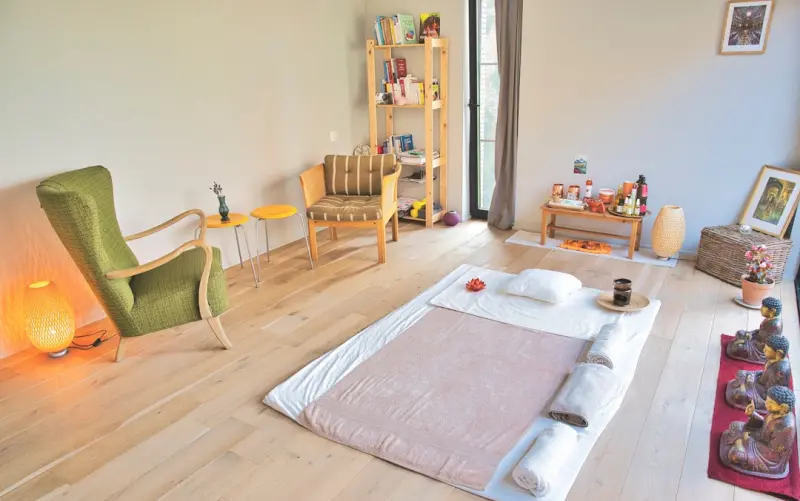
Crafting a Sensory Sanctuary at Home: A Practical Guide
Discover step‑by‑step ways to transform any room into a sensory sanctuary, using light, sound, nature, texture, scent, and personal touches to enhance wellâ...Read More

Community‑First Content Hubs: The Next Frontier in Digital Marketing
A community‑first content hub flips the traditional broadcast model, turning members into co‑creators and advocates. Learn how to design, launch, and measur...Read More

Why Edge AI Is the Next Game‑Changer for B2B SaaS
Edge AI brings inference to the source, cutting latency, saving bandwidth, and enhancing data privacy. This post shows why B2B SaaS should adopt edge AI, offers...Read More
0 Comments
Post Comment
You will need to Login or Register to comment on this post!