
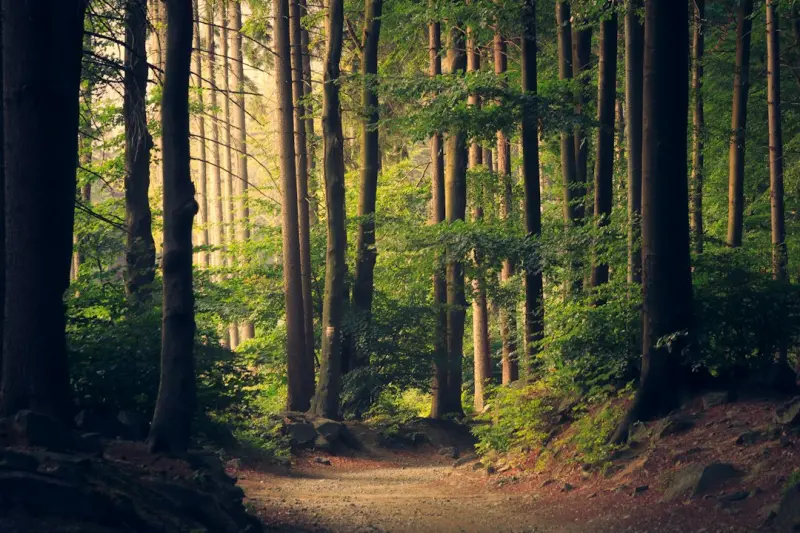
Why Forest Bathing Is the Missing Piece in Your Health Toolkit
When we talk about health in the modern workplace, the conversation often orbits around ergonomics, nutrition, or the occasional power‑nap. Yet there’s a centuries‑old practice that’s quietly making a comeback among high‑performers, entrepreneurs, and remote workers alike: forest bathing, or shinrin‑yoku. It isn’t a trendy workout, a new supplement, or a fancy piece of tech—it’s simply a structured way of immersing yourself in nature and letting the forest’s subtle energies do the heavy lifting for your mind and body.
In my own journey as a tech‑savvy professional who spends most of the day glued to a screen, I discovered that stepping outside the digital cocoon and into a canopy of trees can be the most potent health hack I’ve ever tried. Below, I’ll walk you through the science behind forest bathing, practical ways to integrate it into a busy schedule, and the ripple effects it can have on productivity, creativity, and overall well‑being.
The Science That Turns a Walk into a Therapeutic Ritual
Researchers in Japan, where forest bathing was first formalized in the 1980s, have amassed a growing body of evidence linking exposure to woodland environments with measurable health benefits. Here are a few of the most compelling findings:
- Reduced cortisol levels: A study published in Environmental Health and Preventive Medicine showed that participants who spent just two hours in a forest had a 20‑30% drop in cortisol, the hormone most closely associated with stress.
- Enhanced immune function: Phytoncides—volatile organic compounds released by trees—appear to boost the activity of natural killer (NK) cells, the body’s frontline defenders against viruses and tumors.
- Improved heart rate variability (HRV): Time spent among trees increases parasympathetic nervous system activity, a key indicator of cardiovascular health and stress resilience.
- Sharper cognitive performance: A 15‑minute walk in a forest setting has been linked to better attention scores on the Stroop test compared to an equivalent walk in an urban environment.
These outcomes aren’t magic; they’re the result of a cascade of physiological responses triggered by sensory inputs—sight, sound, scent, and even the subtle feel of the ground beneath your feet. The forest becomes a multisensory lab that gently recalibrates your nervous system, offering a natural antidote to the high‑frequency stressors of modern work life.
Why It Works Better Than a Gym Session or a Meditation App
It’s tempting to dismiss forest bathing as a “nice‑to‑have” activity that can be swapped for a quick treadmill run or a guided meditation. But the data tells a different story:
- Holistic sensory engagement: While meditation apps often focus solely on auditory cues, forests engage all five senses simultaneously—green visuals, rustling leaves, earthy smells, tactile contact with bark, and even the taste of fresh air.
- Low‑intensity, high‑impact: Unlike high‑intensity interval training (HIIT), which spikes cortisol before it drops, forest bathing keeps the body in a low‑stress zone, allowing for sustained recovery benefits without the post‑exercise cortisol surge.
- Social flexibility: You can practice forest bathing solo, with a colleague, or as a family outing. The experience scales to the social context you need, without the logistical constraints of gym bookings.
In short, forest bathing provides a unique blend of low‑impact physical activity, deep sensory immersion, and emotional reset that other health practices struggle to match.
Getting Started: A Step‑by‑Step Guide for the Busy Professional
Integrating forest bathing into a packed calendar might feel daunting, but it doesn’t have to be a weekend retreat. Here’s a practical framework you can adopt, whether you live in a city with a nearby park or have a short drive to a forest preserve.
1. Choose the Right Spot
Look for locations with dense tree cover, minimal traffic noise, and a sense of seclusion. Even a small urban park with mature trees can work, though a larger woodland will amplify the phytoncide effect.
2. Schedule a Dedicated Time Block
Allocate 30‑60 minutes in your calendar—treat it like any other meeting. Early mornings often provide the most tranquil atmosphere, but any time that aligns with your workflow is fine.
3. Unplug Completely
Turn off notifications, leave your phone in airplane mode, and resist the urge to check emails. The purpose is to fully disengage from digital stimuli.
4. Adopt a Mindful Pace
Walk slowly, breathe deeply (yes, you can still practice conscious breathing without duplicating The Breath Hack), and let your senses lead. Notice the texture of bark, the pattern of sunlight through leaves, and the chorus of bird calls.
5. Reflect and Journal
After your walk, spend five minutes jotting down observations, mood changes, or ideas that surfaced. Many professionals report that their most creative breakthroughs happen during or right after forest bathing.
6. Make It Routine
Consistency compounds benefits. Aim for two to three sessions per week, and track your mood, energy, and focus levels over time. You’ll start to see patterns that reinforce the habit.
Integrating Forest Bathing with Tech‑Driven Workflows
For those who thrive on data and love to quantify improvement, forest bathing can be seamlessly integrated with modern productivity tools. Here are a few ideas:
- Use a simple health tracker: Log your HRV or resting heart rate before and after each session to see physiological changes.
- Set up a “Nature KPI” in your project management board: Treat your forest bathing time as a measurable task, assigning it a weight in your weekly sprint.
- Leverage AI for personalized insights: Tools like AI‑Powered Knowledge Graphs can help you correlate your forest bathing schedule with performance metrics such as code commits, sales calls, or content creation output.
By treating forest bathing as an integral component of your workflow rather than an optional “wellness” perk, you’ll be more likely to sustain the practice and reap its long‑term benefits.
Real‑World Success Stories: From Startup Founders to Fortune‑500 Executives
Across industries, leaders are publicly sharing how forest bathing has transformed their approach to work:
Emma Liu, CEO of a fintech startup credits weekly forest walks with a 15% increase in her team’s sprint velocity. “We noticed a measurable lift in focus and creativity after each session,” she says.
David Martinez, senior product manager at a global SaaS firm uses forest bathing as a pre‑launch ritual. “It clears my mental cache, allowing me to spot edge cases that would otherwise slip through,” he explains.
These anecdotes echo the growing body of research: nature immersion isn’t a fringe hobby; it’s a strategic advantage in high‑stakes environments.
Addressing Common Skepticism
It’s natural to wonder if forest bathing is just “hippie fluff.” Below are answers to the most frequent doubts:
“I live in a concrete jungle—no forests nearby.”
Even small green spaces, rooftop gardens, or city parks with dense tree canopies can deliver measurable benefits. The key is the presence of trees and a break from urban visual clutter.
“I’m allergic to pollen.”
Choose late‑spring or early‑fall visits when pollen counts are lower, or select evergreen forests that release fewer allergens.
“I don’t have time.”
Even a 15‑minute “micro‑forest bath”—standing under a tree, closing your eyes, and breathing—can lower cortisol. Think of it as a micro‑break that pays dividends throughout the day.
“Is there any ROI?”
Reduced sick days, higher focus, and improved creativity translate directly into performance gains. Companies that encourage nature breaks report lower turnover and higher employee satisfaction, which are measurable ROI factors.
Combining Forest Bathing with Other Health Practices
Forest bathing can complement, not replace, other wellness strategies. Pair it with:
- Strategic Power Naps: A short nap after a forest walk can amplify the restorative effects, merging the benefits of deep rest and nature immersion.
- Micro‑Movement Snacks: Gentle stretches while standing beneath a tree enhance circulation and muscle activation.
- Nutrition Optimization: Pair your walk with a nutrient‑dense snack—think a handful of nuts or a piece of fruit—to fuel both brain and body.
These combos create a holistic health stack that addresses mental, physical, and emotional dimensions simultaneously.
Future Trends: Bringing Forest Bathing Into the Digital Age
While the core of forest bathing remains a physical experience, innovators are exploring ways to augment it with technology:
- AR‑enhanced trails: Overlaying educational content about tree species and ecosystem health to deepen engagement.
- Biophilic office design: Integrating living walls and indoor trees to bring the forest’s benefits directly into the workspace.
- Data‑driven personalization: Using Google Vertex AI to recommend optimal forest bathing times based on your circadian rhythm and stress metrics.
These developments promise to make nature-based health interventions more accessible, especially for teams operating entirely remotely.
Take the First Step Today
If you’ve read this far, you’re already primed for action. The next step is simple: locate the nearest tree‑rich area, block out 30 minutes on your calendar, and let the forest do its quiet work. Remember, the goal isn’t to achieve a performance metric during the walk; it’s to let the environment reset your nervous system, boost immunity, and spark creative clarity.
When you return to your desk, you’ll likely notice a subtle yet profound shift—an ease in focus, a lightness in mood, and a fresh perspective on the challenges ahead. Over time, those micro‑shifts accumulate into a resilient, high‑performing you.
So, lace up your walking shoes, step out of the digital haze, and give yourself the gift of forest bathing. Your health, your work, and your future self will thank you.

Dale Peterson is a freelance writer with a passion for technology, travel, law and personal finance. With 10 years of experience crafting compelling and informative content, he's dedicated to delivering high-quality writing for Blogging Fusion that engages audiences and achieves specific goals.
Related Posts

Micro‑Movements: Tiny Actions, Massive Gut Health Benefits
Learn why small, frequent movements, mindful hydration, and simple post‑meal walks are the secret ... Read More

Why Digital Detox is the Missing Pillar in Modern Professional Health
A deep dive into why unplugging is crucial for modern professionals, offering actionable steps to cr... Read More

Detox Retreats: Finding Balance in a Connected World
Discover why unplugging at a digital detox retreat can reset your mind and body, offering lasting he... Read More
Top Posts

Zero‑Trust at Scale: Building Resilient Multi‑Cloud SaaS
Zero‑trust is no longer optional for SaaS leaders. This guide walks you through identity, network, data, and runtime security across multi‑cloud architectur...Read More

Riding Google’s AI Wave: Insights From a Marketer’s Frontline
Explore the impact of Google’s AI evolution on marketing, from content creation to local search, with practical tips to turn new features into growth opportun...Read More

Edge Computing: The Real‑Time Engine Powering Modern SaaS Solutions
Edge computing is reshaping SaaS by processing data where it’s generated, delivering instant insights, reducing bandwidth, and meeting compliance demands. Thi...Read More

Composable SaaS: Building Modular Products at Lightning Speed
Composable SaaS leverages modular building blocks—micro‑services, APIs, and low‑code tools—to deliver products faster, adapt to market changes, and stay...Read More
0 Comments
Post Comment
You will need to Login or Register to comment on this post!