
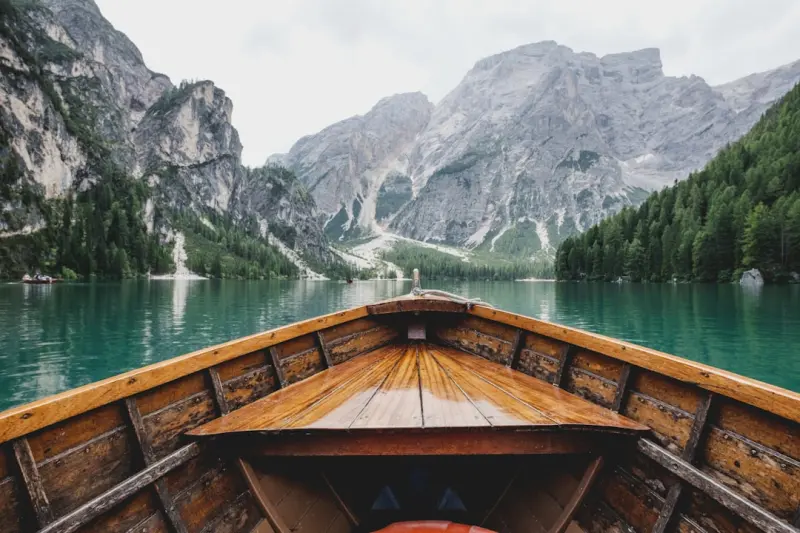
Travel as an Innovation Lab: Turning Business Trips into R&D Opportunities
When most professionals think about business travel, they picture cramped airline seats, rushed hotel check‑ins, and a never‑ending spreadsheet of expenses. I’ve spent enough time in airports and conference rooms to know that the default mindset is “just get the job done and get back home.” But what if you could flip that script? What if every trip—whether it’s a three‑day client visit or a week‑long industry summit—becomes a living laboratory for experimentation, learning, and product insight?
Why the Traditional View of Business Travel Is Outdated
In the past, travel was a necessary evil: a way to meet face‑to‑face with customers or partners when the only alternative was a phone call. Today, the digital toolbox is richer than ever, yet the physical experience of stepping into a new city still offers something no webinar can replicate. The old “travel = lost productivity” equation ignores three critical factors:
- Contextual immersion. Being in the environment where your customers live and work reveals pain points that surveys miss.
- Serendipitous inspiration. Unplanned conversations in airport lounges or local cafés often spark ideas that a scheduled meeting never would.
- Cross‑functional learning. Observing how teams in different cultures approach the same problem can unlock new processes for your own organization.
These advantages are not just feel‑good anecdotes; they translate into measurable outcomes—faster feature validation, richer product roadmaps, and even new revenue streams.
Designing Your Trip as a Mini‑R&D Sprint
Think of a business trip as a three‑phase sprint: Discovery, Experimentation, and Integration. Here’s a step‑by‑step playbook you can adapt to any itinerary.
1. Pre‑Trip Discovery: Set Intentional Learning Goals
Before you book your flight, ask yourself three questions:
- What specific customer problem do I want to observe?
- Which local expert or partner could give me a fresh perspective?
- What hypothesis am I testing, and how will I measure success?
Write these goals down in a shared document and circulate them with your team. This creates accountability and ensures you return with data, not just souvenirs.
2. On‑Ground Experimentation: Capture, Test, Iterate
During the trip, treat every interaction as a data point. Use a lightweight framework—think “Ask, Observe, Prototype”:
- Ask: Conduct quick, open‑ended interviews with customers, suppliers, or even competitors’ employees (when appropriate). Keep each conversation under 15 minutes to respect their time.
- Observe: Pay attention to the physical workflow: how do they move through a warehouse, what tools do they use, how do they handle paperwork?
- Prototype: Bring a small, tangible prototype (a wireframe, a paper sketch, a low‑fidelity demo) to test the concept on the spot. Even a simple “what if we did X?” can unlock a dialogue that validates or refutes your hypothesis.
Document everything in real time—photos, voice notes, or a quick sketch on your phone. The key is to capture the nuance that will disappear once you’re back at the office.
3. Post‑Trip Integration: Turn Insights into Action
When you return, schedule a debrief within 48 hours. Use a “Insight‑Action Matrix” to sort findings:
- Immediate Wins: Low‑effort changes you can implement now (e.g., tweaking onboarding copy based on a regional term).
- Strategic Experiments: Medium‑term tests that require a sprint cycle (e.g., A/B testing a new pricing model inspired by local market behavior).
- Long‑Term Opportunities: Major product pivots or new market entries that need deeper research.
Assign owners, set deadlines, and track progress in your usual project management tool. By treating travel insights as first‑class deliverables, you prevent them from slipping into the “nice‑to‑have” bucket.
Leveraging Local Culture for Product Innovation
Every city has its own rhythm, language, and set of unspoken rules. These cultural fingerprints can be gold mines for product teams. For example, a fintech startup I consulted discovered that in a particular market, users preferred “cash‑back” rewards over “points.” The insight came from a simple observation of how merchants displayed discounts on storefronts. The result? A new reward tier that boosted user acquisition by 12% in that region.
To systematically harvest cultural cues, consider the following “Cultural Lens” checklist:
- Communication style: Direct vs. indirect, formal vs. informal.
- Payment habits: Mobile wallets, cash‑only, subscription models.
- Time perception: Punctuality expectations, lead‑time for decision‑making.
- Regulatory quirks: Local compliance nuances that could affect product rollout.
Integrating these lenses into your discovery phase ensures you’re not just building for a generic user, but for the nuanced reality of each market you enter.
Turn Every Transit Hub Into a Playground of Discovery
Travel isn’t limited to the destination; the journey itself is a fertile ground for insight. Airports, train stations, and even rideshares are micro‑ecosystems where people interact with technology in unique ways. For a deeper dive on how to maximize these moments, check out Turn Every Transit Hub Into a Playground of Discovery. The article outlines practical tactics—like setting up a quick “pop‑up usability test” in a lounge—to capture real‑time feedback from a diverse audience.
Building a Travel‑Ready Knowledge Base
One of the biggest challenges after a trip is preserving the wealth of information you’ve collected. A fragmented set of screenshots, voice memos, and scattered notes quickly becomes useless. The solution? A centralized, searchable repository that tags each insight by location, customer segment, and hypothesis.
Here’s a quick framework you can roll out in a week:
- Tagging convention: Use a consistent schema—city_country_customerSegment_topic—to label each entry.
- Multimedia support: Store audio snippets, photos, and PDFs alongside textual notes.
- Searchability: Leverage a simple knowledge‑graph tool that lets you query “all insights from Berlin about onboarding friction.”
If you need inspiration on structuring such a system, the post Crafting a Personal Travel Archive: From Moments to Memories provides a solid blueprint that you can adapt for team use.
Travel‑Driven Team Building: The Power of Shared Experiences
Beyond the data, travel can strengthen team cohesion. A shared off‑site in a new city encourages informal bonding, breaking down silos that often form in remote work environments. Here’s a recipe for an effective travel‑focused off‑site:
- Morning: Insight workshops. Each team member presents a “travel insight” they captured, followed by rapid brainstorming.
- Afternoon: Cultural immersion activity. Join a local cooking class, attend a city tour, or volunteer for a community project. The experience fuels empathy and fresh thinking.
- Evening: Reflection round. Capture lessons learned and identify next steps on a shared board.
This blend of structured work and cultural immersion creates a narrative that the team can rally around, turning a routine trip into a memorable milestone.
Measuring the ROI of Travel‑Enabled Innovation
It’s natural to worry about the cost of flights and hotels. To justify the expense, tie travel outcomes to quantifiable metrics:
| Metric | How to Track |
|---|---|
| Feature validation speed | Days from hypothesis to prototype tested in the field vs. internal testing. |
| Customer acquisition impact | Conversion lift in regions where insights were applied. |
| Team engagement | Employee Net Promoter Score (eNPS) before and after travel‑based off‑sites. |
| Cost per insight | Total travel spend ÷ number of actionable insights generated. |
When you can demonstrate, for example, a 30% reduction in time‑to‑market for a new feature directly linked to a field observation, the ROI becomes undeniable.
Practical Tips for Sustainable, Low‑Stress Business Travel
While the focus here is on innovation, the experience needs to be sustainable and pleasant to keep the mind sharp:
- Pack light, pack smart. A capsule wardrobe reduces decision fatigue.
- Leverage local transit. Walking or biking not only keeps you healthy but also exposes you to street‑level insights.
- Choose eco‑friendly accommodations. Many hotels now publish carbon‑offset metrics—selecting them aligns your brand with sustainability values.
- Set boundaries. Block “no‑meeting” windows each day for reflection and note‑taking.
Future‑Proofing Your Travel Strategy
As hybrid work becomes the norm, the line between “remote” and “travel” blurs. Companies that embed travel into their continuous learning loop will out‑innovate those that treat it as a cost center. Consider institutionalizing a Travel Innovation Program where employees can apply for “exploration grants” to attend industry events, visit emerging markets, or simply spend a week immersed in a new culture.
In doing so, you turn travel from an occasional expense into a strategic engine for growth, creativity, and market relevance.
In summary, reimagining business travel as an innovation lab requires intentional planning, disciplined execution, and a system for capturing and acting on insights. When done right, every flight, train ride, and coffee shop conversation becomes a catalyst for product excellence and competitive advantage.

Robert Mathews is a professional content marketer and freelancer for many SEO agencies. In his spare time he likes to play video games, get outdoors and enjoy time with his family and friends .
Related Posts

Rediscovering the Joy of Slow Rail Travel
Step aboard historic trains, savor regional flavors, and forge lasting connections as we uncover why... Read More
Travel as a Personal Innovation Lab: Turning Trips into Experiments
Learn to design trips like a lab, using breathwork, digital detox, and biophilic hacks to turn trave... Read More
Taste Trails: Mapping the World One Dish at a Time
Explore a new travel mindset that uses food as a compass, creating personal flavor maps that lead to... Read More
Top Posts

Chasing Sunrises: A Journey Through the World’s Most Stunning Dawn Destinations
Join a sunrise seeker as they explore iconic dawn locations, from Angkor Wat to the Grand Canyon, and learn how early light can transform travel and productivit...Read More
Screen Fatigue Survival: Nutrition, Movement, and Mindset for SaaS Professionals
Learn how to protect your eyes, brain, and body from relentless screen time with practical nutrition tips, quick movement routines, and digital‑boundary strat...Read More
Riding Google’s AI Wave: Insights From a Marketer’s Frontline
Explore the impact of Google’s AI evolution on marketing, from content creation to local search, with practical tips to turn new features into growth opportun...Read More

How to Build a Low‑Noise Sanctuary at Home
Learn step‑by‑step techniques—from sealing gaps and adding heavy curtains to using smart home features and acoustic plants—to transform any room into a ...Read More
0 Comments
Post Comment
You will need to Login or Register to comment on this post!