

Why Sustainable Cloud Architecture Is the Next Competitive Edge for SaaS Leaders
When I first heard the buzzword “green cloud,” I imagined a fluffy data center perched on a cloud‑shaped hill, sprinkling carbon‑neutral pixie dust over every SaaS product. The reality, of course, is far less whimsical—but equally exciting. Sustainable cloud architecture isn’t just a nice‑to‑have CSR checkbox; it’s rapidly becoming a hard‑nosed business imperative that can tilt the competitive landscape.
The Hidden Cost of “Unlimited” Scaling
Most SaaS founders grew up with the mantra “scale without limits.” The cloud promised elastic resources, pay‑as‑you‑go pricing, and the illusion that you could spin up a thousand instances overnight without a second thought. Yet every extra CPU cycle, every terabyte of storage, and every gigabyte of data transferred leaves a carbon footprint.
According to the Green Web Foundation, the internet now accounts for roughly 4 % of global greenhouse‑gas emissions—a figure that is climbing as AI workloads and video‑intensive features become the norm. SaaS companies that ignore this trend risk not only regulatory backlash but also a reputational hit in a market where buyers are increasingly scrutinizing sustainability claims.
From Tokenism to Tangible Impact
Many organizations treat sustainability as a PR exercise: a banner on the website, a vague “we care about the planet” statement, and perhaps a donation to an environmental charity. While well‑intentioned, this approach rarely translates into measurable reductions in emissions.
True impact requires a deep dive into architecture, operations, and product design. It starts with answering three questions:
- Where does most of our energy use occur? Identify the hottest spots—compute, storage, networking, or even idle resources.
- Can we shift workloads to greener regions? Cloud providers now expose regional carbon intensity metrics; leveraging them can cut emissions dramatically.
- What trade‑offs are we willing to accept? Sometimes a slight increase in latency is a small price to pay for a 30 % reduction in carbon output.
Designing for Energy Efficiency
Energy‑efficient design begins at the code level. Languages and runtimes that demand fewer CPU cycles per request—think Rust or Go for backend services—can reduce power consumption without sacrificing performance. Serverless functions also shine here: they spin up only when needed, eliminating idle capacity.
But serverless isn’t a silver bullet. Cold starts can degrade user experience, and some workloads simply don’t fit the event‑driven model. The key is to adopt a mixed‑mode strategy—run latency‑critical services on optimized VMs, and push batch‑or‑heavy‑compute jobs into serverless or spot‑instance fleets.
Green Data Centers: Choosing the Right Cloud Partner
Not all cloud providers are created equal when it comes to sustainability. Some have pledged 100 % renewable energy for their data centers, while others rely heavily on fossil fuels. However, the devil is in the details:
- Do they publish real‑time carbon intensity data per region?
- Do they offer “sustainability‑first” regions, powered by wind or solar?
- How transparent are they about the lifecycle emissions of their hardware?
When you align with a provider that offers edge‑enabled SaaS capabilities, you gain the added benefit of processing data closer to the source, which reduces network hops and associated energy costs. Selecting a region with lower carbon intensity for edge workloads can double the sustainability gains.
Embedding Sustainability into the Development Lifecycle
Just as we embed security testing into CI/CD pipelines, we can weave carbon‑aware checks into our build process. Tools such as Carbon Aware SDKs let developers query the current carbon intensity of a region and defer non‑critical jobs to greener windows.
Imagine a nightly analytics batch job that normally runs at 2 AM. By consulting a carbon API, your orchestrator could delay execution until the grid is powered predominantly by renewable energy—perhaps at 4 AM or 6 AM—without any human intervention. Over time, these micro‑optimizations compound into substantial emission reductions.
The Role of Encryption and Data Governance
Security remains paramount, but traditional encryption methods can be computationally intensive, inadvertently increasing energy consumption. Emerging techniques like quantum‑safe encryption not only future‑proof your data against quantum attacks but also often leverage more efficient algorithms that can lower CPU usage.
Coupling robust encryption with intelligent data lifecycle policies—archiving cold data to cheaper, lower‑energy storage tiers—creates a win‑win: you protect sensitive information while trimming the energy appetite of your storage layers.
Measuring What Matters: Carbon Metrics That Speak to Stakeholders
Metrics are the language of decision‑makers. While IT teams love CPU usage charts, executives care about dollars saved and ESG scores. Translating kilowatt‑hours into CO₂e avoided and tying that to cost avoidance (e.g., lower energy bills, reduced carbon taxes) makes the sustainability story tangible.
Popular frameworks like the Greenhouse Gas Protocol now include a “Scope 3 – SaaS” category, covering emissions from third‑party services. By adopting these standards, you can publish a credible sustainability report that resonates with investors, customers, and partners alike.
Culture and Incentives: Making Sustainability a Team Sport
Technology alone won’t drive change. You need to nurture a culture where every engineer, product manager, and operations specialist feels ownership over carbon outcomes. Some companies have introduced “green sprints,” where teams compete to reduce the carbon footprint of a feature by a set percentage.
Reward structures can reinforce this behavior: bonuses linked to carbon reduction targets, recognition in all‑hands meetings, or even a “sustainability badge” on internal dashboards. When the whole organization internalizes the goal, the impact scales far beyond what a single team could achieve.
Case Study: A SaaS Platform’s Journey to Carbon‑Neutral Operations
Let’s walk through a hypothetical (yet realistic) transformation:
- Baseline Assessment: The company used a cloud‑provider‑agnostic monitoring tool to map energy consumption per microservice. They discovered that their video‑processing pipeline consumed 45 % of total compute energy.
- Optimization Sprint: By rewriting the pipeline in Rust and moving heavy transcoding tasks to spot instances, they cut compute energy by 30 %.
- Region Shift: They migrated the pipeline to a “green region” powered by hydroelectricity, reducing carbon intensity by another 20 %.
- Serverless Offload: Non‑critical thumbnail generation was moved to a serverless function that only ran during low‑carbon windows, slashing idle power draw.
- Reporting & Certification: Using the GHG Protocol, they quantified a 35 % reduction in Scope 3 emissions, earning a “Carbon Neutral” badge from a third‑party certifier.
The result? Not only did the company lower its carbon footprint, but it also saved 18 % on cloud spend—a compelling proof point that sustainability and profitability can be partners, not adversaries.
Future Trends: Where Sustainable Cloud Architecture Is Headed
Looking ahead, a few emerging forces will shape how SaaS companies approach sustainability:
- Carbon‑Aware Scheduling: Cloud providers will increasingly offer APIs that allow workloads to be automatically placed in regions with the lowest real‑time carbon intensity.
- Renewable‑Backed Spot Markets: As more data centers are powered by renewables, spot‑instance pricing will reflect the intermittency of green energy, encouraging workloads to align with solar or wind production peaks.
- Edge‑Centric Green Computing: The next wave of edge nodes will be co‑located with renewable micro‑grids, making the “edge‑enabled SaaS” model even more eco‑friendly.
- AI‑Driven Energy Optimization: Machine‑learning models will predict energy usage patterns and suggest refactoring opportunities, turning sustainability into a continuous, data‑driven process.
Actionable Checklist for SaaS Leaders
If you’re ready to embed sustainability into your product roadmap, start with this practical checklist:
- Audit Energy Consumption: Use cloud native tools (e.g., AWS Cost Explorer, Azure Monitor) to map energy use per service.
- Choose a Green Cloud Partner: Prioritize providers that publish regional carbon intensity data.
- Refactor High‑Energy Services: Migrate to efficient runtimes, serverless where appropriate, and consider spot instances.
- Implement Carbon‑Aware Scheduling: Leverage provider APIs to defer non‑critical jobs to low‑carbon windows.
- Adopt Sustainable Encryption: Transition to quantum‑safe encryption methods that balance security and energy use.
- Measure and Report: Align with GHG Protocol, publish transparent metrics, and seek third‑party verification.
- Incentivize Teams: Create green‑performance KPIs and reward carbon‑reduction milestones.
By tackling each item, you’ll not only shrink your carbon footprint but also unlock cost efficiencies, attract environmentally conscious customers, and future‑proof your platform against tightening regulations.
Conclusion: Sustainability as a Growth Lever
The narrative that sustainability is a cost center is rapidly fading. In the SaaS world, where margins are thin and competition fierce, the ability to deliver a greener product can be a decisive differentiator. From reducing operational expenses to strengthening brand trust, sustainable cloud architecture offers a multi‑dimensional payoff.
So the next time you hear “scale without limits,” ask yourself: scale responsibly, with the planet in mind. The tools are there, the data is available, and the market is listening. It’s time to make sustainable cloud architecture not just a buzzword, but the backbone of your growth strategy.

Related Posts

Quantum‑Ready SaaS: Future‑Proofing Your Cloud Stack
A practical guide for SaaS leaders to become quantum‑ready, covering post‑quantum cryptography, ... Read More

Composable Architecture: The New Blueprint for Agile SaaS Development
Composable architecture breaks monolithic SaaS into modular, API‑first components, enabling faster... Read More
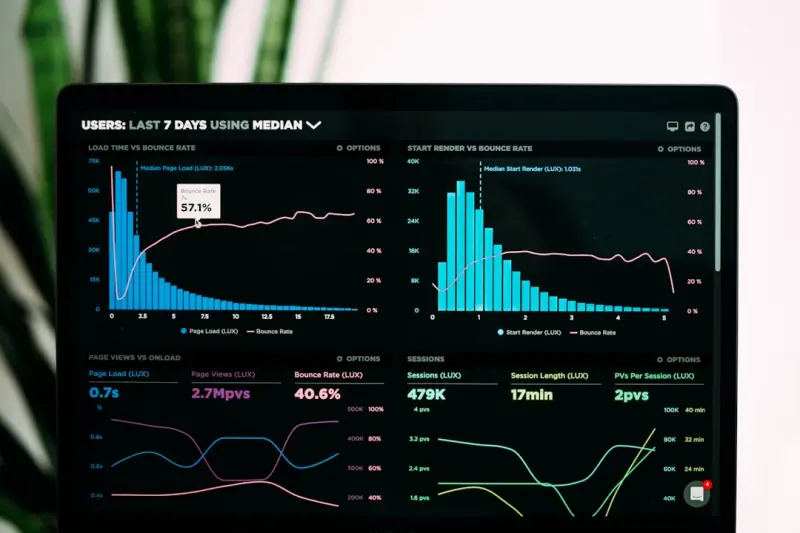
When AI Starts Designing Your Dashboard: The Generative UI Revolution
Generative UI lets AI create and personalize SaaS dashboards on the fly, cutting design time, boosti... Read More
Top Posts

Gamified Loyalty: Turning Customers into Brand Heroes
Learn why gamified loyalty programs are the next frontier in marketing, how to design winning game mechanics, and the metrics that prove their impact on revenue...Read More

From Data Clean Rooms to Consent‑First Personalization: Winning Strategies for a Cookieless Digital Landscape
Explore privacy‑centric tactics—data clean rooms, unified customer profiles, and consent‑first personalization—that let marketers thrive without thirdâ€...Read More

Building a Digital Second Brain: How AI Turns Your Notes into Actionable Insight
Learn how an AI‑driven digital second brain can organize your ideas, connect insights, and become a trusted ally for professionals seeking smarter knowledge m...Read More

Riding Google’s 2024 AI Wave: Insider Insights from Rose DesRochers
Rose DesRochers shares insider strategies for navigating Google’s 2024 AI wave, from semantic content creation to AI‑centric link building, helping brands r...Read More
0 Comments
Post Comment
You will need to Login or Register to comment on this post!