
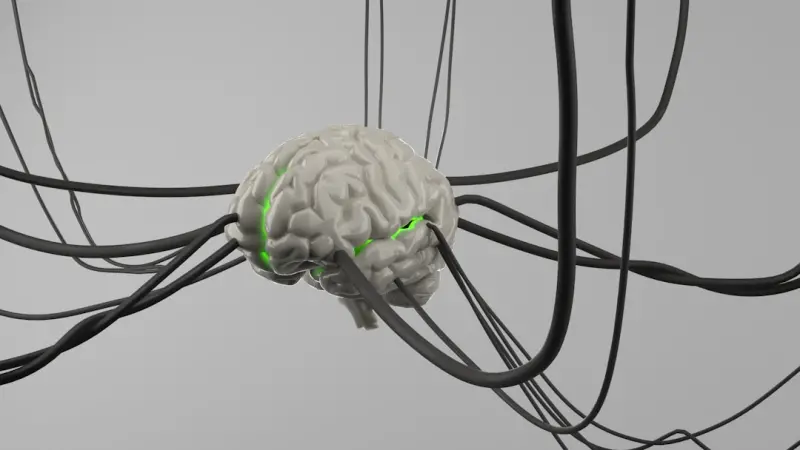
Why Your Brain Needs a Digital Companion
Every day we swallow a deluge of articles, research papers, meeting notes, and fleeting ideas that threaten to drown our mental bandwidth. Information overload isn’t just a buzzword; it translates into decision fatigue, missed opportunities, and a nagging feeling that we’re constantly playing catch‑up. The solution isn’t to consume less, but to give our minds a trusted ally that can sort, connect, and surface the right insight at the right moment.
The Knowledge Overload Crisis
Modern professionals juggle dozens of tools—email, Slack, project boards, cloud drives—each spawning its own silo of data. When those silos remain isolated, valuable context evaporates, forcing us to relearn or reconstruct connections that should have been preserved. By the time we finally locate that critical note from three months ago, the relevance has often faded, leaving us scrambling for a shortcut that never arrives.
Enter the Digital Second Brain
A digital second brain is an external repository that mirrors the way our biological brain creates associations, but with the speed and scale of a computer. It captures everything—from fleeting thoughts captured on a phone screen to deep‑dive research PDFs—then tags, links, and categorizes them automatically. This living knowledge graph becomes a personal AI‑driven assistant that can answer questions, suggest next steps, and even spark creative ideas without the mental overhead of manual organization.
AI Tools That Turn Raw Notes into Structured Insight
Today’s AI platforms can read your notes, extract entities, and weave them into a semantic network that evolves as you add more content. Applications like Obsidian AI, Notion’s AI, and Roam Research’s AI extensions not only summarize but also propose connections you never considered, effectively becoming AI as a creative collaborator. By leveraging large‑language models, these tools understand nuance, detect recurring themes, and surface insights that feel like a conversation with a seasoned colleague who never forgets a detail.
Seamlessly Integrating AI into Existing Workflows
The power of a second brain lies in its ability to sit quietly in the background, pulling data from your favorite apps via APIs, webhooks, or simple clipboard captures. You can dictate a thought into a voice memo, have it transcribed, and instantly see it linked to related project cards in your task manager. Because the AI operates on a continuous learning loop, the more you feed it, the sharper its recommendations become—turning a chaotic inbox into a curated knowledge hub without disrupting your established processes.
Concrete Benefits for Professionals and Creatives
When you stop hunting for information and start querying a cohesive knowledge base, productivity spikes dramatically; tasks that once took hours can be completed in minutes with AI‑generated summaries and action items. Creatives gain a well of inspiration, as the system surfaces unrelated but relevant concepts that ignite fresh perspectives. Moreover, teams benefit from a shared, searchable memory that reduces onboarding time, aligns terminology, and safeguards institutional knowledge against turnover.
Potential Pitfalls and Ethical Guardrails
Relying on AI to organize personal data raises privacy concerns—especially when third‑party services process sensitive notes on cloud servers. It’s essential to audit encryption standards, retain ownership of your data, and regularly review the AI’s suggestion biases to avoid echo chambers. Additionally, over‑automation can dull critical thinking if users accept AI recommendations without verification; the goal should always be augmentation, not replacement, of human judgment.
Looking Ahead: The Next Evolution of Knowledge Management
Future AI models promise deeper contextual awareness, allowing them to not only retrieve facts but also anticipate what you’ll need next based on project timelines and personal habits. Imagine an assistant that drafts a research outline the moment you finish a literature review, or that pre‑populates a presentation slide deck with relevant charts drawn from your stored data. These advances echo the transformation seen in AI‑powered search, where relevance is no longer static but dynamically personalized.
Getting Started Without Overwhelming Yourself
Begin by selecting one trusted note‑taking app and enable its AI extension, then commit to capturing every new idea for a single week. Watch how the system auto‑tags and links entries, and experiment with asking natural‑language queries like “What were my main takeaways from last month’s client calls?” Use those answers to plan your upcoming week, and gradually expand the ecosystem as confidence grows. In time, the digital second brain will become an invisible yet indispensable partner, freeing you to focus on the work that truly matters.

Paul Flynn is a versatile freelance writer equipped with a diverse skillset and a portfolio that reflects his wide-ranging interests and expertise. From crafting compelling website copy and engaging blog posts to delivering in-depth articles and meticulously researched reports, Flynn demonstrates a remarkable ability to adapt his writing style to suit various audiences and purposes.
Related Posts

When AI Becomes Your SaaS Team’s Silent Strategist
Discover how a discreet AI “silent strategist” can cut decision fatigue, surface unbiased insigh... Read More
AI‑Enhanced Knowledge Graphs: The Hidden Engine Driving Enterprise Insight
AI‑enhanced knowledge graphs turn fragmented enterprise data into a dynamic, self‑updating map, ... Read More

When AI Becomes Your Decision‑Making Ally: Turning Overwhelm into Insight
Explore a fresh approach to AI that focuses on reducing decision fatigue by surfacing contradictions... Read More
Top Posts

Zero-Click Search: Winning the SERP Without a Click
Zero‑click search is reshaping SEO. Discover practical tactics—from answering queries directly to mastering schema markup—so your brand thrives even when ...Read More

Ambient Computing: The Invisible Helpers Shaping Our Daily Lives
Discover the rise of ambient computing—how invisible sensors and edge AI turn ordinary environments into proactive, privacy‑focused assistants that enhance ...Read More

Unlocking Google Workspace as a Secret Weapon for SaaS Growth
Google Workspace isn’t just email and docs—its hidden features, add‑ons, and emerging AI capabilities can become a SaaS growth engine. Learn a step‑byâ€...Read More

Why Audio‑First Marketing Is the Next Frontier for SaaS Brands
Audio is emerging as a primary channel for SaaS brands to build trust and drive growth. This post explores why sound matters, the formats to use, integration ta...Read More
0 Comments
Post Comment
You will need to Login or Register to comment on this post!