
Why Quantum‑Safe Encryption Isn’t a Luxury Anymore
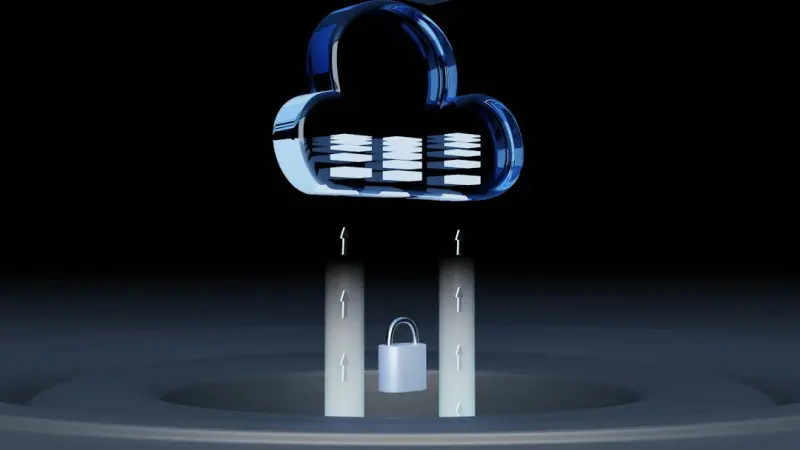
When I first heard the term “quantum‑safe,” I pictured a sci‑fi movie where data floated in a glowing cloud, guarded by laser‑armed bots. The reality is far less glamorous, but equally critical: the cryptographic foundations that protect every SaaS transaction today are on a collision course with the next wave of computing power. If you’re still relying on RSA‑2048 or ECC‑256 without a migration plan, you’re essentially leaving the back door wide open for the inevitable quantum breakthrough.
The Coming Disruption: A Quick Primer
Quantum computers aren’t just faster; they operate on fundamentally different principles—superposition and entanglement. This allows algorithms like Shor’s to factor large numbers exponentially faster than classical computers. In plain English: the mathematical problems that keep our encryption safe today become trivial for a sufficiently powerful quantum machine.
Most experts agree that a truly practical, fault‑tolerant quantum computer capable of breaking RSA‑2048 is still years away. But “years” in the world of SaaS can mean the difference between a seamless upgrade and a catastrophic breach. The edge‑enabled SaaS movement already teaches us that waiting for perfection is a recipe for obsolescence—security is no different.
What “Quantum‑Safe” Actually Means
Quantum‑safe (or post‑quantum) encryption refers to cryptographic algorithms that are resistant to attacks from both classical and quantum computers. The National Institute of Standards and Technology (NIST) is currently standardizing a suite of such algorithms, including lattice‑based, hash‑based, code‑based, and multivariate quadratic schemes. For SaaS providers, this isn’t just an academic exercise; it’s a roadmap to future‑proofing your platform.
Key Drivers for Early Adoption
- Regulatory pressure: Data protection regulations are tightening worldwide. Many upcoming frameworks explicitly call out “quantum‑resilient” measures as a compliance requirement.
- Customer trust: Enterprises are increasingly demanding proof that their vendors have a quantum‑ready security posture. Failure to demonstrate this can be a deal‑breaker.
- Supply‑chain risk: A breach at any tier of your technology stack can cascade. If a third‑party service still uses vulnerable cryptography, your entire ecosystem is exposed.
- Competitive advantage: Positioning your SaaS as quantum‑ready signals forward‑thinking engineering and can be a differentiator in crowded markets.
Mapping the Migration Path
Transitioning to quantum‑safe algorithms isn’t as simple as swapping out a cipher string. It requires a phased approach that balances security, performance, and continuity.
1. Inventory Your Cryptographic Assets
Start with a comprehensive audit: identify every data flow, storage location, and communication channel that relies on asymmetric encryption. Don’t forget the less obvious places—JWT signing, API keys, and even internal service‑to‑service calls.
2. Choose NIST‑Approved Candidates
While many research prototypes exist, only algorithms that have survived the rigorous NIST competition should be considered for production. As of the latest round, CRYSTALS‑Kyber (key encapsulation) and CRYSTALS‑Dilithium (digital signatures) are leading candidates.
3. Implement Hybrid Encryption
During the transition, run both classical and post‑quantum algorithms in parallel. This “hybrid” mode ensures interoperability with legacy clients while you roll out updates. Most modern TLS libraries now support hybrid handshakes.
4. Test Performance at Scale
Post‑quantum algorithms typically have larger key sizes and higher computational overhead. Conduct load tests that mirror your peak traffic to ensure latency stays within acceptable bounds. For latency‑sensitive SaaS products, consider offloading heavy crypto operations to dedicated hardware security modules (HSMs) that support the new algorithms.
5. Communicate with Your Users
Transparency builds trust. Draft clear communications that explain why the change is happening, the benefits, and any expected impact. Offering a migration window and detailed FAQs can smooth the process.
Practical Pitfalls to Avoid
Even with a solid roadmap, teams often stumble on common traps:
- Underestimating key management complexity: Larger keys mean more storage and potentially higher costs for key‑management services.
- Neglecting backward compatibility: Some older clients may not support hybrid handshakes, leading to broken integrations.
- Rushing without proper testing: A hastily deployed post‑quantum cipher can introduce subtle bugs, especially in multi‑tenant environments.
Quantum‑Safe Doesn’t Mean “Quantum‑Only”
While the headline focus is on preparing for quantum threats, the migration journey also brings ancillary benefits. For instance, many post‑quantum schemes are built on lattice structures that can double as foundations for homomorphic encryption—a promising avenue for secure data analytics in SaaS.
Integrating Quantum‑Safe Practices with Existing Security Layers
Think of quantum‑safe encryption as another tier in a defense‑in‑depth strategy. Pair it with zero‑trust networking, robust identity verification, and continuous monitoring. Speaking of data hygiene, the Zero‑Party Data framework underscores the importance of collecting only the data you truly need—reducing the attack surface for any future cryptographic compromise.
Case Study: A SaaS CRM’s Quantum Leap
A mid‑size CRM provider recently announced a pilot program to replace its RSA‑2048 based token signing with CRYSTALS‑Dilithium. The initiative unfolded in three phases:
- Prototype Development: Engineers built a sandbox environment using OpenSSL’s post‑quantum patches.
- Hybrid Rollout: Over six months, they introduced hybrid token signatures for internal APIs while keeping external client integrations on RSA, ensuring zero downtime.
- Full Migration: After extensive performance benchmarking, the firm switched all public‑facing endpoints to pure Dilithium signatures, shaving 12% off overall authentication latency thanks to optimized HSM offloading.
Post‑migration surveys showed a 15% increase in customer confidence scores, and the company leveraged this narrative in its sales deck to win several enterprise contracts that required quantum‑ready security.
Future Trends: Beyond Encryption
Quantum‑safe cryptography is just the tip of the iceberg. Upcoming advancements include:
- Quantum‑Resistant Identity Management: Integrating post‑quantum signatures into OAuth and SAML flows.
- Secure Multi‑Party Computation (MPC): Enabling collaborative analytics without ever exposing raw data.
- Quantum‑Ready AI Services: Protecting model weights and inference pipelines using lattice‑based schemes.
Putting It All Together: Your Action Checklist
To keep your SaaS platform ahead of the curve, adopt this concise checklist:
- Run a cryptographic asset inventory within 30 days.
- Select NIST‑approved post‑quantum algorithms for key exchange and signatures.
- Implement hybrid TLS handshakes in a staging environment.
- Conduct performance benchmarks at 150% of peak load.
- Update your key‑management policy to accommodate larger keys.
- Prepare a communication plan for customers and partners.
- Integrate quantum‑safe encryption with existing zero‑trust controls.
- Monitor NIST and industry updates for final algorithm selections.
Remember, the goal isn’t just to survive the quantum era—it’s to thrive in it. By embracing quantum‑safe encryption now, you’ll not only protect your data but also signal to the market that you’re a forward‑thinking partner capable of navigating tomorrow’s challenges.
Learning from Other Security Innovations
The journey mirrors other security evolutions we’ve chronicled, such as the rise of AI‑Powered Knowledge Bases. In both cases, early adopters reap the benefits of differentiation, while laggards risk obsolescence. The lesson is clear: security isn’t a checkbox; it’s a continuous, strategic investment.
Closing Thoughts
Quantum‑safe encryption may feel like a distant threat, but the technology adoption curve moves faster than many anticipate. As SaaS leaders, we have a responsibility to safeguard not just our own code, but the data ecosystems our customers entrust to us. By treating quantum readiness as a core product pillar—rather than an afterthought—you’ll future‑proof your platform, strengthen compliance, and build lasting trust in an increasingly uncertain digital landscape.

Paul Flynn is a versatile freelance writer equipped with a diverse skillset and a portfolio that reflects his wide-ranging interests and expertise. From crafting compelling website copy and engaging blog posts to delivering in-depth articles and meticulously researched reports, Flynn demonstrates a remarkable ability to adapt his writing style to suit various audiences and purposes.
Related Posts
The Rise of Synthetic Data: How SaaS Companies Can Train Models Without Real User Info
Synthetic data offers SaaS companies a privacy‑first, cost‑effective way to train and test AI mo... Read More

The Hardware Renaissance: Neuromorphic, Quantum‑Ready, and Sustainable Tech
A deep dive into how brain‑inspired processors, quantum‑ready systems, and sustainable materials... Read More

Composable SaaS: Building Modular Platforms for Unstoppable Innovation
A deep dive into composable SaaS, exploring how modular microservices, AI, and edge computing empowe... Read More
Top Posts

When Customers Become Co‑Creators: A New Playbook for B2B Marketing
Learn how inviting customers to co‑create content, campaigns, and product ideas can unlock deeper trust, accelerate innovation, and give B2B marketers a power...Read More

When AI Starts Designing Your Dashboard: The Generative UI Revolution
Generative UI lets AI create and personalize SaaS dashboards on the fly, cutting design time, boosting user adoption, and turning UI into a scalable competitive...Read More

When Machines Dream: The Surprising Role of AI in Creative Storytelling
Discover how AI is reshaping the art of storytelling, offering fresh collaboration, ethical guardrails, and innovative business models for modern writers....Read More

Zero‑Party Data: The Future‑Proof Strategy Brands Can’t Ignore
Zero‑party data lets consumers share preferences willingly, giving marketers a compliant, high‑quality insight source that fuels personalized experiences an...Read More
0 Comments
Post Comment
You will need to Login or Register to comment on this post!