
Reimagining Airport Time: Work‑Friendly Travel Hacks
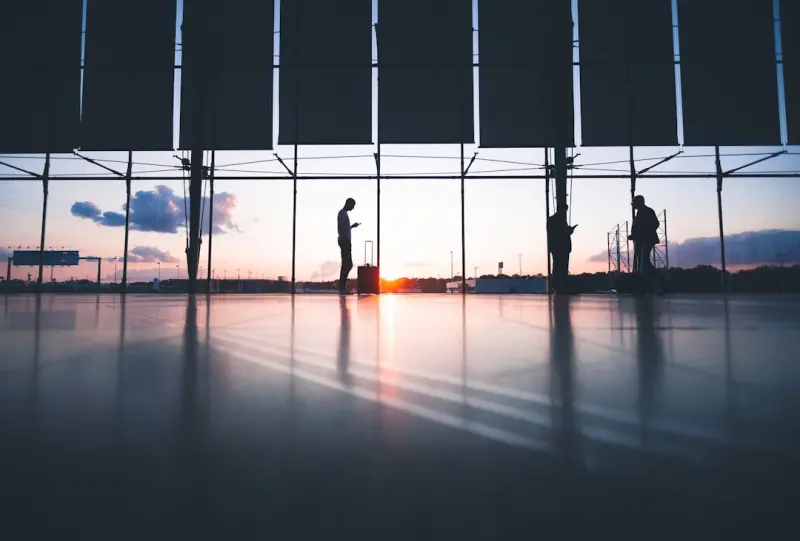
When I first stepped onto the polished tiles of an international hub, I felt the familiar rush of excitement mixed with a whisper of anxiety. The announcements, the bustling crowds, the endless rows of departure boards—each element seemed to shout, “You’re on the move!” Yet, nestled between gate A12 and the duty‑free perfume aisle, I discovered a hidden canvas for productivity, mindfulness, and even a dash of creativity. This post is my field guide to turning those fleeting airport moments into purposeful, sustainable work‑friendly experiences.
The Airport as a Transitional Workspace
Airports have long been viewed as mere waypoints, places to kill time while waiting for the next flight. For many, the default mode is to stare at a screen, scroll through social media, or, worse, succumb to jet‑lag‑induced fatigue. But what if we reframed the airport as a transitional workspace—a place where the kinetic energy of travel can be harnessed to power your projects, not just your passport?
- Micro‑Zoning on the Fly: Just as I apply micro‑zoning concepts at home, I can carve out functional zones within the terminal: a “focus nook” near a quiet gate, a “collaboration corner” by the coffee bar, and a “reset zone” beside a window with natural light.
- Portable Power Stations: Your gear needs to be as adaptable as your itinerary. A portable workstation isn’t just a laptop bag—it’s a curated set of tools that transform any surface into a productive desk.
- Time‑Chunking Strategies: Instead of viewing a two‑hour layover as a monolithic block, break it into 15‑minute sprints for emails, 30‑minute deep‑work bursts, and short mindfulness intervals. This rhythm mirrors the natural ebb and flow of airport activity.
Building a Sustainable Travel Routine
Travel can be exhilarating, but the cumulative stress of constant transitions often leads to burnout. Sustainability isn’t just about carbon footprints; it’s about preserving your mental and physical stamina over the long haul.
1. Pre‑Flight Rituals
Start with a pre‑flight prep ritual that sets the tone for the journey:
- Check the weather and lounge amenities at your destination airport. Knowing whether you’ll have access to quiet pods or natural light helps you plan your work blocks.
- Pack a “focus kit”: noise‑cancelling earbuds, a compact notebook, a reusable water bottle, and a portable charger. The act of assembling this kit signals to your brain that you’re entering a work‑ready state.
- Set a clear intention for the layover: “I will finish the client proposal draft and take a 10‑minute breathing exercise before boarding.”
2. In‑Terminal Micro‑Work Zones
Once you’re inside the terminal, scan the environment for spaces that match the micro‑zones you’ve identified:
- Focus Nook: Look for under‑used gate areas away from high‑traffic corridors. Bring a small, foldable privacy screen if you need visual separation.
- Collaboration Corner: If you need to hop on a quick call, the coffee shop’s communal tables provide a natural backdrop—just remember to use a headset to keep the environment respectful.
- Reset Zone: Near large windows or indoor gardens, stand, stretch, and let natural light reset your circadian rhythm. Even a brief 5‑minute walk along the concourse can reduce cortisol spikes.
3. Harnessing the Power of Ambient Sound
Airports are a symphony of announcements, rolling suitcases, and distant conversations. While some find this distracting, you can turn it into a productivity catalyst. Experiment with ambient soundscapes—download a playlist of low‑frequency “white noise” that blends with the terminal’s hum, or use a noise‑cancelling app that filters out the most disruptive frequencies.
The Science Behind Jet Lag and Cognitive Performance
Understanding the biology of jet lag can empower you to schedule your most demanding tasks strategically.
When you cross time zones, your circadian rhythm—governed by the suprachiasmatic nucleus in the brain—gets out of sync with external cues like light and meals. This misalignment can impair working memory, decision‑making, and even emotional regulation.
Here’s a quick, evidence‑based cheat sheet:
- Light Exposure: Seek bright light in the morning of your new timezone to advance your internal clock. Conversely, dim the lights in the evening to delay it.
- Hydration & Nutrition: Dehydration amplifies fatigue. Drink water consistently and opt for protein‑rich snacks to stabilize blood sugar.
- Strategic Naps: A 20‑minute power nap can boost alertness without triggering deep sleep inertia. Avoid naps longer than 90 minutes, which can push you into REM cycles and make you groggier.
By aligning your airport work sessions with these biological cues, you’ll notice a marked improvement in focus and output.
Gear That Turns Any Gate Into a Desk
Not all gear is created equal. Below are three categories of equipment that have transformed my own airport experience.
1. The Modular Laptop Stand
A collapsible, adjustable stand turns any flat surface—whether it’s a boarding gate bench or a café table—into an ergonomic workstation. Look for models with a built‑in cable manager to keep your chargers tidy.
2. The All‑In‑One Power Hub
Airports are notorious for mismatched power outlets. A compact hub with USB‑C, USB‑A, and AC ports eliminates the need to carry multiple chargers. Bonus points if it includes an e‑ink display that shows your device’s battery status at a glance.
3. The Travel‑Friendly Notebook
Even in a digital world, a small, high‑quality notebook can capture ideas that don’t fit on a screen. I swear by a pocket‑sized Moleskine with a rubber band—perfect for quick sketches or meeting notes while waiting for security.
Mindful Moments: Turning Downtime into Recharge
While the focus zones are essential for productivity, the “reset zones” are just as critical. Here’s how I incorporate mindfulness without drawing attention or missing my boarding call.
- 5‑Minute Breath Reset: Sit upright, place one hand on your chest and the other on your abdomen. Inhale for a count of four, hold for two, exhale for six. Repeat five times.
- Grounding with Senses: Identify three things you can see, two you can hear, and one you can touch. This simple practice anchors you in the present and reduces travel‑induced anxiety.
- Micro‑Movement: Perform a series of discreet stretches—neck rolls, shoulder shrugs, ankle circles—while standing in line for security. These movements improve circulation and keep stiffness at bay.
Case Study: From Layover to Launch
Last month, I faced a 6‑hour layover in Singapore’s Changi Airport, a terminal famed for its gardens and art installations. Instead of watching the clock, I applied the framework above:
- Pre‑Flight: I packed my portable workstation, set a goal to finalize a product pitch deck, and scheduled a 10‑minute mindfulness break.
- Micro‑Zoning: I claimed a quiet corner near the Jewel’s waterfall for my focus block, used the coffee bar for a quick collaborative call with a teammate, and took a stroll through the butterfly garden for my reset.
- Outcome: By the time I boarded, the pitch deck was polished, my mind felt refreshed, and I had captured a few photos of the garden that later inspired a blog post about “Nature‑Infused Creativity”.
This experience reinforced a simple truth: when you treat the airport as a dynamic workspace, every minute becomes an asset rather than a liability.
Putting It All Together: A Sample 3‑Hour Layover Blueprint
Feel free to adapt this template to your own travel style.
| Time | Activity | Purpose |
|---|---|---|
| 0–15 min | Locate a focus nook; set up portable workstation | Establish a distraction‑free zone |
| 15–45 min | Deep‑work sprint (e.g., draft email, outline report) | High‑value cognitive task |
| 45–55 min | 5‑minute breath reset + 5‑minute stretch | Recalibrate mental energy |
| 55–70 min | Collaborative call at coffee bar | Leverage social space for communication |
| 70–85 min | Quick review of inbox; prioritize next steps | Maintain workflow continuity |
| 85–95 min | Walk through a terminal garden or art exhibit | Stimulate creativity and reduce stress |
| 95–110 min | Second deep‑work sprint (e.g., finalize presentation slides) | Complete high‑impact deliverable |
| 110–120 min | Pack up, hydrate, double‑check gate information | Transition smoothly to boarding |
Future‑Proofing Your Travel Routine
As airports continue to evolve—integrating biometric boarding, AI‑driven wayfinding, and immersive lounge experiences—our approach to work on the go must evolve too. Keep an eye on emerging trends such as:
- Smart Seating: Seats equipped with built‑in power, adjustable height, and privacy screens.
- AR Navigation: Augmented‑reality overlays that guide you to the nearest quiet zone or power outlet.
- Wellness Pods: Private capsules offering guided meditation, aromatherapy, and low‑light environments for restorative breaks.
By staying adaptable and treating each terminal as a canvas for productivity, you’ll not only survive the turbulence of travel but thrive within it.
Final Thoughts
Travel is often romanticized as an escape from the office, but for many of us, the journey itself is the work. When you blend the principles of micro‑zoning, sustainable routines, and mindful breaks, you turn airports from dreaded waiting rooms into vibrant, purposeful hubs. The next time you hear that boarding call, remember: you have the power to transform that 30‑minute window into a catalyst for achievement.

In the world of freelance writing, where creativity and adaptability are paramount, Michelle Fisher stands out as a dedicated and versatile professional. With a passion for crafting compelling narratives and a keen eye for detail, Michelle has established herself as a trusted voice.
Related Posts

Beyond Checklists: Crafting a Living Travel Narrative
Learn to transform trips from static checklists into dynamic stories by choosing a narrative lens, s... Read More

Micro‑Escapes: The Power of Ultra‑Short Getaways in a Hyper‑Connected World
Micro‑escapes—brief, purposeful trips lasting a few hours to a weekend—are reshaping travel an... Read More
Why Micro‑Escapes Are the Next Travel Revolution
Micro‑escapes—brief, intention‑driven trips under three days—are reshaping how we recharge, ... Read More
Top Posts

The Hardware Renaissance: Neuromorphic, Quantum‑Ready, and Sustainable Tech
A deep dive into how brain‑inspired processors, quantum‑ready systems, and sustainable materials are redefining the tech landscape and what it means for inn...Read More

Gut Feelings: How Your Microbiome Shapes Mood and Immunity
Explore the powerful link between your gut microbiome and overall well‑being. Learn science‑backed habits, foods, and tech tools to boost mood, immunity, an...Read More

Bite‑Sized Adventures: Redefining Travel Through Hyperlocal Discovery
Travel is shifting from massive itineraries to bite‑sized adventures that focus on hyperlocal discovery, community immersion, and spontaneous storytelling, of...Read More

Riding the Wave of Google’s Search Generative Experience: A SaaS Playbook
This post explores Google’s Search Generative Experience (SGE) and its impact on SaaS companies, offering concrete strategies for content, structured data, an...Read More
0 Comments
Post Comment
You will need to Login or Register to comment on this post!