

Why the Searcher Journey Should Be the Heartbeat of Your SEO Strategy
Every day, millions of professionals type a question into a search box, expecting an answer that feels personal and immediate. For most B2B SaaS marketers, the usual SEO playbook—keywords, backlinks, and meta tags—still feels like building a house without a floor plan. What if we flipped the script and started with the searcher’s journey itself? By mapping how a prospect moves from the seed of curiosity to a purchase decision, you can architect SEO assets that grow, adapt, and stay relevant long after the algorithm changes. This isn’t a gimmick; it’s a systematic approach that aligns content, technical signals, and user experience into a living blueprint.
From Linear Funnels to Dynamic Paths
Traditional funnels paint a linear picture: awareness → consideration → decision. In reality, a modern buyer’s path resembles a mesh of intersecting routes—search queries, community discussions, product demos, and even competitor research. Each touchpoint generates its own set of signals that search engines interpret as “relevance.” If you treat SEO as a static checkpoint, you miss the chance to capture value from those ancillary paths. By acknowledging the dynamic nature of the journey, you can strategically place content that speaks to each micro‑moment, ensuring that you own more real‑estate in the organic landscape.
Charting the Journey: The Data-First Toolkit
Mapping the journey starts with data, not intuition. Pull together:
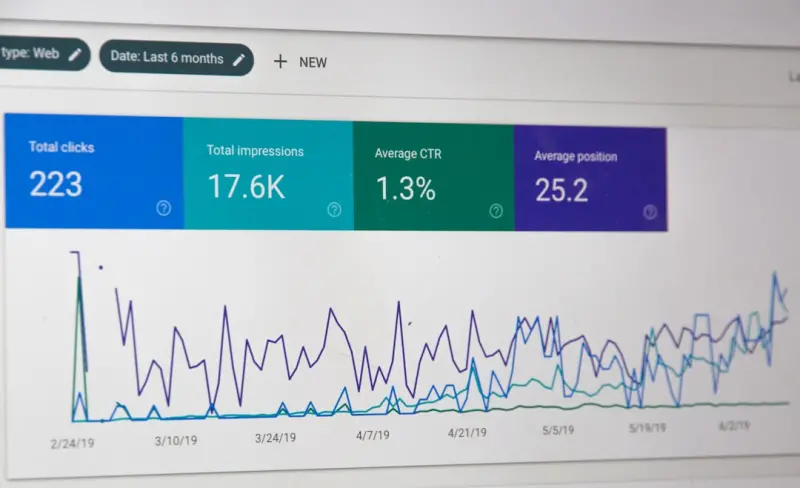
- Search console insights to see which queries bring users to your site and where they drop off.
- Behavioral analytics (heatmaps, scroll depth) to understand how users engage once on page.
- CRM and marketing automation data to trace downstream actions like trial sign‑ups or demo requests.
When you overlay these datasets, patterns emerge—clusters of queries that funnel into the same downstream conversion events, or “content deserts” where a promising keyword has no matching asset. This evidence‑based map becomes the foundation for a modular SEO architecture, where every piece of content is a reusable, rank‑ready component.
Modular SEO: Borrowing from Modular Momentum
If you’ve read about composable architecture in SaaS, you already know the power of building with interchangeable parts. Apply the same principle to SEO: instead of siloed landing pages, think in terms of “content modules”—FAQ snippets, how‑to videos, data visualizations, and case studies—that can be dropped into multiple contexts. A well‑structured FAQ module can surface in a support article, a product page, and a blog post, each time targeting a slightly different intent but sharing the same underlying schema. This approach not only scales efficiently but also creates a robust internal linking web that search bots love, reinforcing topical authority across the site.
Semantic Grouping: The Bridge Between Intent and Architecture
Search engines are moving beyond exact‑match keywords toward a more nuanced understanding of topics. Semantic grouping—clustered content around a core concept—helps you signal depth and breadth to the crawlers. To implement it, start with a topic pillar that aligns with a high‑value business outcome (e.g., “remote team collaboration”). Then, flesh out supporting pieces that answer related questions: “best virtual whiteboards,” “security for distributed workforces,” and “pricing models for collaborative SaaS.” Each node should interlink using descriptive anchor text, creating a lattice that guides both users and crawlers through the journey.
Structured Data: Not the End, But the Amplifier
We’ve all seen the buzz around schema markup, and it’s easy to treat it as a one‑off task. In the context of a searcher‑journey map, structured data becomes a multiplier. By consistently annotating every content module—FAQ, product, review—you equip the SERP with rich signals that can surface in diverse formats: featured snippets, carousel cards, or even voice‑assistant responses. This amplification is why Why Structured Data Is the Quiet Engine Driving B2B SaaS Visibility is a critical read; it shows how a granular, systematic approach to schema can push you from the shadows into prime real estate across search experiences.
Voice Search and Conversational Queries: The Emerging Frontier
As more professionals rely on virtual assistants for quick answers, the search landscape is morphing toward natural language. Voice searches tend to be longer, question‑oriented, and intent‑rich. To future‑proof your map, sprinkle conversational phrasing throughout your modules. Turn “remote team collaboration software” into “what’s the best software for remote team collaboration?” and answer it concisely in a featured‑snippet‑friendly paragraph. Pair this with schema.org’s FAQPage or HowTo types, and you’ll increase the odds of being the voice‑assistant’s go‑to source.
Testing the Map: Agile Experiments Over Static Audits
SEO is often treated as a once‑a‑year audit, but a journey map demands an agile mindset. Set up short‑cycle experiments:
- Content swap tests: Replace a paragraph with a more conversational tone and measure CTR changes.
- Internal linking rotations: Re‑anchor certain modules to new parent pages and watch the flow of link equity.
- Schema toggles: Add or remove specific schema types and observe the impact on SERP features.
Track outcomes in a dedicated SEO dashboard, then iterate. Over time, the map itself evolves, reflecting real user behavior instead of static assumptions.
Integrating the Journey into Product Roadmaps
One of the biggest missteps is keeping SEO in a silo separate from product development. When the journey map highlights a gap—say, “prospects ask about GDPR compliance before evaluating pricing”—that insight should feed directly into your product’s documentation or feature prioritization. A close partnership between SEO, product, and customer success ensures that the content you create not only ranks but also reduces friction in the funnel, leading to higher qualified‑lead conversion rates.
Measuring Success: Beyond Rankings
Traditional SEO metrics—rankings, organic traffic—remain important, but they’re only part of the picture. For a journey‑centric strategy, focus on:
- Micro‑conversion rates: Click‑throughs from a blog post to a demo request.
- Time‑on‑page for intent‑matching modules: Indicates content relevance.
- Path‑completion velocity: How quickly a user moves from an informational query to a trial sign‑up.
By aligning these metrics with business outcomes, you can prove SEO’s ROI in terms that senior leadership cares about—revenue growth, customer acquisition cost, and churn reduction.
Bringing It All Together: A Blueprint for Action
To turn the theory into practice, follow this three‑step playbook:
- Map the current journey. Use data sources to chart existing touchpoints and identify gaps.
- Modularize content. Build reusable SEO modules, annotate them with schema, and interlink semantically.
- Iterate aggressively. Launch micro‑experiments, measure against journey‑focused KPIs, and refine the map continuously.
The payoff is a resilient, self‑reinforcing SEO ecosystem that adapts to algorithm updates, shifts in user intent, and new search formats. In a world where search engines are increasingly acting as “experience curators,” owning the searcher journey is your most strategic advantage.

Shawn DesRochers is a certified Microsoft technician and Programmer with 30+ year's experience. He has written many reviews on computer related products, software, and SEO related topics. When he's not writing reviews he can be found at one of the Oldest Directories Online Business Directory USA which he is the CEO of.
Related Posts

When Your SaaS Gets Heard: A Voice‑Search Playbook for B2B Growth
Voice search is reshaping B2B buyer behavior. This guide walks SaaS marketers through conversational... Read More

Conversational SEO: Optimizing for AI Assistants and Chatbots
Discover how to future‑proof your SEO with conversational tactics, schema markup, and intent clust... Read More

Why Progressive Web Apps Are the SEO Game‑Changer You Need
Progressive Web Apps blend native app speed with web accessibility, delivering faster load times, hi... Read More
Top Posts

Google Workspace Hacks That Supercharge B2B SaaS Teams
Learn practical Google Workspace automations, data‑driven dashboards, and cultural practices that turn everyday tools into a growth engine for B2B SaaS teams....Read More
Unlocking SEO Success with Visual Search and User‑Generated Video
Learn how to harness visual search and authentic user videos to dominate SERPs, improve rankings, and connect with audiences through a mobile‑first, data‑dr...Read More

Riding the Google AI Wave: A Marketer’s Insider Perspective
Explore how Google’s AI surge is transforming marketing—from search intent to ad automation. Learn insider strategies to harness the wave and future‑proof...Read More

Riding Google’s AI Wave: A Marketer’s Personal Playbook for Staying Human
A marketer’s guide to leveraging Google’s AI without losing authenticity—practical steps, case studies, and ethical tips for staying human in a tech‑hea...Read More
0 Comments
Post Comment
You will need to Login or Register to comment on this post!