
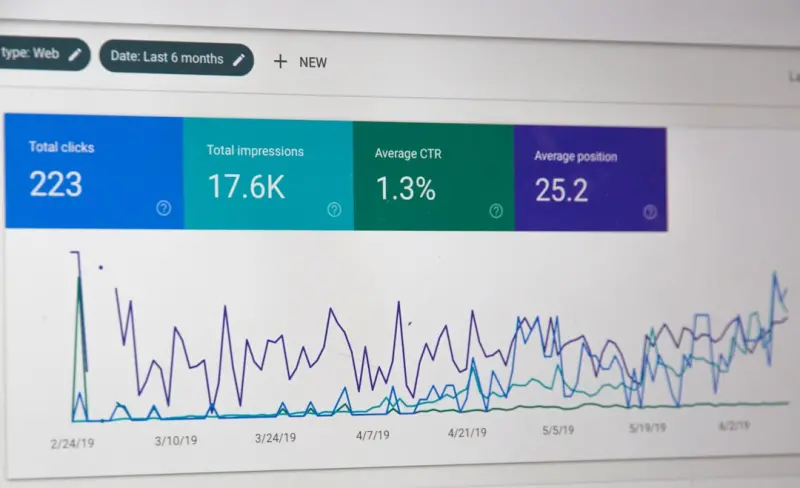
Why Voice Search Matters for SaaS
When I first heard a colleague ask, “Hey Siri, what’s the best project‑management tool for remote teams?” I realized I was witnessing a paradigm shift. Voice assistants have moved from novelty gadgets to primary discovery engines for many professionals. In the B2B world, the stakes are higher: a single spoken query can route a procurement decision straight to a competitor’s landing page if your content isn’t ready for it. That’s why voice search isn’t just another SEO checkbox—it’s a strategic imperative that can reshape how SaaS companies attract, educate, and convert.
Understanding the Conversational Query Landscape
Traditional keyword research taught us to think in fragments: “project management SaaS,” “API pricing,” “team collaboration tools.” Voice, however, mirrors human conversation. People ask full‑sentence questions, often prefixed with “how,” “what,” “why,” or “which.” For example:
- “How do I automate my sales pipeline without writing code?”
- “What’s the difference between tier‑one and tier‑two SaaS security?”
- “Which CRM integrates best with Zapier for e‑commerce?”
These queries are intent‑rich and demand answers that feel natural. The challenge is twofold: surface the right content in a voice‑friendly format, and ensure the search engine trusts your brand as the authoritative voice.
Technical Foundations: Structured Data & Speed
Google’s voice engine relies heavily on structured data to extract concise answers. If you’ve already invested in semantic topic modeling, you’re halfway there. Extend that work by embedding FAQPage, HowTo, and Product schema directly onto your help center, pricing pages, and feature overviews. Here’s why:
- Snippet eligibility: Structured markup signals to Google that your content can be used for featured snippets—prime real‑estate for voice answers.
- Speed advantage: Voice assistants favor pages that load under two seconds. Use server‑side rendering, lazy‑load non‑critical assets, and compress images to keep the “time to audible answer” razor‑thin.
- Contextual relevance: Rich schema gives the engine contextual clues (e.g., product name, price, rating) that help it match the user’s spoken intent more accurately.
Content Strategies for Voice
Switching from “keyword‑centric” to “conversation‑centric” content means re‑thinking how you write for your audience. Below are tactics that have worked for my own SaaS products:
- Answer‑first paragraphs: Begin each section with a concise, direct answer (one to two sentences) before expanding. Voice assistants can pull that sentence verbatim for the spoken result.
- Natural language headings: Use question‑style H2s—e.g., “What is a zero‑trust architecture?”—that echo the phrasing users employ when speaking.
- Long‑tail conversational FAQs: Populate your knowledge base with real user queries captured from support tickets and sales calls. Each FAQ becomes a potential voice snippet.
- Multimedia support: Pair text with short, captioned videos. Google increasingly surfaces video content for voice queries, especially when the video is hosted on your domain.
Remember, voice isn’t about stuffing your copy with “how to” or “what is” repeatedly. It’s about providing the clearest, most authoritative answer in the most digestible form.
Leveraging AI Tools for Voice Optimization
Artificial intelligence has become the co‑pilot of modern SEO workstreams. The AI Co‑Pilot I’m using today can scan my entire documentation library, surface the most common spoken queries, and suggest schema snippets in seconds. Here’s a quick workflow I follow:
- Data ingestion: Feed the AI tool with support chat logs, sales call transcripts, and product demo scripts.
- Query clustering: The model groups similar spoken questions, highlighting high‑volume intent clusters.
- Content mapping: For each cluster, the AI recommends existing pages to optimize or flags gaps that need new “voice‑ready” content.
- Schema generation: The tool auto‑generates JSON‑LD blocks tailored to the identified question type (FAQ, HowTo, Product).
- Performance monitoring: Integrated dashboards track snippet impressions and voice‑originated traffic over time.
This loop reduces manual research hours by 70 % and ensures that the content you produce aligns precisely with how your prospects speak.
Measuring Success in a Voice‑First World
Traditional SEO metrics—organic clicks, impressions, bounce rate—still matter, but voice adds new dimensions to the reporting suite. Focus on:
- Voice‑originated sessions: Google Search Console now surfaces “Voice Search” as a traffic source. Track growth month over month.
- Featured snippet capture rate: The percentage of your target questions that appear as snippets (the primary voice answer format).
- Time‑to‑answer metric: Measure how quickly users navigate from the voice result to a deeper interaction (e.g., a free‑trial signup).
- Micro‑conversion uplift: Observe lift in demo requests or newsletter sign‑ups that originate from voice‑driven pages.
Combine these with qualitative feedback from sales reps who notice a surge in inbound calls that reference the exact phrasing you optimized for. That’s the real proof that voice is moving the needle.
Putting It All Together: A Tactical Checklist
To turn theory into action, here’s my go‑to checklist for any SaaS SEO campaign that wants to be voice‑ready:
- Audit existing schema: Ensure every product, pricing, and FAQ page has up‑to‑date markup.
- Identify conversational gaps: Use AI‑driven query clustering on support tickets, community forums, and sales logs.
- Rewrite for answer‑first: Edit top‑ranking pages so the first two sentences directly answer a likely spoken question.
- Optimize for speed: Leverage CDN, HTTP/2, and image compression to hit sub‑2‑second load times.
- Expand the FAQ library: Publish at least one new, voice‑optimized FAQ per week targeting high‑volume queries.
- Leverage internal linking: Connect new FAQs to core product pages with anchor text that mirrors spoken intent.
- Monitor and iterate: Set up a monthly dashboard in Google Search Console and your AI tool to track snippet impressions and voice sessions.
By treating voice as a distinct channel rather than a subset of traditional search, you position your SaaS brand as the go‑to authority for the very questions your prospects ask in real time.
Future‑Proofing with Sustainable Practices
While voice search is a technological frontier, it also intersects with broader ESG considerations. Companies that host their content on carbon‑neutral platforms—like the ones highlighted in Turning Google’s Carbon‑Free Energy Credits into a Competitive Edge for SaaS—gain an extra layer of trust. Search engines increasingly factor sustainability signals into ranking algorithms, and a greener hosting footprint can subtly boost your voice visibility.
Final Thoughts
Voice search isn’t a passing trend; it’s the next logical evolution of how professionals discover solutions. For SaaS companies, ignoring it means ceding conversational real‑estate to competitors who have already optimized for “hey Google, find me a low‑code automation platform.” By aligning your technical foundation, content strategy, and AI‑powered workflows, you can ensure that when a prospect asks a question out loud, the answer comes from your brand—clearly, quickly, and authoritatively.

Dale Peterson is a freelance writer with a passion for technology, travel, law and personal finance. With 10 years of experience crafting compelling and informative content, he's dedicated to delivering high-quality writing for Blogging Fusion that engages audiences and achieves specific goals.
Related Posts

Semantic SEO for SaaS: Building Topic Authority Beyond Keywords
Learn to move beyond keyword checklists and build a semantic SEO framework that maps topic clusters,... Read More

AI‑Powered Topic Modeling: A New Frontier for SEO Authority
Explore the power of AI‑generated topic clusters to transform your SEO approach, improve content s... Read More

Why Semantic SEO Is the Quiet Engine Driving B2B SaaS Visibility
Semantic SEO moves beyond keywords to map user intent, structured data, and AI insights, giving B2B ... Read More
Top Posts
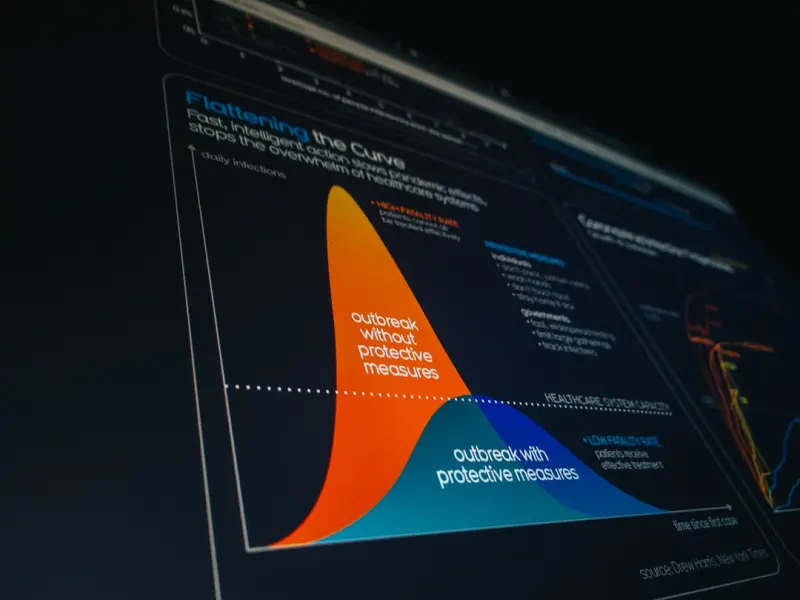
AI‑Powered Knowledge Graphs: The Secret Sauce for SaaS Insight
AI‑powered knowledge graphs turn fragmented SaaS data into a unified, queryable map of relationships, enabling predictive churn alerts, dynamic pricing, and s...Read More

Augmented Reality Experiences: The Next Frontier for Digital Marketers
Explore why AR is essential for modern marketers, learn a step‑by‑step framework, and see real‑world examples that turn virtual try‑ons into measurable ...Read More
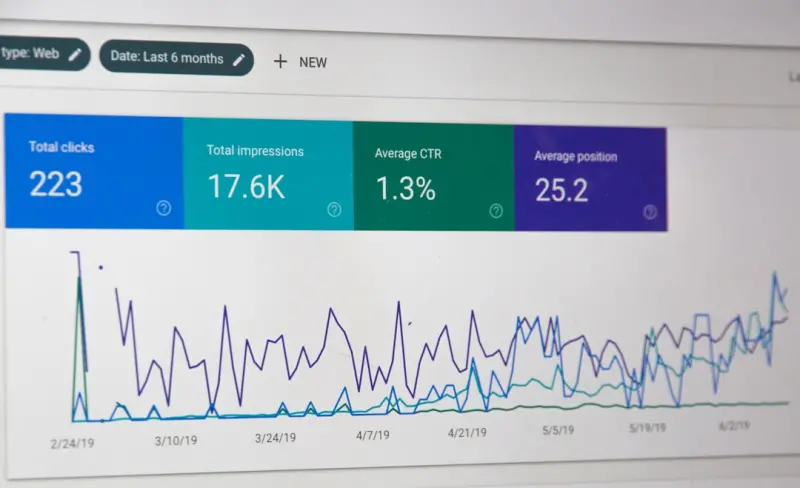
Beyond Search: How Google’s New Attribution Suite is Redefining Marketing ROI
Google’s new Attribution Suite gives B2B SaaS marketers a data‑driven view of every touchpoint, turning guesswork into measurable ROI and aligning product, ...Read More

Unlocking Mood and Immunity: How Fermented Foods Rewire Your Brain
Explore the powerful link between fermented foods, gut microbiome, and mental health, and learn simple, science‑backed steps to transform your mood and immuni...Read More
0 Comments
Post Comment
You will need to Login or Register to comment on this post!