
From Guesswork to Insight: How AI Is Transforming Product Discovery
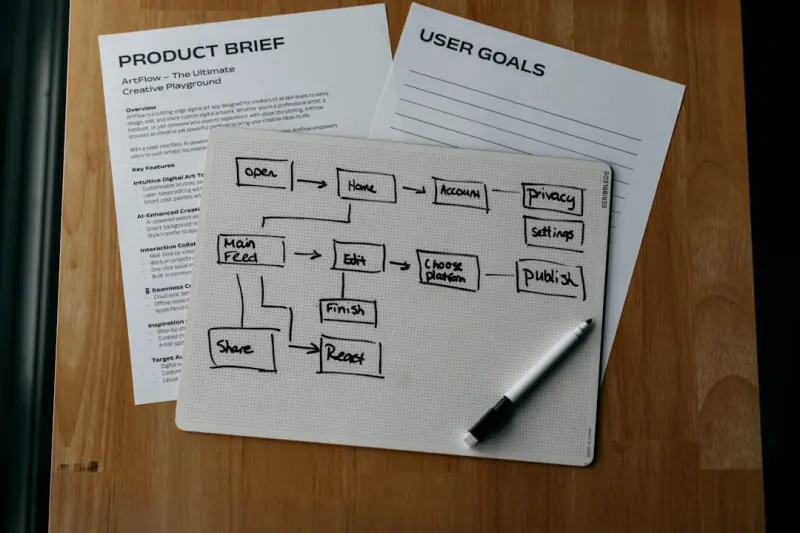
When I first joined a fast‑growing SaaS startup, the product roadmap was a living document scribbled on a whiteboard during late‑night brainstorming sessions. Ideas were filtered through intuition, customer calls, and the occasional spreadsheet. Fast forward a few years, and the same team now leans on a quiet, tireless partner that never sleeps: an AI engine that translates raw user signals into clear, actionable feature proposals. This shift from guesswork to insight isn’t a futuristic fantasy—it’s happening right now, and it’s reshaping how we think about product discovery.
The Blind Spots of Traditional Roadmapping
Traditional roadmapping often suffers from three blind spots:
- Latency. By the time a trend surfaces in support tickets or NPS surveys, the market may have already moved on.
- Bias. Human decision‑makers tend to champion ideas that align with their own experiences, inadvertently sidelining novel opportunities.
- Scale. As a SaaS product grows, the volume of usage data explodes. Manually sifting through millions of events is simply impossible.
These challenges lead to missed opportunities, delayed releases, and a perpetual “react‑instead‑of‑proact” cycle. The good news is that AI, when applied thoughtfully, can illuminate these blind spots and turn them into competitive advantages.
AI’s Three‑Stage Playbook for Product Discovery
At its core, AI‑driven product discovery follows a three‑stage playbook: Signal Capture, Pattern Synthesis, and Predictive Prioritization. Let’s unpack each stage.
1. Signal Capture: Mining the Data Goldmine
Every click, keystroke, and API call is a data point. Modern SaaS platforms generate terabytes of telemetry daily—from feature usage heatmaps to time‑to‑value metrics. AI models excel at aggregating these disparate signals into a unified, high‑resolution view of how customers actually interact with the product.
One practical approach is to embed lightweight event collectors directly into the UI, feeding anonymized streams into a secure data lake. From there, synthetic data techniques can augment real‑world logs, preserving privacy while expanding the training set for downstream models.
2. Pattern Synthesis: Turning Noise into Narratives
Once the data is collected, the real magic begins. Machine‑learning algorithms—particularly clustering and sequence‑modeling techniques—detect hidden usage patterns. For instance, a recurrent sequence where users first explore a dashboard, then jump to an export function, might reveal an unmet need for a combined reporting view.
Natural language processing (NLP) also plays a role. By analyzing support tickets, community forums, and churn surveys, AI can surface recurring pain points that surface in plain language. These textual insights, when linked back to quantitative usage trends, create a rich narrative that tells you not just what users are doing, but why.
3. Predictive Prioritization: From Insight to Action
Insight alone isn’t enough; product teams need to decide which ideas to ship first. Predictive models assess the potential impact of a new feature by simulating adoption curves based on historical data. Bayesian inference, for example, can estimate the probability that a proposed enhancement will improve key metrics such as user retention or average revenue per user (ARPU).
What sets AI‑driven prioritization apart is its ability to weigh trade‑offs in real time. If a feature promises high adoption but also incurs significant engineering effort, the model can surface a cost‑benefit ratio, allowing product managers to make data‑backed trade‑off decisions without lengthy debates.
Embedding AI into Your Product Development Cycle
Integrating AI doesn’t require a complete overhaul of your existing workflows. Here’s a practical roadmap for SaaS teams:
- Start Small. Identify a high‑impact area—perhaps a churn‑prone segment—and pilot an AI model that predicts churn drivers.
- Leverage Existing Infrastructure. Most modern SaaS stacks already have event pipelines (Kafka, Kinesis) and analytics layers (Snowflake, BigQuery). Plug AI models into these pipelines to avoid reinventing the wheel.
- Adopt a composable architecture. By decoupling data ingestion, model training, and inference as independent services, you gain flexibility to iterate on each component without disrupting the whole system.
- Close the Loop. Deploy model insights directly into product management tools (Jira, Asana) using automation bots that create feature tickets with AI‑generated hypotheses.
- Iterate and Validate. Treat AI suggestions as hypotheses. Run A/B tests or beta programs to confirm impact before full rollout.
Real‑World Success Stories
Several SaaS pioneers have already embraced AI‑driven product discovery and reported measurable gains:
- Customer Success Platform. By analyzing usage sequences, the AI identified that users who frequently switched between the “Insights” and “Export” modules were yearning for a bulk export feature. After releasing the feature, the company saw a 12% lift in monthly active users.
- Collaboration Tool. NLP analysis of support tickets highlighted recurring frustration around version control. Predictive modeling showed a high adoption likelihood for a built‑in document history feature, which subsequently reduced churn by 8%.
- Analytics SaaS. Synthetic data was used to train a recommendation engine that suggested new dashboard templates based on industry benchmarks. Customers reported a 20% reduction in time‑to‑value.
Addressing Common Concerns
Privacy & Security. The use of real user data inevitably raises privacy questions. Employing differential privacy and synthetic data generation can mitigate risk while preserving analytical fidelity.
Model Transparency. Stakeholders often fear “black‑box” decisions. Providing explainability dashboards—showing which data points drove a recommendation—builds trust and facilitates cross‑functional alignment.
Resource Constraints. Running large‑scale AI workloads can be costly. Cloud‑native services with spot‑instance pricing or managed AI platforms can keep budgets in check.
The Human‑AI Partnership
AI is not a replacement for product intuition; it’s a catalyst that amplifies it. The most successful teams treat AI as a collaborative teammate—one that surfaces patterns you might miss, but still relies on your domain expertise to interpret and act. This partnership yields a virtuous cycle: as product teams ship AI‑informed features, new usage data feeds back into the models, continuously sharpening their predictive power.
Looking Ahead: The Future of AI‑Powered Product Discovery
We’re only scratching the surface of what’s possible. Emerging trends to watch include:
- Generative Design. AI that not only suggests features but auto‑generates UI mockups based on user flows.
- Cross‑Product Insight. Models that synthesize signals across multiple SaaS products in a portfolio, revealing ecosystem‑level opportunities.
- Real‑Time Adaptive Roadmaps. Continuous delivery pipelines that adjust feature priorities on the fly as AI detects shifting user behavior.
When these capabilities mature, product discovery will become a truly predictive science—one where intuition and data co‑exist in harmony.
In the meantime, the actionable takeaway is clear: start collecting the right signals, build a modest AI pipeline, and let the data speak. Your next breakthrough feature may already be lurking in the streams of user events, waiting for an intelligent eye to bring it to light.

In the world of freelance writing, where creativity and adaptability are paramount, Michelle Fisher stands out as a dedicated and versatile professional. With a passion for crafting compelling narratives and a keen eye for detail, Michelle has established herself as a trusted voice.
Related Posts
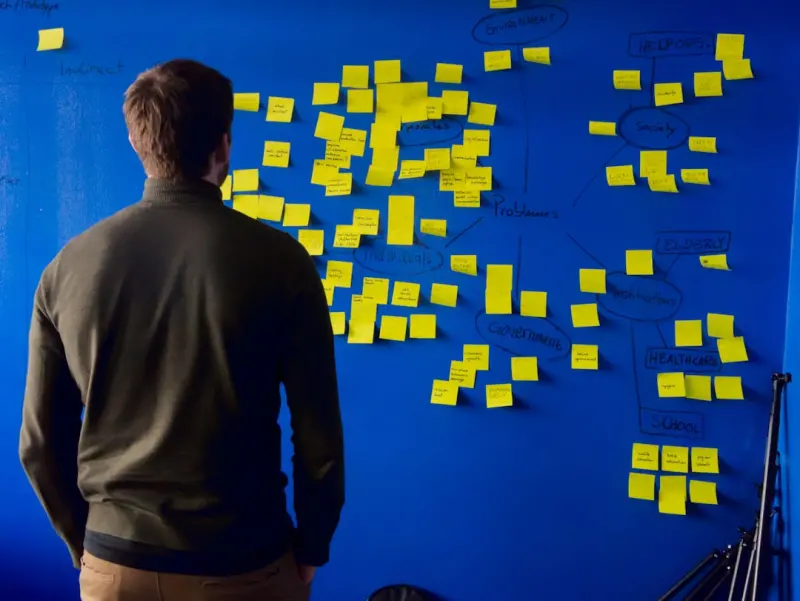
AI‑Augmented Brainstorming: How Generative Tools Supercharge Creative Ideation
Explore how AI can become a silent partner in brainstorming, turning vague concepts into concrete, i... Read More
When AI Becomes Your Decision Co‑Pilot: Designing Dashboards That Talk
Explore the rise of narrative‑first dashboards, where AI interprets data, provides context, and de... Read More

The Silent Power of AI‑Driven Feedback Loops in SaaS Growth
A deep dive into building AI‑driven feedback loops that continuously learn from user interactions,... Read More
Top Posts

Transform Your Home Into a Productivity Oasis Without Leaving Your Couch
A step‑by‑step guide to turning any living space into a productivity sanctuary, covering zoning, lighting, air quality, sound, movement, and smart home twea...Read More

Zero‑Party Data: The Secret Sauce for Hyper‑Personalized B2B Marketing
Zero‑party data—information customers willingly share—offers B2B marketers a privacy‑first path to hyper‑personalization. Learn how to collect, activa...Read More

Edge Intelligence: The New Frontier for Enterprise SaaS
Edge intelligence pushes processing closer to data sources, slashing latency and opening fresh revenue models for SaaS providers. This article breaks down the a...Read More

Google’s Search Generative Experience: A New Frontier for B2B SaaS Marketing
Google’s Search Generative Experience (SGE) injects AI‑generated answers directly into search results, shortening buyer research cycles and redefining how S...Read More
0 Comments
Post Comment
You will need to Login or Register to comment on this post!