

Why “Idea Fog” Is the Real Barrier to SaaS Innovation
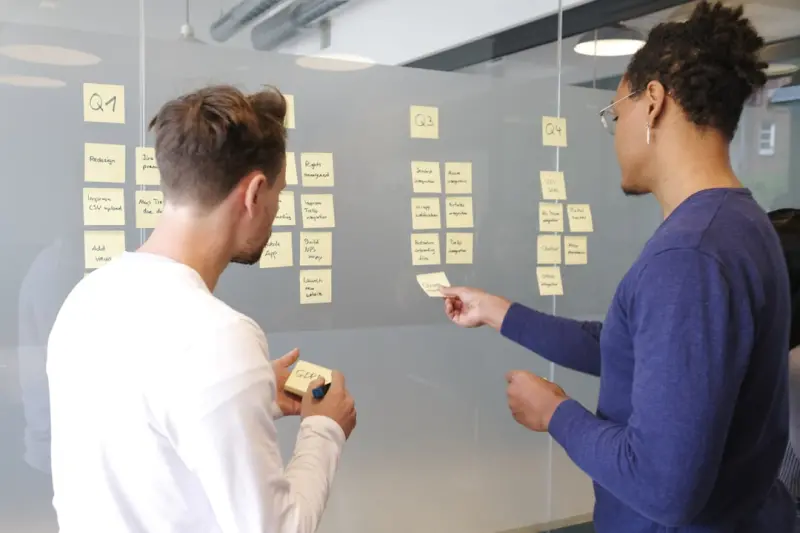
When I first joined a fast‑growing SaaS startup, I was handed a stack of scribbled post‑its from the product team. Each note represented a user‑pain point, a feature wish, or a vague “we should try this”. The problem? They were all floating in a haze I like to call idea fog. The fog made it hard to see which concepts were worth the engineering effort, which needed more validation, and which were simply nice‑to‑have fantasies.
Fast forward a few months, and the same team is now leveraging AI‑driven frameworks that turn that fog into a crystal‑clear roadmap. The shift feels less like a technology upgrade and more like a change in mindset: from guess‑and‑test to data‑informed design. In this post I’ll walk you through the mental models, practical tools, and cultural tweaks that let AI act as a “clarity engine” for SaaS product discovery.
The Traditional Discovery Loop—and Its Blind Spots
Most B2B SaaS companies still rely on a three‑step discovery loop:
- Collect – Gather user interviews, support tickets, and feature requests.
- Prioritize – Use a scoring matrix (impact × effort) to rank ideas.
- Validate – Build a prototype or MVP and test with a pilot group.
On paper this works. In practice it suffers from two recurring blind spots:
- Signal‑to‑noise overload. Thousands of tickets and feedback threads drown out the truly strategic signals.
- Human bias. Product managers inevitably champion ideas that align with their own experiences or departmental agendas.
The result is a backlog that feels more like a wish list than a strategic plan. And that’s exactly where AI can step in.
Enter AI: From Data Sieve to Insight Generator
Think of AI not as a replacement for human intuition but as a high‑precision sieve that separates the gold from the gravel. Modern language models can:
- Parse unstructured feedback at scale, extracting recurring pain points and emerging trends.
- Map user language to product features, revealing hidden demand for capabilities you didn’t even know you could build.
- Simulate market impact scenarios, giving you a data‑backed “what‑if” analysis before any line of code is written.
When these capabilities are combined with a disciplined discovery framework, the result is a living, AI‑enhanced roadmap that updates itself as new data streams in.
Building an AI‑Powered Discovery Pipeline
Below is a step‑by‑step blueprint I’ve refined over the past year. Feel free to adapt it to the size and cadence of your own organization.
1. Centralize All User‑Facing Text
Gather everything that users type: support tickets, chat logs, survey responses, and even free‑form comments on feature request portals. The key is to store this data in a searchable, structured repository—think a cloud‑based data lake with built‑in NLP indexing.
2. Run a “Theme Extraction” Model
Deploy a fine‑tuned language model to cluster similar phrases into thematic buckets. For example, “slow dashboard load” and “laggy charts” would land in a “performance” cluster, while “custom branding” and “white‑label options” group under “branding flexibility”.
These clusters become the first layer of your Idea Fog Map—a visual representation of where user pain is most concentrated.
3. Quantify Business Impact
Here’s where adaptive AI in customer journeys shines. By feeding historical conversion, churn, and ARR data into a regression model, you can assign a projected revenue uplift to each thematic cluster. The AI essentially answers: “If we solved this problem, how much would we expect to earn?”
4. Prioritize with a Multi‑Dimensional Scorecard
Combine the impact score with other dimensions—engineering effort, compliance risk, and strategic fit. The AI can automatically weight these factors based on your company’s current objectives (e.g., “growth mode” vs. “cost‑optimization mode”). The result is a dynamic priority list that updates as new data arrives.
5. Generate “Idea Prototypes” Using Generative Models
Before you commit to a full‑scale build, ask a generative model to sketch out feature specs, UI wireframes, or even API contracts based on the high‑priority themes. These AI‑crafted drafts provide a concrete starting point for design and engineering teams, dramatically shrinking the “concept to prototype” window.
6. Validate with AI‑Augmented Experiments
Deploy low‑cost experiments (feature toggles, A/B tests, sandbox rollouts) and feed the results back into the model. The AI learns which assumptions held true and which fell flat, refining its future impact predictions.
Case Study: Turning “Custom Reporting” Into a Revenue Engine
One of my clients—a mid‑market analytics SaaS—had a recurring request for “custom reporting”. It sat low in the backlog because it was perceived as an engineering nightmare. By running the pipeline above, the AI surfaced two crucial insights:
- The “custom reporting” theme accounted for 22% of all support tickets, indicating a high pain frequency.
- When cross‑referencing with churn data, the model found a 15% higher churn rate among accounts that never used the standard reporting module.
Combined with a modest engineering effort estimate, the AI projected a potential $2.5M ARR uplift if a flexible reporting feature were released. Armed with this data, the product team secured executive buy‑in, shipped a beta in six weeks, and saw a 9% reduction in churn among the target segment within two months.
Culture: Getting Your Team to Trust the “Clarity Engine”
Even the smartest AI can’t succeed if the team treats it as a black box. Here are three cultural levers that helped my teams embrace AI‑driven discovery:
- Transparency. Publish the AI’s confidence scores alongside each recommendation. When people see the numbers, they’re more likely to ask “why?” instead of dismissing the suggestion outright.
- Iterative Ownership. Let product managers own the AI’s output as a draft, not a decree. Encourage them to edit, add context, and re‑run the model, reinforcing a sense of co‑creation.
- Celebrate Small Wins. Highlight quick successes—like a feature that moved from idea to launch in 30 days thanks to AI. These stories build momentum and reduce fear of the unknown.
Integrating AI With Existing Knowledge Assets
If you already have a knowledge base or internal wiki, AI can act as a semantic enhancer. By linking the thematic clusters from discovery to existing documentation, you create a feedback loop where new insights enrich the knowledge base, and the knowledge base, in turn, informs future AI predictions. This synergy mirrors the concepts explored in AI as a knowledge catalyst, but with a focus on product ideation rather than pure documentation.
Measuring the ROI of an AI‑Enhanced Discovery Process
To justify continued investment, track these leading indicators:
- Time‑to‑Idea‑Validation. Measure days from initial user feedback to a validated prototype. AI‑driven pipelines often cut this time by 40‑60%.
- Backlog Health. Monitor the ratio of high‑impact ideas to total backlog items. A rising ratio signals better prioritization.
- Revenue Attribution. Use cohort analysis to tie newly released, AI‑prioritized features to ARR uplift.
- Team Sentiment. Conduct quarterly pulse surveys asking product, design, and engineering teams how confident they feel about the roadmap.
When these metrics move in the right direction, you’ve turned the “idea fog” into a measurable competitive advantage.
Common Pitfalls and How to Avoid Them
Even with the best tools, teams stumble. Here are the most frequent traps:
- Over‑reliance on AI Scores. Remember that AI predicts probability, not certainty. Always pair its recommendations with human judgment.
- Data Quality Neglect. Garbage in, garbage out. Invest in cleaning and normalizing user‑generated text before feeding it to models.
- One‑Size‑Fits‑All Models. Tailor the model to your domain. A generic sentiment analyzer may miss SaaS‑specific jargon like “quota‑reset” or “sandbox environment”.
- Ignoring the “Why”. Use explainable AI techniques (e.g., SHAP values) to surface the features driving each impact prediction. This builds trust and uncovers hidden assumptions.
Looking Ahead: The Next Evolution of AI‑Powered Discovery
We’re already seeing early adopters experiment with “real‑time idea surfacing”. Imagine a Chrome extension that, while a support agent chats with a customer, instantly flags emerging pain points and suggests pre‑built solution templates. Or a Slack bot that aggregates weekly “idea whispers” from channel chatter and updates the roadmap automatically.
These forward‑looking experiments hint at a future where the discovery loop is continuous, frictionless, and always informed by the latest user signals. The fog will never completely disappear—but with AI as our lighthouse, we’ll navigate it with confidence.
In the end, the real magic isn’t the algorithm itself; it’s the disciplined process we build around it. By centralizing data, letting AI surface patterns, and embedding human expertise at each step, we transform vague whispers into concrete, revenue‑driving roadmaps. That’s the future of SaaS innovation, and it starts with clearing the fog today.

Related Posts

When AI Becomes Your Decision‑Making Ally: Turning Overwhelm into Insight
Explore a fresh approach to AI that focuses on reducing decision fatigue by surfacing contradictions... Read More

AI‑Enhanced Emotional Intelligence: Machines Helping Us Read Feelings
AI isn’t just for data crunching; it can help us sense emotions better. Learn how sentiment‑awar... Read More
Building an Ethical AI Playbook for SaaS Leaders
A six‑step, actionable framework guides SaaS leaders to weave fairness, transparency, and accounta... Read More
Top Posts

Micro‑Zones: Turn Tiny Corners into Powerful Home Hubs
Discover the concept of micro‑zones—small, purpose‑driven corners in your home—and how they can elevate productivity, wellbeing, and family harmony with...Read More

Riding the AI Wave: How Google’s Tools are Redefining Human‑First Marketing
Explore the impact of Google’s AI on modern marketing, from content creation to measurement, and learn human‑first strategies to thrive in the evolving sear...Read More

How to Future‑Proof Your Site with Search Intent Clustering
What if you could map every query to a clear intent cluster, letting you craft content that hits the mark every time? Learn the step‑by‑step method to clust...Read More

Harnessing Semantic Topic Modeling to Future‑Proof Your SEO
Discover a data‑driven framework for building semantic topic clusters that boost search authority, earn rich SERP features, and integrate seamlessly with pers...Read More
0 Comments
Post Comment
You will need to Login or Register to comment on this post!