
Why Travel Should Be a Strategic Business Tool, Not Just a Vacation
When I first swapped my office chair for a rickety hostel bunk in Southeast Asia, I wasn’t thinking about product roadmaps or go‑to‑market strategies. I was simply chasing sunshine, street food, and a break from the endless cycle of sprint demos. Six months later, my notebook was overflowing with ideas that reshaped our flagship SaaS platform, and my team’s quarterly metrics showed a noticeable lift in engagement.
That experience taught me a hard truth: travel, when approached deliberately, becomes a catalyst for business creativity. It’s not about escaping work; it’s about immersing yourself in environments that force you to see problems—and solutions—from fresh angles.
The Business Case: Turning Wanderlust into ROI
Many leaders treat travel as a cost center, an expense on the profit‑and‑loss statement that must be justified by “team building” or “client meetings.” While those are valid outcomes, they’re the byproducts of a deeper, more intentional practice. Here’s why a purpose‑driven trip can directly impact the bottom line:
- Cross‑cultural insights. Exposure to different markets reveals unmet needs that can inspire new feature sets or entirely new product verticals.
- Breaks the echo chamber. Stepping away from the office removes you from the daily feedback loop, allowing the brain to synthesize information in novel ways.
- Boosts morale and retention. Employees who see leadership invest in meaningful experiences are more likely to stay, reducing churn costs.
- Accelerates decision‑making. Real‑world constraints—like limited Wi‑Fi or language barriers—force you to prioritize ruthlessly, a skill that translates to faster product iterations.
In other words, the ROI of intentional travel isn’t measured in dollars per mile but in the quality of ideas and the speed at which they reach market.
Designing a Purposeful Trip: From Daydream to Action Plan
Most travelers start with a bucket list: see the Eiffel Tower, dive in the Great Barrier Reef, or hike the Inca Trail. To harness travel for business, you need a parallel list of objectives.
Begin with three questions:
- What problem am I trying to solve? (e.g., understanding user friction in low‑bandwidth regions)
- Which environment naturally surfaces that problem? (e.g., remote villages with spotty connectivity)
- How will I capture insights without disrupting the experience? (e.g., voice memos, quick sketches, or a disposable journal)
Next, map out a schedule that balances “exploration” with “reflection.” Allocate at least 30 % of each day for unstructured time—think coffee breaks in local cafés, rides on public transport, or walks through markets. This is where the magic happens. During these moments, you’re not thinking about KPIs; you’re observing human behavior, cultural nuances, and spontaneous problem‑solving.
Leveraging Downtime: Turning Airport Wait Times into Idea Labs
Even the most meticulously planned itinerary includes inevitable gaps: delayed flights, layovers, or a missed connection. Instead of seeing these as setbacks, treat them as airport wait times that can become creative power‑ups.
Here’s a quick framework you can run in a 45‑minute layover:
- Observe. Pick a spot near a gate and watch the flow of people. Note the pain points—crowded seating, confusing signage, limited charging stations.
- Sketch. Jot down a one‑page “what‑if” scenario. What if you could turn a waiting bench into a collaborative touchscreen?
- Validate. Strike up a brief conversation with a fellow traveler. Ask how they currently solve the problem you just identified. This instant feedback loop can surface hidden assumptions.
When you return to the office, these micro‑insights often serve as the seed for larger product experiments. The key is to capture them quickly—use a voice memo app or a small notebook you keep in your carry‑on.
Bringing Back the Gains: From Field Notes to Product Features
After a trip, the real work begins: translating raw observations into actionable product backlog items. Follow this three‑step process:
- Consolidate. Within 48 hours, transcribe your notes and group them by theme (e.g., “offline usability,” “local payment methods”).
- Prioritize. Use a simple impact‑effort matrix. High impact / low effort ideas become quick wins; high impact / high effort ideas merit deeper research.
- Prototype. Assign a small cross‑functional squad to build a rapid prototype. Test it internally, then, if feasible, with a small user group in the region you visited.
To keep momentum, schedule a debrief meeting with the entire team. Share anecdotes, photos, and, most importantly, the concrete next steps. When colleagues see the direct line from “travel story” to “product feature,” they’ll be more inclined to support future trips.
Practical Tips for the SaaS Professional on the Move
Below are my go‑to tactics for making travel both enjoyable and productive:
- Travel light, think deep. Pack a single notebook, a pen, and a phone with a good voice‑memo app. The less you carry, the more space you have for ideas.
- Secure your data. Use a VPN, enable two‑factor authentication, and avoid public Wi‑Fi for anything beyond casual browsing.
- Set a “no‑screen” window. Designate at least two hours each day where you’re device‑free. This encourages deeper observation and reduces screen fatigue.
- Leverage local experts. Meet with entrepreneurs, freelancers, or university students. Their perspective can highlight market gaps you’d never see from a distance.
- Document in the moment. A quick photo with a caption in your notebook can capture context that text alone can’t convey.
Case Study: From a Rural Village to a New Product Line
Last year, I spent a week in a remote fishing community on the coast of Portugal. The village had limited broadband, but residents used a simple SMS‑based system to coordinate daily catches. This sparked a conversation about offline-first workflows for field teams—something our product had never seriously considered.
Back at the office, we ran a sprint focused on building an offline data entry mode for our CRM. Within three months, the feature launched, and early adopters in logistics and field services reported a 27 % reduction in data‑entry latency. The ROI was clear, and the entire initiative traced its origin to that humble village’s workaround.
Stories like this illustrate that the most powerful product insights often come from places you’d never think to look—if only you give yourself permission to wander.
Balancing Work and Wander: The “Hybrid Travel” Model
Not every leader can afford a month‑long sabbatical. The hybrid model blends short, focused trips with remote work. Here’s how to make it work:
- Choose a hub city. Select a location with reliable co‑working spaces and a vibrant local community.
- Set clear deliverables. Before you depart, outline what you aim to achieve—be it user research, partnership meetings, or a prototype test.
- Allocate “exploration days.” Reserve one or two days per week for non‑work activities that feed your curiosity.
- Sync with the team. Use asynchronous tools (e.g., recorded video updates) so you stay aligned without constant meetings.
This approach lets you capture the benefits of travel without sacrificing the momentum of ongoing projects.
Conclusion: Make Travel an Intentional Part of Your Business Strategy
Travel is more than a break from the keyboard; it’s a structured experiment in human behavior, culture, and problem‑solving. By setting clear objectives, embracing downtime, and systematically translating observations into product actions, you can turn every journey into a strategic asset.
So the next time you book a flight, ask yourself: What will I learn that I can’t learn in my office? If the answer is compelling, you’re on the right track. Pack your notebook, secure your connection, and let the world become your next innovation lab.
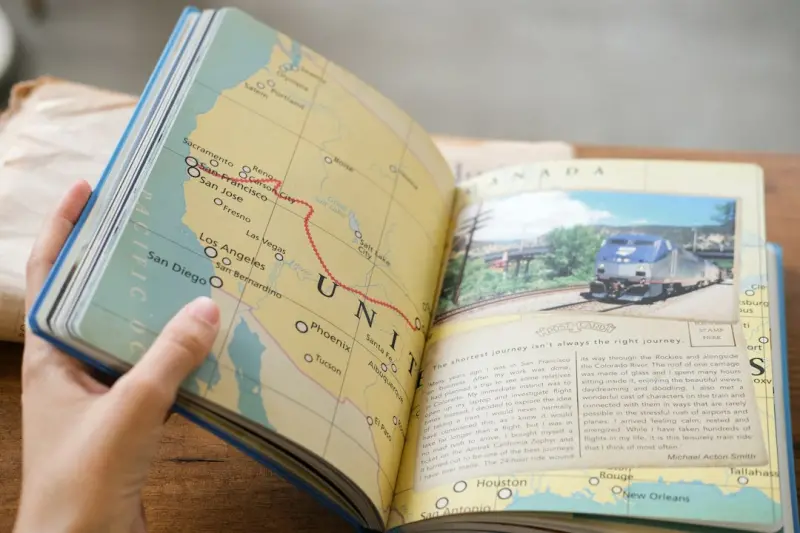
And if you ever find yourself stuck at an airport, remember that a few minutes of observation can spark the next big feature—just as the team behind recharging trips discovered.

Robert Mathews is a professional content marketer and freelancer for many SEO agencies. In his spare time he likes to play video games, get outdoors and enjoy time with his family and friends .
Related Posts
The Sensory Journal: Turning Travel Moments into Tangible Memories
A travel journal isn’t just a notebook—it's a sensory archive that deepens presence, encourages ... Read More

Beyond the Checklist: Redefining Travel Through Purposeful Exploration
Travel is evolving from a personal escape to a purposeful act. This post explores how intentional ex... Read More

Rediscovering the Romance of Regional Rail: A Journey Beyond the Airport
A fresh take on travel, this post invites readers to embrace regional rail, highlighting its environ... Read More
Top Posts
Gamified Loyalty: Turning Customers into Brand Heroes
Learn why gamified loyalty programs are the next frontier in marketing, how to design winning game mechanics, and the metrics that prove their impact on revenue...Read More

Riding the 2026 Google AI Wave: Insider Insights for Modern Marketers
Explore the 2026 Google AI wave and learn insider strategies for data‑driven creativity, privacy‑first tactics, and real‑time success measurement....Read More

Reimagining SaaS Customer Journeys with Adaptive AI
Adaptive AI turns traditional, static SaaS funnels into living, responsive journeys, delivering real‑time personalization, measurable ROI, and ethical safegua...Read More

Quantum‑Safe Encryption: Future‑Proofing Your SaaS Platform
Quantum‑safe encryption is no longer a futuristic concept; it’s a pressing need for SaaS providers. This article outlines the upcoming quantum threat, pract...Read More
0 Comments
Post Comment
You will need to Login or Register to comment on this post!