
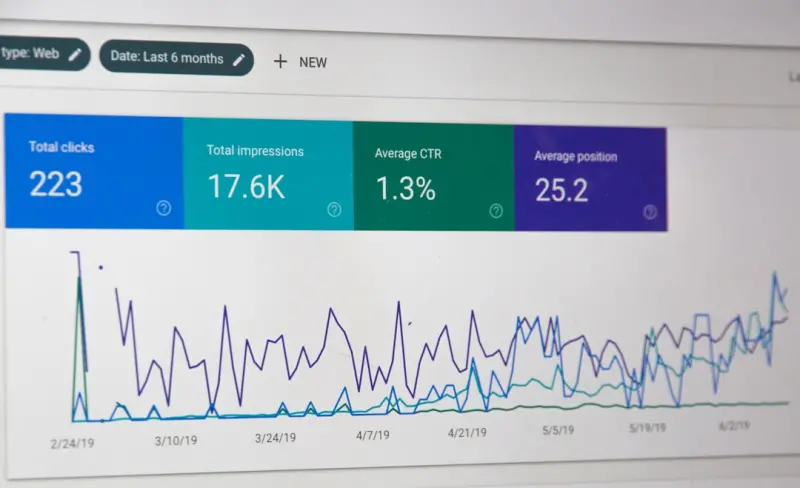
The Unseen Power Behind Your Marketing Dollars: Google’s New Attribution Suite
When I first started navigating the labyrinth of B2B SaaS marketing, the phrase “attribution” felt like a mythic beast—promised but rarely captured. We’d spend weeks, sometimes months, stitching together disparate data sources, chasing ghost conversions, and still end up with a fuzzy picture of what really moved the needle. Then Google, the undisputed king of search, quietly rolled out a suite of attribution tools that promise to turn that myth into a measurable reality. In this deep dive, I’ll walk you through why this matters, how it works, and what you can start doing today to harness its power.
Why Attribution Has Been the Weak Link in SaaS Growth
Most B2B SaaS teams operate on a multi‑touch journey: a prospect discovers a blog post, signs up for a webinar, downloads a whitepaper, engages with a sales rep, and finally converts. Traditional “last‑click” models flatten this complexity, crediting the final click while ignoring the earlier, often more influential, interactions. The result? Misallocated budgets, under‑invested channels, and a perpetual feeling that you’re guessing.
Enter Google’s Attribution Suite—a collection of machine‑learning‑powered models, real‑time data pipelines, and integration capabilities that let you see the full story, from the first impression to the closed‑won deal. It’s not just an upgrade; it’s a paradigm shift from siloed metrics to a unified, outcome‑focused view.
What’s New? A Quick Tour of the Core Components
- Google Attribution 360 – An enterprise‑grade platform that consolidates data across Search, Display, YouTube, and even third‑party ad networks. It introduces data‑driven attribution (DDA), a model that learns from your own conversion paths rather than relying on generic heuristics.
- Conversion Modeling API – Allows you to feed anonymized event data from your CRM or product analytics directly into Google’s ML engine, creating bespoke attribution signals that reflect your unique buyer journey.
- Real‑Time Attribution Dashboard – A customizable UI that surfaces incremental lift, channel overlap, and path‑level performance in seconds, not days.
- Privacy‑First Design – Built on Google’s federated learning framework, the suite respects user consent while still delivering actionable insights.
What makes this suite truly compelling is its focus on incrementality. Instead of asking “Which channel got the click?” it asks “Which channel actually moved the needle?” That nuance is the difference between “spending more on paid search” and “optimizing the entire funnel for sustainable growth.”
How the Data‑Driven Model Learns From Your Business
At the heart of the new suite is a proprietary algorithm that ingests billions of anonymized touchpoints across the Google ecosystem and learns the probability that any given interaction contributes to a conversion. Unlike rule‑based models that assign fixed percentages (e.g., 40% to first click, 60% to last click), the data‑driven model continuously recalibrates based on actual performance.
For SaaS companies, this means the model can differentiate the impact of a high‑intent blog post from a brand‑building video, even if both lead to the same conversion event. Over time, the model surfaces patterns such as:
- Search ads delivering early‑stage awareness but rarely closing the loop.
- YouTube tutorials that act as “sticky” touchpoints, boosting trial‑to‑paid conversion rates by up to 15%.
- Remarketing audiences that, when paired with email nurture, generate the highest incremental lift.
The key takeaway? You’ll finally have data that justifies investing in top‑of‑funnel assets—a perennial challenge for B2B marketers.
Integrating the Suite Into Your Existing Martech Stack
Most SaaS firms already juggle a cocktail of tools: HubSpot for inbound, Salesforce for CRM, Mixpanel for product analytics, and Google Ads for paid media. The beauty of Google’s Attribution Suite is its open API architecture, which makes integration painless:
- Export your conversion events from your CRM (e.g., MQL, SQL, Closed‑Won) via the Conversion Modeling API.
- Map Google ad clicks and impressions to those events using Google’s offline conversion import.
- Feed product usage signals (feature adoption, trial activation) into the model to capture post‑click influence.
- Consume the attribution insights directly in your BI tool of choice (Looker, Data Studio, Power BI) via the real‑time dashboard.
If you’re already leveraging Google’s Data Studio, you can extend those visualizations with attribution metrics, turning a static report into a dynamic decision engine.
First‑Hand Lessons: What Early Adopters Are Seeing
During the beta phase, several mid‑size SaaS firms reported striking results:
- 30% reduction in wasted ad spend after shifting budget from under‑performing display placements to high‑impact YouTube tutorials.
- 12% lift in MRR when aligning content marketing cadence with the attribution‑identified “high‑influence” days of the week.
- Improved cross‑team alignment—product, sales, and marketing now share a single, data‑driven narrative of the buyer journey.
These outcomes aren’t magic; they’re the result of a feedback loop that continuously refines where you invest.
Addressing Common Concerns
“We’re worried about data privacy.”
Google’s suite complies with GDPR, CCPA, and other regional regulations. All data is aggregated and anonymized before it ever reaches the ML engine. Moreover, you retain full control over which events you share via the Conversion Modeling API.
“Our funnel is highly custom; will the model still be relevant?”
Absolutely. The model learns from your own conversion paths. If you have a multi‑step demo request, a product‑led trial, and a sales‑qualified handshake, the algorithm will assign credit proportionally based on observed lift.
“We’ve already invested heavily in third‑party attribution tools.”
Think of Google’s suite as a complement, not a replacement. Its deep integration with the ad ecosystem provides a level of granularity that external tools struggle to match, especially for Google‑owned channels.
Practical Steps to Get Started Today
- Audit your current conversion events. Identify the key milestones you want to attribute (e.g., trial sign‑up, demo request, paid conversion).
- Enable offline conversion tracking in Google Ads. This is the gateway to feeding your CRM data into the system.
- Set up the Conversion Modeling API. Work with your engineering team or a trusted partner to push events daily.
- Configure the real‑time dashboard. Prioritize metrics such as Incremental Lift, Path Length, and Channel Overlap.
- Iterate. Use the insights to reallocate spend, test new creative, and refine your content calendar. Re‑measure every 30 days to capture the model’s learning curve.
For a more holistic view, I recommend pairing these steps with a review of Google’s sustainability initiatives. While the focus here is ROI, understanding the broader impact of your digital footprint can be a differentiator in a crowded market. The green data center article offers great context.
Future Outlook: Attribution Beyond the Browser
Google’s roadmap hints at expanding attribution into emerging touchpoints—think AR/VR ad experiences, voice‑activated searches, and even the soon‑to‑arrive “Project Gemini” AI models that will power predictive insights across the entire Google Cloud ecosystem. As these capabilities mature, the line between measurement and prediction will blur, enabling truly prescriptive marketing decisions.
Imagine a world where the moment a prospect watches a product demo on YouTube, the system auto‑optimizes your ad spend to amplify that exact creative across Search and Display, all while forecasting the expected lift in ARR. That’s the horizon we’re heading toward, and early adoption of Google’s Attribution Suite positions you at the forefront.
Wrapping Up
If you’ve ever felt blindsided by a sudden drop in conversions or frustrated by the endless debate over “which channel is really driving revenue,” it’s time to let data do the heavy lifting. Google’s new Attribution Suite doesn’t just give you numbers; it hands you a narrative that ties every marketing effort back to the bottom line.
By embracing data‑driven attribution, you’ll unlock three core benefits:
- Strategic Budget Allocation: Direct spend where it truly matters.
- Cross‑Team Alignment: A unified view that bridges product, sales, and marketing.
- Continuous Optimization: A feedback loop that evolves with your business.
In a landscape where every dollar counts, the ability to see the real impact of each touchpoint is no longer a luxury—it’s a competitive necessity. Dive into the suite, start feeding your own data, and watch your ROI transform from a guess to a guarantee.

In the world of freelance writing, where creativity and adaptability are paramount, Michelle Fisher stands out as a dedicated and versatile professional. With a passion for crafting compelling narratives and a keen eye for detail, Michelle has established herself as a trusted voice.
Related Posts

Riding Google’s AI Wave: How to Keep Your Brand Human and Authentic
Learn practical steps to blend AI efficiency with genuine brand voice, ensuring your content stays a... Read More

Google’s Hidden Toolbox: 10 Under‑Used Features to Supercharge Your Daily Workflow
Explore ten underrated Google features—from Lens to custom search engines—that can transform eve... Read More

Riding Google’s AI Wave: My Journey to Keep Authenticity Alive
Explore a marketer’s personal journey mastering Google’s AI while preserving brand humanity, wit... Read More
Top Posts

The Light Switch to Better Health: Rethinking Office Illumination for Hybrid Teams
A deep dive into how natural and smart lighting can align our circadian rhythm, improve mood, and boost productivity for hybrid teams, with practical steps and ...Read More

Augmented Reality: The Next Frontier for Immersive Digital Marketing
Explore the power of AR in digital marketing, from virtual showrooms to AI‑driven experiences, and learn how to integrate immersive tech for measurable growth...Read More
Sustainable SEO: Ranking Higher While Cutting Carbon Footprint
Sustainable SEO blends efficient site architecture, purpose‑driven content, and green hosting to boost rankings while lowering your digital carbon footprintâ€...Read More

Embedding SEO Into Your SaaS Product Roadmap: A Playbook for Sustainable Growth
Treat SEO like a core product feature: integrate intent clustering, structured data, and API‑driven content into your SaaS roadmap to drive organic traffic, c...Read More
0 Comments
Post Comment
You will need to Login or Register to comment on this post!