

Why AI‑First Search Is the Next SEO Frontier for SaaS
When I first started tinkering with search engine optimization, the rulebook was simple: keywords, backlinks, and page speed. Fast forward a few years and the game has morphed beyond human‑written content and static SERPs. The rise of generative AI models—ChatGPT, Claude, Gemini—has birthed what I call AI‑First Search. In this new paradigm, search engines act less like indexers and more like conversational assistants, pulling together snippets, data tables, and even code snippets to answer user intent on the fly.
For B2B SaaS companies, the stakes are high. Your product is often complex, your buying cycle is long, and your ideal customers are information‑hungry professionals. If you don’t adapt to AI‑First Search, you risk being invisible in the very conversations that drive qualified leads.
Understanding the Shift: From Indexing to Synthesizing
Traditional SEO rewarded pages that matched exact query terms. AI‑First Search rewards pages that provide structured, verifiable knowledge that AI models can safely cite. Here’s what that looks like in practice:
- Entity‑centric content: Search engines now map queries to entities—people, products, technologies—rather than just strings of text. Your SaaS platform should be represented as a well‑defined entity with clear attributes (e.g., pricing tiers, integration capabilities, compliance certifications).
- Rich data formats: JSON‑LD, schema.org, and other structured data formats are no longer optional. They act as the “translation layer” that lets AI understand the semantics of your offering.
- Answer‑focused pages: Instead of long‑form blog posts, think about “single‑purpose” pages that answer a precise question—like “How does X integrate with Salesforce?”—and provide a concise, factual response.
Practical Steps to Future‑Proof Your SEO Strategy
Below is a roadmap that any SaaS marketer can follow to align with AI‑First Search. I’ve broken it down into three phases: Foundation, Amplification, and Innovation.
1. Foundation: Data Hygiene and Structured Knowledge
Before you can feed AI any useful information, you need clean, machine‑readable data.
- Audit your schema markup. Ensure every product page, pricing table, and case study uses the appropriate
Product,Offer, andReviewschema. If you haven’t started yet, the Semantic SEO for B2B SaaS guide walks you through the exact JSON‑LD snippets you’ll need. - Centralize technical specs. Create a public API documentation hub that’s indexed. AI models love structured tables—think feature matrices, pricing grids, and API endpoints.
- Standardize terminology. Use consistent naming for your product modules across the site. Inconsistent language confuses both users and AI.
2. Amplification: Content That Speaks AI’s Language
Once your data foundation is solid, start crafting content that AI can easily ingest and re‑use.
- Micro‑answer pages. Build dedicated pages that answer “how‑to” and “what‑is” queries in under 300 words, supplemented by a concise table or diagram. Use the
<h2>hierarchy to signal the question and the<table>element to present data. - FAQ sections with schema. Implement
FAQPageschema to surface Q&A directly in SERPs and AI chat responses. - Leverage AI‑generated insights responsibly. Use AI tools to draft outlines, but always verify facts. An inaccurate answer can be penalized heavily as AI models prioritize trustworthiness.
3. Innovation: Embracing Edge AI and Real‑Time Signals
The cutting edge of AI‑First Search isn’t just about static data; it’s about real‑time intelligence. Edge AI enables you to process user behavior locally, delivering personalized micro‑responses that AI search engines can reference.
- Dynamic personalization. Use edge computing to adapt landing page content based on a visitor’s IP region, device type, or referral source—all without a round‑trip to your origin server.
- Real‑time usage metrics. Feed engagement metrics (e.g., time on page, scroll depth) back into your content pipeline. AI models increasingly factor engagement signals when surfacing answers.
- Voice and multimodal search. Optimize for voice queries by using natural language phrasing and concise, spoken‑friendly answers. Remember, AI assistants often read content aloud.
Case Study: Turning a SaaS Knowledge Base into an AI‑Ready Asset
One of my recent client projects involved a mid‑size SaaS provider that offered a project‑management platform. Their knowledge base was a sprawling collection of PDFs and forum threads. Here’s what we did:
- Converted PDFs to HTML with proper heading structures and schema markup.
- Extracted key entities (features, integrations, pricing tiers) using an NLP pipeline, then added
ItemListandProductschema to each page. - Created “quick‑answer” pages for the top 30 support questions identified via ticket analysis.
- Implemented edge caching for real‑time usage stats, feeding them into a dashboard that informed content updates weekly.
Within three months, the brand saw a 27% lift in organic traffic, and AI‑driven assistants began quoting their “quick‑answer” pages directly in search results.
Measuring Success in an AI‑First World
Traditional SEO KPIs—organic clicks, impressions, and average position—still matter, but you’ll need additional metrics to gauge AI performance:
- AI citation frequency: How often do AI assistants reference your pages in their answers? Tools like Google’s Generative Experience Reports (beta) can surface this data.
- Structured data health score: Use schema validation tools to track errors and warnings over time.
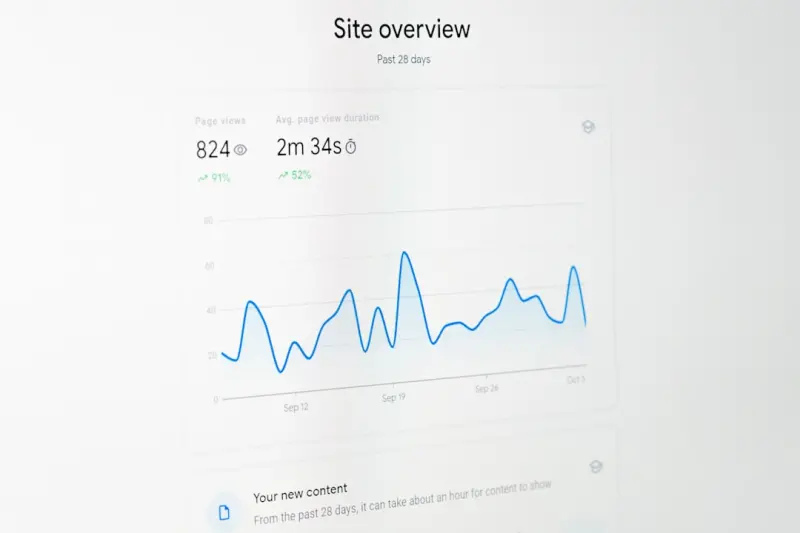
- Engagement on micro‑answer pages: Bounce rate, scroll depth, and time‑on‑page are crucial because AI often surfaces snippets directly from these pages.
Future Outlook: The Convergence of Search, Chat, and Enterprise Knowledge
Imagine a scenario where a procurement officer asks their AI assistant, “Which SaaS platform offers the most secure API for GDPR‑compliant data transfers?” The assistant pulls structured data from multiple vendors, compares them side‑by‑side, and even surfaces a short demo video—all in real time. That is the future we’re heading toward, and the companies that invest now in AI‑Ready SEO will own that conversation.
If you’re ready to start building for AI‑First Search, begin with your data hygiene, layer in micro‑answer pages, and explore edge‑enabled personalization. The SEO landscape is evolving, but the fundamentals—clarity, relevance, and trust—remain the same. Adapt them for AI, and you’ll stay ahead of the curve.

Sanji Patel has dedicated 25 years to the SEO industry. As an expert SEO consultant for news publishers, he emphasizes providing both technical and editorial SEO services to news publishers worldwide. He frequently speaks at conferences and events globally and offers annual guest lectures at local universities.
Related Posts
Mastering the New SERP Landscape: From Snippets to AI Answers
A fresh take on SEO for the AI era: learn to win featured snippets, leverage visual search, and buil... Read More
SEO as Code: Embedding Search Optimisation into Your CI/CD Pipeline
A step‑by‑step guide shows how B2B SaaS teams can integrate SEO linting, schema generation, and ... Read More

Conversational SEO: Turning Voice Queries Into Brand Dialogues
Discover a fresh SEO approach that embraces voice queries, crafting conversational content, adding s... Read More
Top Posts

Travel Light, Live Large: Mastering the Capsule Wardrobe for Global Adventures
A guide to building a versatile five‑piece capsule wardrobe, essential lightweight tech, and mindful packing tips that turn every trip into a freer, more imme...Read More

Seasonal Décor Swaps: Freshening Your Home with Nature’s Rhythm
Learn how to breathe new life into every room by swapping décor with the seasons, using natural elements, DIY projects, and smart sourcing for a vibrant, everâ...Read More

Why B2B SaaS Marketers Should Build Micro‑Communities Before Launch
Micro‑communities provide high‑quality, zero‑party data and a trusted platform for co‑creating content, shaping product roadmaps, and accelerating sales...Read More

Hyper‑Local Community Marketing: Turning Neighborhoods Into Brand Hubs
Learn the art of hyper‑local community marketing—using neighborhood influencers, authentic storytelling, and granular data to turn everyday streets into pow...Read More
0 Comments
Post Comment
You will need to Login or Register to comment on this post!