

Why Your SaaS Team Needs an AI “Silent Strategist”
In the bustling corridors of product development, every meeting feels like a high‑stakes chess match. Feature debates, roadmap debates, and the endless tug‑of‑war between speed and perfection dominate the conversation. Yet, amidst this noise, a subtle, almost invisible player can tip the balance: an AI system that operates quietly in the background, surfacing insights, flagging blind spots, and nudging decisions without demanding a seat at the table.
The Decision‑Fatigue Dilemma
Modern SaaS teams are drowning in data. From user‑behavior analytics to market trend reports, the sheer volume of information creates a paradox of choice. The more data you have, the harder it becomes to distill actionable insight. This cognitive overload leads to decision fatigue—a state where the quality of decisions deteriorates because the brain is exhausted from constant evaluation.
When teams are fatigued, they fall back on heuristics, gut feelings, or the loudest voice in the room. Unfortunately, these shortcuts often embed bias, overlook emerging opportunities, and can steer the product roadmap away from genuine user needs.
Enter the Silent Strategist
An AI “silent strategist” is not a flashy chatbot or a flashy dashboard that demands attention. Instead, it’s a set of intelligent agents embedded within your existing toolchain—think of them as the quiet librarians who know exactly which book you need, even before you ask.
- Context‑aware recommendations: By continuously ingesting telemetry from your product, CRM, and support tickets, the AI surfaces feature hypotheses that align with real‑world usage patterns.
- Bias detection: Advanced models can flag when a decision leans heavily on a single customer segment or historical bias, prompting a broader perspective.
- Prioritization scaffolding: Instead of dictating a priority list, the AI offers a weighted matrix that reflects impact, effort, and strategic alignment, letting the team retain ownership.
Because the AI works in the background, it doesn’t dominate meetings or require constant monitoring. It simply whispers the right data at the right moment.
How It Differs From Traditional Analytics
Most analytics platforms present static reports that need manual interpretation. The silent strategist, however, is dynamic:
- Real‑time learning: It updates its models as new data streams in, ensuring recommendations stay fresh.
- Cross‑domain synthesis: It correlates seemingly unrelated data points—like a spike in churn after a pricing change with an uptick in support tickets mentioning a particular feature.
- Actionable nudges: Instead of a chart, you get a concise suggestion: “Consider A/B testing Feature X for segment Y before full rollout.”
Embedding the Silent Strategist Into Your Workflow
Implementing this approach doesn’t require a wholesale overhaul of your tech stack. Here’s a practical roadmap:
- Identify anchor points: Choose existing tools where the AI can surface insights—Jira tickets, product road‑mapping boards, or even Slack channels.
- Connect data pipelines: Feed usage metrics, NPS scores, support logs, and sales forecasts into a central data lake.
- Deploy lightweight models: Start with rule‑based triggers (e.g., “if churn > 5% after release”) and evolve toward predictive models as confidence builds.
- Establish feedback loops: Let team members confirm or dismiss AI suggestions. This reinforcement helps the system refine its relevance.
Case Study: From Guesswork to Data‑Guided Feature Rollouts
A mid‑size SaaS startup struggled with feature creep. Product managers would champion ideas based on vocal customers, while the engineering team resisted due to capacity constraints. By integrating a silent strategist, the company achieved the following:
- Reduced the average decision‑making cycle from four weeks to ten days.
- Cut the number of low‑adoption features by 38%, freeing engineering bandwidth for high‑impact work.
- Improved cross‑functional alignment, as the AI provided a shared data‑driven language.
The AI’s secret sauce was its ability to surface “latent demand” signals—subtle patterns in trial usage that indicated a need for a new onboarding flow, long before the sales team heard any complaints.
Addressing Common Concerns
Will AI replace product managers? Absolutely not. The silent strategist is a co‑pilot, not a pilot. It amplifies human judgment, not supplants it.
What about data privacy? Since the AI works on aggregated, anonymized data, it complies with most enterprise security policies. Moreover, you can enforce role‑based access so only authorized users see the nudges.
Is the technology too complex to maintain? Modern MLOps platforms have lowered the barrier. You can start with pre‑built APIs that handle model training, deployment, and monitoring.
Learning From Other AI Initiatives
While the silent strategist concept is fresh, it builds on proven AI applications across the SaaS ecosystem. For instance, AI‑infused product roadmaps already demonstrate how predictive models can prioritize features. Similarly, Google Lens innovations illustrate the power of contextual AI in enhancing user interactions. By combining these learnings with a quieter, advisory layer, you get a holistic decision‑support system.
Best Practices for a Successful Silent Strategist
- Start Small, Scale Fast: Pilot the AI on a single product area, gather feedback, and expand iteratively.
- Maintain Human Oversight: Every AI recommendation should be reviewable. This maintains trust and prevents over‑automation.
- Prioritize Explainability: Use models that can articulate “why” they made a suggestion. Transparent reasoning encourages adoption.
- Celebrate Wins: Publicly recognize when the AI’s insight led to a successful launch. This reinforces its value.
- Continuously Refresh Data: Stale data erodes relevance. Schedule regular data ingestion and model retraining cycles.
Future Outlook: The Evolution Toward a “Strategic AI Mesh”
Imagine a network of micro‑AI agents, each specializing in a facet of product development—pricing, churn prediction, user onboarding, and even developer velocity. They communicate, share signals, and collectively guide the team toward a unified strategy. This “Strategic AI Mesh” would be the ultimate silent strategist, offering hyper‑personalized guidance without ever needing a spotlight.
While that vision may still be on the horizon, the groundwork is being laid today. By adopting a discreet, data‑driven AI companion now, your SaaS organization positions itself to seamlessly integrate the next wave of intelligent orchestration when it arrives.
Getting Started Today
Ready to give your product team a silent partner? Here’s a quick checklist:
- Audit your data sources—identify high‑signal metrics.
- Select an AI platform that supports real‑time inference.
- Define the first set of nudges—e.g., “Flag features with < 10% adoption after 30 days.”
- Roll out the AI in a low‑risk environment, such as a sprint retro, and gather feedback.
- Iterate, expand, and celebrate the incremental gains.
The journey from intuition‑driven to AI‑augmented decision making doesn’t have to be dramatic. It can start with a single, well‑placed suggestion that quietly steers your team toward smarter outcomes.
Conclusion
In a world where every team member is competing for attention, the most powerful AI is the one that steps back, listens, and only speaks when it truly matters. By embedding a silent strategist into your SaaS workflow, you transform decision fatigue into decision clarity, bias into balanced insight, and guesswork into data‑driven confidence. The future of product development isn’t about AI shouting from the rooftops—it’s about AI whispering the right ideas at the right time, letting human creativity shine brighter than ever.

David Moore is a freelance writer specializing in two dynamic and ever-evolving fields: gambling and the tech industry. With a keen eye for detail and a knack for unraveling complex topics, David delivers insightful and engaging content that keeps readers informed and entertained.
Related Posts

AI as Your Personal Negotiation Coach: Turning Conversations into Wins
Learn how AI can serve as a discreet, real‑time negotiation coach, providing data‑driven suggest... Read More

Prompt Engineering: The Low‑Cost, High‑Impact Lever SaaS Teams Need
Prompt engineering turns generic AI models into tailored business assets. This post outlines a pract... Read More

How AI‑Powered Knowledge Hubs Are Redefining Remote Collaboration
AI‑powered knowledge hubs transform fragmented information into a living, intelligent repository, ... Read More
Top Posts
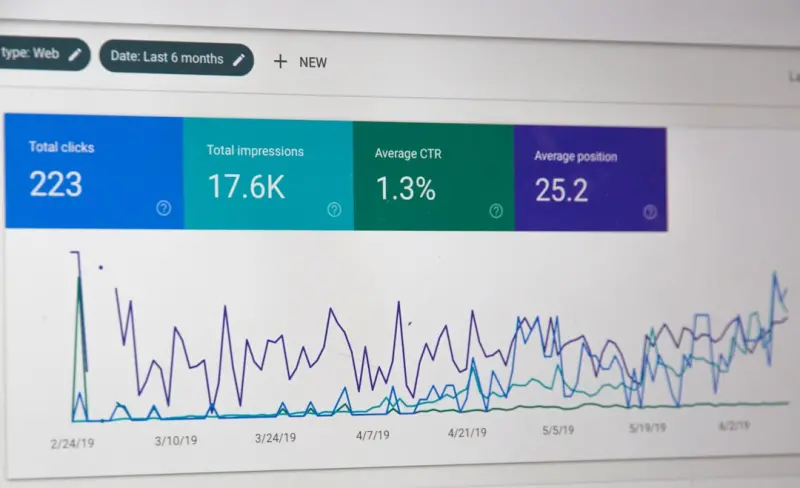
How Voice Search Is Redefining SaaS SEO Strategies
Voice assistants are now primary discovery tools for B2B professionals. This post explains how SaaS companies can restructure technical SEO, content, and AI wor...Read More
Micro‑Influencer Networks: The Quiet Power Shaping Digital Marketing
Explore the rise of micro‑influencer networks, data‑driven storytelling without cookies, and voice‑enabled commerce to build authentic, high‑ROI digital...Read More

Navigating Google’s AI Tsunami: Rose DesRochers’ Front‑Row Perspective
Rose DesRochers shares a front‑row perspective on Google’s AI wave, offering practical tactics, ethical insights, and a 2024 outlook for marketers navigatin...Read More

Beyond the Airport Lounge: Crafting Creative Journeys for Remote Teams
Travel isn’t just a break—it’s a catalyst for deep thinking and innovation. Learn how to design nomadic sprints, secure work on the move, and embed a trav...Read More
0 Comments
Post Comment
You will need to Login or Register to comment on this post!