
When AI Becomes the Blueprint of Product Design
It’s a strange feeling to watch a machine learn the subtle art of design. Not the graphic‑design‑meets‑code kind of thing you see on a poster, but the deep, structural choreography that turns a vague market need into a product that customers actually love. Over the past few years, I’ve been sitting at the intersection of SaaS product teams and emerging machine‑learning research, and I’m convinced we’re on the brink of a paradigm shift: AI‑first product design.
Don’t get me wrong—AI isn’t a silver bullet that will magically conjure the next unicorn feature. But when we treat AI not as a helper that adds insight after the fact, and instead as a co‑creator that shapes the design process from the very first sketch, the outcomes become dramatically more innovative, faster, and—most importantly—more aligned with real user problems.
From Inspiration to Ideation: AI as a Creative Partner
Traditional product design workflows typically start with a brainstorming session, a whiteboard full of sticky notes, and a handful of hypotheses about what users might need. The next steps involve market research, user interviews, and a painful iteration loop that can stretch weeks or months. AI can compress this timeline in three distinct ways:
- Pattern Mining at Scale: Large language models (LLMs) can ingest millions of support tickets, forum posts, and feature request logs in minutes, surfacing latent pain points that would otherwise remain hidden in the noise.
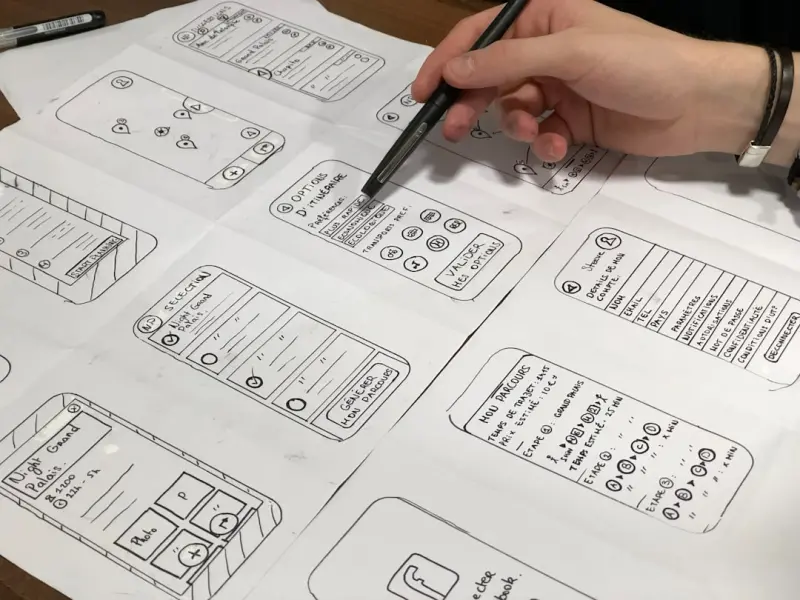
- Idea Generation on Steroids: Prompted correctly, generative models can propose dozens of feature concepts, complete with rough user stories, acceptance criteria, and even UI wireframes.
- Rapid Prototyping Feedback Loops: By coupling LLMs with simulation environments, you can test a new workflow in a virtual sandbox, gathering synthetic usage data before you write a single line of production code.
Take, for instance, a SaaS team that built a customer‑success dashboard. Instead of spending weeks combing through churn data, they fed an LLM a corpus of anonymized churn logs and asked, “What are the top three leading indicators of churn for mid‑market SaaS customers?” Within seconds, the model returned a concise list, complete with confidence scores and suggested visualizations. The team used those insights to prototype a new predictive widget—an effort that would have taken weeks, now completed in days.
Designing with Data‑Driven Empathy
Empathy has always been the cornerstone of great product design, but empathy can be biased. Human designers often project their own experiences onto users, overlooking edge cases that could be the difference between delight and frustration. AI, when trained on diverse, anonymized data sets, offers a form of data‑driven empathy that can surface under‑represented user journeys.
One practical approach is to build a user‑persona synthesis engine. Feed the engine a blend of survey responses, interview transcripts, and usage analytics, and let it generate a set of persona clusters with nuanced behavioral attributes. These personas can be refreshed automatically as new data rolls in, ensuring that design decisions stay aligned with the evolving customer base.
But there’s a caveat: the quality of the output depends heavily on the quality of the input data. Poorly labeled or biased data will produce skewed personas, reinforcing existing blind spots. This is why a disciplined data‑governance framework is essential—something I’ll cover in depth later.
AI‑Powered Validation: From Hypothesis to Evidence
Even with AI‑generated ideas, validation remains non‑negotiable. However, AI can streamline validation by generating synthetic user interactions that mimic real usage patterns. Imagine you have a new onboarding flow you want to test. Instead of recruiting a panel of beta users, you can simulate thousands of sessions using a behavior‑cloned model trained on existing onboarding data. The model will highlight friction points, drop‑off zones, and even suggest micro‑optimizations like button text or placement.
This isn’t science fiction. Several leading SaaS platforms have already integrated synthetic data pipelines to stress‑test their analytics pipelines before launch. The result? A dramatically reduced risk of post‑launch bugs and a clearer picture of how the feature will perform in the wild.
Integrating AI into the Product Design Workflow
So, how do you embed AI into an existing design process without turning your team into a Frankenstein’s monster of code and creativity? Below is a pragmatic, step‑by‑step framework that I’ve refined with my own product squads.
- Define Clear Design Goals: Start with a concise problem statement. This keeps the AI output focused and reduces “analysis paralysis.”
- Curate a High‑Quality Data Set: Pull in relevant data—customer support tickets, usage logs, NPS comments. Clean, label, and anonymize it. Remember, garbage in, garbage out.
- Choose the Right Model: For raw text, LLMs like GPT‑4 excel. For visual wireframes, diffusion models or specialized design generators are better.
- Prompt Engineering: Spend time crafting prompts that reflect your design goals. Iteratively refine prompts based on output quality.
- Human‑in‑the‑Loop Review: Treat AI suggestions as drafts. Designers, product managers, and engineers review, tweak, and approve.
- Prototype & Simulate: Use AI‑generated wireframes or interaction scripts to build quick prototypes. Run simulations to gather synthetic usage data.
- Validate with Real Users: Complement synthetic data with targeted user testing to confirm insights.
- Iterate & Document: Capture the AI prompts, data sources, and decisions made. This documentation becomes a living asset for future projects.
When you follow this loop, AI moves from being a “nice‑to‑have” tool to an integral part of your product DNA.
Governance, Ethics, and the Human Touch
Embedding AI in product design raises two inevitable questions: How do we ensure the model behaves ethically? and Where does the human designer’s intuition fit in? The answer lies in a balanced governance framework.
Transparency is the first pillar. All AI‑generated suggestions should be traceable back to their data sources and prompts. This not only builds trust within the team but also satisfies compliance requirements in regulated industries.
Bias Audits should be scheduled regularly. Run the model’s outputs through bias detection tools, and compare them against known demographic data to spot any systematic skew.
Finally, Human Oversight remains non‑negotiable. AI can surface patterns and generate concepts, but it lacks the lived experience and strategic foresight that senior product leaders bring to the table. Treat AI as a co‑pilot, not a captain.
Case Study: A SaaS Company’s Journey to AI‑First Design
To illustrate these principles, let’s walk through a real‑world example (anonymized for privacy). A mid‑size SaaS vendor offering a project‑management tool wanted to revamp its reporting dashboard. Their goals were to:
- Reduce the time users spent configuring reports.
- Increase the adoption rate of advanced analytics features.
They began by aggregating three data sources: support tickets (10,000+), usage logs (2 M sessions), and NPS survey comments (1,200). After cleaning the data, they fed it into an LLM with the prompt: “Identify the top three friction points users encounter when creating custom reports.” The model returned:
- Complex filter selection UI.
- Lack of real‑time preview.
- Difficulty understanding metric definitions.
Armed with these insights, the design team used a generative UI model to produce ten wireframe concepts addressing each pain point. They then ran a synthetic simulation using a behavior‑cloned model trained on historical reporting sessions. The simulation highlighted that a drag‑and‑drop filter builder would cut configuration time by 40 % and that tooltips explaining metrics would boost feature adoption by 15 %.
After a rapid prototype build, they conducted a focused user test with 25 power users. The feedback confirmed the AI’s predictions—users loved the new drag‑and‑drop interface and the contextual help. Within two months of launch, the company reported a 30 % reduction in support tickets related to reporting and a 22 % increase in advanced analytics usage.
This story underscores the power of an AI‑first approach: data‑driven insights, rapid ideation, and validated execution—all converging to deliver measurable business impact.
Bridging AI with Existing SaaS Knowledge Structures
If you’re already leveraging AI‑Powered Knowledge Graphs to map your product’s domain, integrating AI‑first design becomes even more seamless. Knowledge graphs can serve as the semantic backbone for prompt engineering, ensuring that the AI’s output aligns with your product ontology.
For example, when generating feature concepts, you can embed the graph’s relationships into the prompt: “Based on our existing entities—‘Task’, ‘Milestone’, ‘Resource’—suggest three new reporting widgets that would add strategic value for enterprise customers.” The resulting concepts will be inherently consistent with your product’s data model, reducing downstream integration effort.
Co‑Creating Value with Customers Using AI
Another powerful angle is to involve customers directly in the AI‑enhanced design loop. By exposing a curated subset of your LLM through a secure portal, you can invite strategic customers to shape the next feature set. This practice not only accelerates ideation but also deepens Co‑Creating Value with your most engaged users.
Here’s a quick playbook:
- Secure a sandbox LLM instance: Restrict access to internal data only.
- Define contribution guidelines: Explain how customers can submit prompts and review AI‑generated suggestions.
- Reward participation: Offer early‑access credits or feature branding.
- Iterate publicly: Share the roadmap updates driven by customer‑AI collaborations.
When customers see that their ideas—refined by AI—make it to production, you cultivate a sense of partnership that translates into higher retention and advocacy.
The Future Landscape: AI as a Design Operating System
Looking ahead, I envision AI evolving from a set of discrete tools into a full‑blown Design Operating System (DOS). Think of it as the Kubernetes of product design: a declarative layer where you specify high‑level goals, and the system orchestrates data ingestion, idea generation, prototyping, testing, and deployment automatically.
Key components of this future DOS might include:
- Unified Data Fabric: A real‑time, privacy‑first data lake that feeds all AI models.
- Composable Prompt Library: Reusable prompt templates that encapsulate best‑practice design heuristics.
- Simulation Engine: Integrated synthetic user agents that can stress‑test any UI change.
- Feedback Loop Hub: A bi‑directional channel that captures live user data, feeds it back into the model, and triggers continuous improvement.
While we’re not there yet, every step we take—curating data, refining prompts, establishing governance—lays the groundwork for this vision.
Getting Started Today
If you’re eager to experiment but unsure where to begin, start small:
- Pick a Low‑Risk Feature: Something that won’t break core functionality if the AI suggestion misses the mark.
- Build a Prompt Repository: Document what works and what doesn’t. Share it across your design and engineering teams.
- Run a Pilot with Synthetic Data: Validate the AI’s suggestions in a sandbox before exposing them to real users.
- Measure Impact: Track metrics such as time‑to‑market, user satisfaction, and support volume to quantify the ROI of AI‑first design.
Remember, AI is not a replacement for human creativity—it’s a catalyst. By treating it as a collaborative partner, you unlock a faster, more informed, and ultimately more human product design process.
In the coming months, I’ll be sharing deeper dives into each of these stages, from prompt engineering patterns to synthetic data best practices. Stay tuned, experiment boldly, and let the machines help you design the next generation of SaaS experiences.

Dale Peterson is a freelance writer with a passion for technology, travel, law and personal finance. With 10 years of experience crafting compelling and informative content, he's dedicated to delivering high-quality writing for Blogging Fusion that engages audiences and achieves specific goals.
Related Posts
Synthetic Data: The Underrated Engine Powering Next‑Gen SaaS AI
Synthetic data lets SaaS firms train robust AI models without compromising privacy or waiting for ra... Read More
How AI Is Turning Product Discovery Into Predictive Science
AI is reshaping product discovery by converting raw usage data into actionable feature ideas. Learn ... Read More

Synthetic Data: Unlocking Enterprise AI at Scale
Synthetic data lets SaaS firms generate privacy‑safe, balanced datasets on demand, accelerating mo... Read More
Top Posts

Cultural Osmosis: How Everyday Moments Transform Travel
Explore how embracing everyday interactions, unplanned paths, and sensory immersion can turn ordinary travel moments into deep, lasting connections with the pla...Read More

Unlocking the Hidden Power of AI‑Driven Knowledge Hubs
An AI‑enhanced knowledge hub transforms static docs into dynamic, context‑aware insights, accelerating support, sales, and product decisions while safeguard...Read More

Seasonal Décor Swaps: Freshening Your Home with Nature’s Rhythm
Learn how to breathe new life into every room by swapping décor with the seasons, using natural elements, DIY projects, and smart sourcing for a vibrant, everâ...Read More

Inside Google’s AI-Powered Search Revolution
Google’s AI search is reshaping how users find answers and how brands get discovered. Learn the new ranking signals, content strategies, and privacy tools you...Read More
0 Comments
Post Comment
You will need to Login or Register to comment on this post!