
Unleashing the Power of Google’s Knowledge Graph for B2B SaaS Growth
When I first heard the term “Knowledge Graph,” I imagined a futuristic map of glowing nodes floating in a data‑center. In reality, it’s a sophisticated, behind‑the‑scenes engine that Google uses to connect facts, entities, and relationships across the web. As SaaS leaders, we’re often fixated on APIs, cloud infrastructure, and marketing funnels—yet the Knowledge Graph is the silent catalyst that can transform how prospects discover, evaluate, and adopt our solutions.
Why the Knowledge Graph Matters to SaaS Companies
Think of the Knowledge Graph as Google’s semantic brain. It doesn’t just index keywords; it understands the meaning behind them. When a user searches for “project management software for remote teams,” Google can instantly surface a curated set of solutions, user reviews, pricing tiers, and integration options—all drawn from structured data that the graph has pieced together.
For us in the SaaS arena, this means:
- Accelerated discovery. Potential customers find us faster because Google can match intent with the exact problem we solve.
- Richer SERP presence. Rich snippets, knowledge panels, and answer boxes give us real‑estate on the search results page without paying for ads.
- Higher trust signals. When Google confidently displays a knowledge panel, users perceive the brand as authoritative.
How to Feed the Knowledge Graph: Structured Data is Your New Currency
The first step is to ensure your website speaks Google’s language. This is where Demystifying AI: A Trust‑First Playbook for SaaS Leaders comes into play—trust is built on transparency, and structured data is the most transparent way to tell Google what you do.
Implement schema.org markup across your product pages. Here are the most relevant types for SaaS:
SoftwareApplication– defines name, operating system, pricing model, and feature list.Offer– clarifies subscription tiers, trial periods, and discounts.AggregateRating– aggregates user reviews from trustworthy sources.FAQPage– answers common buyer questions directly in the SERP.
Google’s Structured Data Testing Tool (now part of Search Console) will tell you if your markup is valid. A clean pass means Google can ingest your data without friction.
Beyond Product Pages: Embedding Contextual Relationships
What sets the Knowledge Graph apart from simple metadata is its ability to map relationships. If your SaaS integrates with Slack, Zapier, or Google Workspace, you should explicitly model those connections.
Use sameAs properties to link your product to its official profiles on external platforms. This tells Google, “Hey, this solution works hand‑in‑hand with these tools.” The result? When a user searches “Slack project management bots,” your product may appear as a related entity, pulling you into a conversation you’d otherwise miss.
Leveraging the Knowledge Graph for Account‑Based Marketing (ABM)
ABM is all about targeting high‑value accounts with precision. The Knowledge Graph can help you identify the exact entities (companies, decision‑makers, tech stacks) that are already associated with your solution in Google’s ecosystem.
By monitoring Google’s entity search API, you can surface:
- Companies that have mentioned your product in press releases.
- Industry analysts who reference your solution in reports.
- Competitor products that appear alongside yours in knowledge panels.
These insights let you craft hyper‑personalized outreach—mention a recent article that featured you, or reference a mutual integration partner. The Knowledge Graph becomes a research assistant that surfaces relevance at scale.
Case Study: Turning a Knowledge Panel into a Lead Magnet
One of our SaaS clients—an AI‑powered analytics platform—noticed a dip in organic traffic despite strong inbound campaigns. We audited their site and discovered they lacked any structured data for their “Enterprise Analytics Suite.” After implementing comprehensive SoftwareApplication markup and linking to their partner ecosystem, Google generated a knowledge panel that displayed:
- Product name and tagline.
- Key integrations (Google BigQuery, Snowflake, Tableau).
- Average rating sourced from G2 and Capterra.
- A “Free trial” call‑to‑action button (via
PotentialActionmarkup).
Within three months, the client saw a 27% lift in organic clicks and a 14% increase in trial sign‑ups directly attributed to the panel. The Knowledge Graph turned a passive SERP position into an active conversion gateway.
Measuring Impact: Metrics That Matter
To prove ROI, track these KPIs:
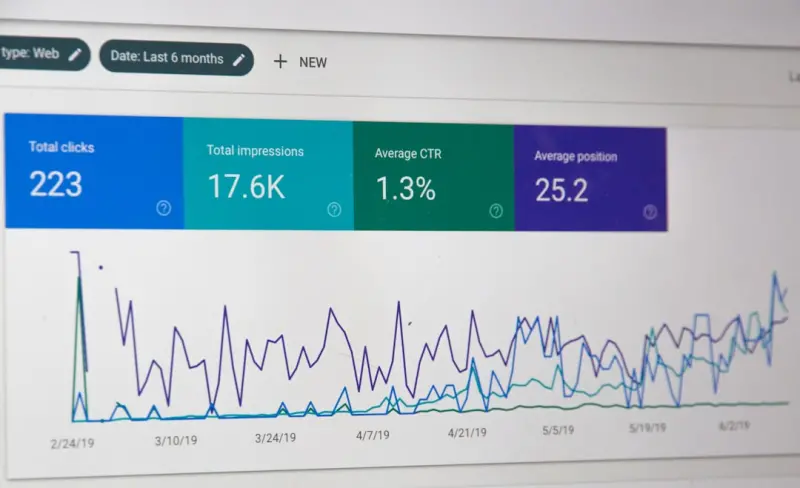
- Impression share in SERPs. Search Console now shows “Search appearance” metrics for rich results.
- Click‑through rate (CTR) lift. Compare baseline CTR before markup to post‑implementation.
- Organic trial conversions. Tie UTM parameters to the “Free trial” button in the knowledge panel.
- Referral traffic from entity pages. Google’s “Discover” feed may surface your entity to related searches.
When you see a sustained upward trend across these metrics, you’ve turned the Knowledge Graph from a hidden engine into a measurable growth lever.
Future‑Proofing: The Graph’s Role in Generative Search
Google’s next wave of search is shifting from keyword matching to generative answers. Imagine a user typing “Help me choose a SaaS tool for scaling my remote sales team.” The answer will be a synthesized paragraph that pulls from the Knowledge Graph, curated reviews, and pricing data. If your product’s structured data is clean, you’ll be part of that answer.
In this context, the Knowledge Graph isn’t just a “nice‑to‑have”—it’s the foundation of AI‑driven discovery. Companies that invest now will own a slice of the generative SERP space, while laggards risk being invisible when the next generation of Google search rolls out.
Practical Checklist for SaaS Leaders
- Audit existing schema. Use Search Console’s Rich Results Test on every product page.
- Map integrations. Add
sameAslinks to partner sites and official documentation. - Publish FAQ pages. Answer buyer questions with
FAQPagemarkup. - Collect verified reviews. Feed them into
AggregateRatingto boost credibility. - Monitor entity performance. Set up alerts for changes in your knowledge panel via the Entity Search API.
- Iterate. Every quarter, revisit markup for new features, pricing changes, or partnership updates.
Bridging the Gap: From Data to Dialogue
While the Knowledge Graph is a technical asset, it’s also a narrative tool. It tells a story about who you are, what you solve, and who you work with. When that story is accurate, compelling, and searchable, you’re not just competing for clicks—you’re shaping the conversation that prospects have before they ever land on your site.
In a world where attention is scarce and trust is hard‑won, the Knowledge Graph offers a direct line to the brain of the search engine—and, by extension, the brain of the buyer.
Conclusion: Make the Graph Work for You
Google’s Knowledge Graph isn’t a secret weapon reserved for big brands; it’s an open framework that any SaaS company can tap into. By embracing structured data, mapping relationships, and measuring impact, you turn a hidden data model into a front‑line growth engine.
Remember, the Graph is only as good as the data you feed it. So take the time to clean, enrich, and maintain your markup. The payoff isn’t just higher rankings—it’s a richer, more trustworthy presence that guides prospects from curiosity to conversion, all without lifting a finger on paid media.
Ready to start? Dive into your site’s schema today, and let the Knowledge Graph do the heavy lifting for your next wave of B2B SaaS growth.

Sanji Patel has dedicated 25 years to the SEO industry. As an expert SEO consultant for news publishers, he emphasizes providing both technical and editorial SEO services to news publishers worldwide. He frequently speaks at conferences and events globally and offers annual guest lectures at local universities.
Related Posts

Riding Google’s AI Wave: A Human‑First Playbook for Modern Marketers
A fresh, human‑first guide to navigating Google’s AI‑powered search, packed with real‑world ... Read More

Riding the Google AI Wave: Rose DesRochers’ Insider Take on 2024’s Search Revolution
Rose DesRochers shares an insider’s view on Google’s 2024 AI-driven search evolution, offering p... Read More

Navigating Google’s AI Wave: Rose DesRochers’ Insider Playbook for 2024
Rose DesRochers shares an insider’s playbook for thriving in Google’s AI‑driven search era, of... Read More
Top Posts

How Biofeedback Wearables Are Redefining Stress Management for Remote Workers
Remote work has blurred the lines between personal and professional life, leading to chronic stress. This post reveals how biofeedback wearables, intelligent da...Read More

Riding Google’s AI Wave in 2026: Insider Strategies for Marketers
Explore 2026’s Google AI transformation with insider tactics, practical playbooks, and expert insights to boost rankings, ad performance, and authentic brand ...Read More

Smart Water Savings: Everyday Habits for a Greener Home
Learn simple, low‑tech habits to dramatically reduce your household water consumption—from timed showers and pot‑full dishwashing to reusing greywater and...Read More
Riding Google’s 2026 AI Wave: A Marketer’s Playbook from the Frontlines
Rose DesRochers shares insider tactics for leveraging Google’s 2026 AI wave, from data‑driven content pivots to ethical AI practices, helping marketers surf...Read More
0 Comments
Post Comment
You will need to Login or Register to comment on this post!