
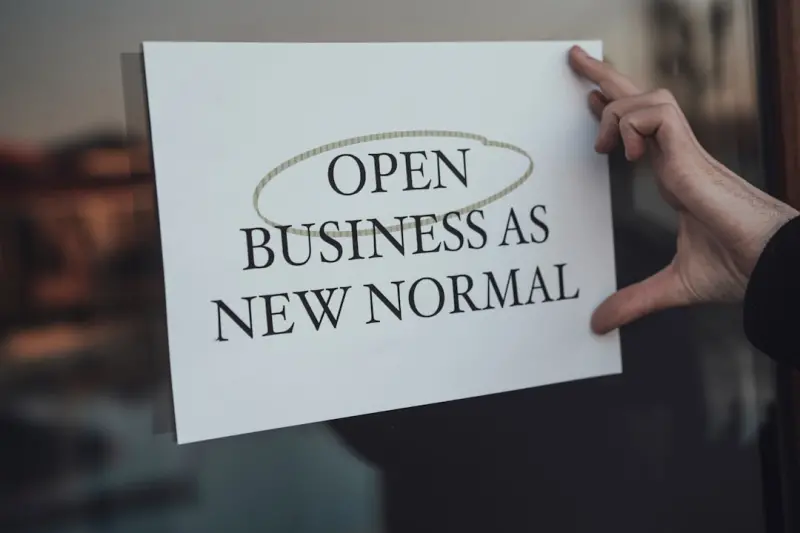
Reimagining Business Travel: Your Next‑Level Innovation Lab
When the airplane doors close and the cabin lights dim, most of us are counting down the minutes until we can stretch our legs again. But what if that idle time, the hotel room, and even the hurried lunch break could become a catalyst for breakthrough ideas? I’ve spent the last decade hopping between conference rooms, co‑working spaces, and unfamiliar streets, and I’ve learned to treat every business trip as a portable lab where curiosity, observation, and intentional experimentation converge.
Why Treat a Trip Like a Lab?
Traditional business travel is often framed as a logistical hurdle: flights, visas, expense reports. The focus is on getting from point A to point B efficiently. Yet, the very variables that make travel “messy” – new cultures, unexpected schedules, unfamiliar technology – are also the ingredients that spark fresh thinking. In a controlled office environment, it’s easy to fall into routine. On the road, you’re forced to ask, “What can I learn from this environment that I can bring back to my team?”
- Contextual Insight: Observing how locals solve everyday problems gives you a sandbox of real‑world solutions.
- Rapid Prototyping: Limited resources push you to improvise, often yielding lean, elegant fixes.
- Cross‑Pollination: Meeting professionals from unrelated industries can ignite interdisciplinary ideas.
Turning the trip into a lab doesn’t require a full‑scale research team; it just needs a mindset shift and a few practical tools.
Step 1: Set an Intentional Learning Goal
Before you even pack your bag, ask yourself a simple question: What do I want to discover on this trip? Rather than a vague “network more,” be specific. For instance:
- Identify three ways local hospitality services streamline guest check‑in.
- Learn how a regional startup uses low‑bandwidth connectivity to deliver services.
- Observe the design of public transportation ticketing systems for friction points.
Write this goal on a sticky note and place it on your laptop lid. When the day feels hectic, that note becomes a compass, steering you back toward purposeful exploration.
Step 2: Equip Your Portable Toolkit
Technology can amplify the lab experience, but it should stay lightweight. Here’s a minimal yet powerful set:
- Voice Memo App: Capture fleeting insights without interrupting the flow.
- Offline Note‑Taking Canvas: A digital sketchpad that works without Wi‑Fi, ideal for mapping process flows on the go.
- Portable Wi‑Fi Hotspot: Guarantees connectivity for quick research or sharing findings with teammates.
- Secure Cloud Folder: Store photos, PDFs, and recordings in a single, searchable location.
When you need a deeper dive into the tech side of travel, check out Edge Computing: The Unseen Accelerator for B2B SaaS for inspiration on low‑latency solutions that can keep your lab running smoothly even in remote corners.
Step 3: Conduct Micro‑Field Studies
Field studies don’t have to be exhaustive. In fact, the most valuable observations often come from short, focused interactions. Here are three micro‑study formats that fit into a coffee break:
- “One‑Minute Interviews” – Approach a local employee or fellow traveler and ask a single, open‑ended question related to your learning goal.
- Process Walk‑Throughs – Observe a service transaction (e.g., buying a metro ticket) from start to finish, noting each touchpoint.
- Environment Mapping – Sketch the layout of a coworking space or lobby, highlighting traffic flow and friction spots.
Document each study in a structured template: hypothesis, observation, insight, potential application. This habit transforms scattered anecdotes into actionable data.
Step 4: Synthesize on the Fly
While you’re still in the hotel, set aside 20 minutes each evening to consolidate your notes. Look for patterns across the different micro‑studies. Ask yourself:
- What recurring pain points did I see?
- Which solutions seemed simple yet effective?
- How could my organization adapt or improve upon these findings?
Use a visual mind‑map or a simple table to align observations with potential product or process ideas. This immediate synthesis prevents insights from evaporating overnight.
Step 5: Share and Iterate Before You Fly Home
Before the trip ends, schedule a short virtual debrief with a cross‑functional team. Present your findings in a concise slide deck—no more than ten slides—focusing on three high‑impact takeaways. Encourage teammates to ask “What‑if” questions, turning your raw observations into prototype concepts.
When the conversation gains momentum, assign a small sprint to prototype one of the ideas. The advantage of having fresh data from the field is that the team can move quickly, testing hypotheses while the experience is still vivid.
Real‑World Example: From Airport Lounge to Product Feature
During a recent trip to a bustling Asian metropolis, I spent an hour in an airport lounge that offered a seamless “digital concierge” service. Travelers could order food, request lounge access, and even book a taxi with a single tap. The key insight? The interface used a contextual menu that adapted based on the user’s flight status and time until departure.
Back at my company, we were grappling with a sluggish onboarding flow for new SaaS users. Inspired by the lounge experience, our product team built a dynamic onboarding checklist that reordered steps based on a user’s activity patterns. Within a month, the activation rate jumped by 12%.
This is a textbook example of turning an observed travel convenience into a concrete product improvement.
Step 6: Turn the Trip Into a Post‑Trip Innovation Sprint
After you return, the work isn’t over. Schedule a dedicated “Innovation Sprint” that lasts no longer than two weeks. Use the sprint to:
- Validate the most promising ideas with internal stakeholders.
- Build low‑fidelity prototypes and test them with a small user group.
- Document lessons learned and archive them in a shared knowledge base for future travelers.
For a deeper dive into how to capture and leverage travel‑derived insights, the Sensory Passport article offers a framework for translating sensory experiences into creative assets—perfect for enriching your sprint’s ideation phase.
Balancing Work, Exploration, and Rest
Running a lab on the road doesn’t mean sacrificing well‑being. In fact, the most productive innovators are those who honor the need for downtime. Here are three quick practices:
- Morning Mindful Scan: Spend five minutes observing the hotel lobby, noting ambient sounds, lighting, and movement patterns. This primes your observational muscles.
- Walking Breaks: Use a 15‑minute walk to mentally rehearse a recent observation, allowing subconscious connections to form.
- Digital Sunset: Power down devices at least an hour before bed to consolidate memory and foster creative dreaming.
Putting It All Together: The Traveler’s Innovation Checklist
Print this checklist and tuck it into your passport. Treat it as a pre‑flight ritual.
- ✅ Define a clear learning objective.
- ✅ Pack a lightweight tech toolkit.
- ✅ Conduct at least three micro‑field studies.
- ✅ Synthesize findings each night.
- ✅ Share insights with your team before departure.
- ✅ Launch a post‑trip innovation sprint.
When you close the loop, you’ll notice a ripple effect: each trip becomes a catalyst, each observation a seed, and each sprint a harvest of tangible value for your organization.
Final Thought: The Journey Is the Experiment
Travel has always been a metaphor for discovery, but in the context of business, it can be a literal experiment. By approaching every itinerary with the curiosity of a scientist and the pragmatism of a product manager, you transform the ordinary act of traveling into a strategic advantage. The next time you board a flight, remember: the runway isn’t just a strip of concrete—it’s the launchpad for your next great idea.

Related Posts

Spontaneous Detours: A Fresh Take on Travel Adventures
Embrace the unknown with spontaneous detours, local flavors, and night‑sky tales that turn ordinar... Read More

Chasing the Uncharted: How Unplanned Detours Redefine the Soul of Travel
Explore the power of unplanned detours, from serendipitous street‑food finds to mindful tech use, ... Read More
Travel by Ear: Unlocking the World Through Sound
Discover how tuning into a destination’s unique sounds can turn ordinary trips into immersive expe... Read More
Top Posts

Secret Seaside Villages: How to Find Uncrowded Coastal Gems
Explore quiet seaside villages, learn how to locate them, enjoy authentic food, and travel responsibly while capturing unforgettable moments....Read More
Sustainable Storytelling: Turning Real Impact into Brand Trust
Explore why authentic eco‑focused storytelling is the new trust currency, how to turn data into relatable narratives, and the channels that amplify real impac...Read More
AI‑Powered Scenario Planning: Mapping Uncertainty for Strategic Advantage
AI scenario planning transforms raw data into actionable futures, enabling B2B SaaS leaders to anticipate market shifts, manage risk, and make faster, more info...Read More
Beyond Keywords: Building a Semantic SEO Strategy for SaaS
A fresh take on SaaS SEO, this guide walks you through building a semantic strategy—mapping entities, adding structured data, and creating topic clusters—to...Read More
0 Comments
Post Comment
You will need to Login or Register to comment on this post!