
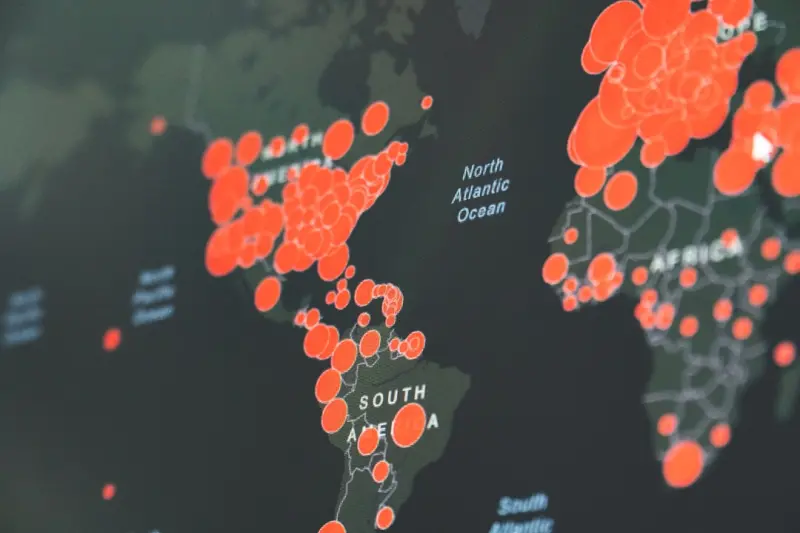
The Silent Saboteur: Reclaiming Health in a World of Constant Notifications
Every morning, before I even brush my teeth, a cascade of vibrations, chimes, and blinking lights greets me. It’s the digital equivalent of a rooster’s crow, except instead of signaling sunrise, it signals an endless stream of demands: emails, Slack pings, calendar alerts, social media updates, and the occasional “urgent” text from a colleague. For most of us, this barrage feels normal – a sign that we’re connected, productive, and in the loop. Yet beneath the surface, this constant notification overload is silently eroding our physical, mental, and emotional health.
In my years consulting with tech‑driven enterprises, I’ve watched high‑performing teams achieve remarkable milestones. But I’ve also witnessed the hidden cost: burnout, fragmented attention, chronic stress, and a cascade of health issues that rarely make it onto the KPI dashboard. The good news? The problem is solvable, and the solution starts with a deliberate, data‑informed approach to managing digital interruptions.
Why Notifications Matter More Than You Think
Research in cognitive psychology tells us that each time we shift attention – what’s known as a “task‑switch” – our brain incurs a measurable performance penalty. A 2020 study from the University of California found that task‑switching can waste up to 40% of our productive time, and the mental fatigue that follows is cumulative. Add to that the physiological stress response triggered by perceived urgency, and you have a perfect storm for chronic health deterioration.
But the impact goes beyond productivity. The fight‑or‑flight response activated by notification alerts releases cortisol, a hormone that, when elevated chronically, raises blood pressure, impairs immune function, and disrupts sleep architecture. Over weeks and months, employees can develop hypertension, experience frequent colds, and see their resting heart rate climb without ever realizing the root cause.
Three Hidden Health Pathways Affected by Notification Overload
- Neurocognitive Load: The brain’s limited capacity for information processing means that frequent interruptions force it to constantly re‑orient, leading to reduced working memory capacity and poorer decision‑making.
- Autonomic Nervous System Imbalance: The sympathetic branch (responsible for “alert” states) dominates when alerts are constant, leaving the parasympathetic branch (rest‑and‑digest) under‑activated. This imbalance fuels anxiety and hampers digestion.
- Sleep Disruption: Even a single notification that lights up a screen before bedtime can suppress melatonin production, delaying sleep onset and reducing deep‑sleep cycles, which are critical for cellular repair.
Quantifying the Cost: The Business Case for Health‑First Notification Management
From a leadership perspective, the numbers are compelling. Companies that implement structured notification policies report:
- 15‑20% reduction in employee sick days, as measured by HR analytics.
- 10% increase in average focus time per employee per day, translating into higher project throughput.
- Up to 30% lower turnover intent among teams that receive training on digital well‑being.
These gains are not abstract. They directly impact the bottom line, especially for knowledge‑intensive SaaS firms where every minute of deep work drives product innovation and customer satisfaction.
Designing a Health‑Centric Notification Strategy
Below is a step‑by‑step framework that any organization can adopt, regardless of size or industry.
1. Audit Your Digital Landscape
Start by mapping out every source of notification that reaches employees: email servers, collaboration tools (Slack, Teams), project management platforms (Jira, Asana), CRM alerts, and even personal apps that bleed into work hours. Use a simple spreadsheet to track frequency, perceived urgency, and who receives each type.
Next, correlate these data points with existing health metrics – such as average sleep quality scores from wellness surveys or wearable‑derived stress indices. Look for patterns: Do high‑frequency alerts align with spikes in reported anxiety? Does a particular team experience more “burnout” days when their Slack channel is always “on”?
2. Classify Alerts by Criticality
Not all alerts are created equal. Create three buckets:
- Critical (Immediate Action Required): System outages, security breaches, client emergencies.
- Important (Action Within Hours): Project deadline reminders, stakeholder meeting updates.
- Informational (Optional): Newsletter digests, social channel chatter, non‑urgent product updates.
Assign each notification source to a bucket and configure delivery methods accordingly. Critical alerts stay as push notifications; important ones can be batched into a daily summary; informational alerts should be relegated to a digest email or a “read later” queue.
3. Implement “Quiet Hours” Policies
Designate company‑wide quiet windows, such as 10 p.m. to 7 a.m., where only critical alerts break through. Encourage teams to respect each other’s focus time by using status indicators (“Do Not Disturb”) in collaboration tools. Reinforce the policy with automated rules: for example, Slack can be set to silence non‑critical messages after a user marks themselves “in a meeting.”
4. Leverage Intelligent Notification Routing
Modern AI platforms can prioritize alerts based on context. For instance, a machine‑learning model can learn that a developer who is deep in code commits rarely needs meeting invites, so it routes non‑essential messages to a low‑priority queue. While many firms are exploring AI for decision‑intelligence, applying it to notification triage is a low‑hanging fruit that directly protects employee health.
5. Educate and Empower Employees
Technology alone won’t solve the problem. Conduct workshops that teach the science of attention, the health impact of constant interruptions, and practical techniques like “single‑tasking” and “digital fasting.” Provide personalizable tools – such as mobile apps that let users set custom notification filters – so they feel ownership over their digital environment.
6. Measure, Iterate, and Celebrate Wins
After implementation, track key health indicators: self‑reported stress levels, sleep duration, and even biometric data (if your organization has a wellness program that uses wearables). Pair these with productivity metrics like average focus time and task completion rates. Celebrate improvements publicly – a 5‑point drop in stress scores, for example, should be highlighted in all‑hands meetings as proof that health‑centric policies drive performance.
Case Study: Turning Notification Overload into a Competitive Advantage
One mid‑size SaaS firm I consulted for was grappling with high turnover among its engineering team. An internal health survey revealed that 68% of engineers felt “always on” and cited “constant Slack pings” as a primary stressor. By applying the framework above, the company achieved the following within six months:
- Reduced average daily Slack notifications per engineer by 45%.
- Improved average sleep duration from 6.2 hours to 7.1 hours, measured via wearable data.
- Decreased voluntary turnover intent by 28%.
- Boosted sprint velocity by 12% due to longer periods of uninterrupted coding.
The success was not merely a “nice‑to‑have” perk. The company reported faster feature releases, higher customer satisfaction scores, and a measurable uplift in their quarterly revenue forecast.
Integrating Nutrition and Digital Hygiene: A Holistic Approach
While managing notifications tackles the neurological and emotional dimensions of health, we shouldn’t overlook the role of nutrition. The emerging field of nutrigenomics shows that diet can modulate how our bodies respond to stress. For example, foods rich in omega‑3 fatty acids help regulate cortisol production, while magnesium‑dense meals support better sleep quality.
Encourage teams to pair digital‑wellness practices with nutrition‑focused initiatives: provide brain‑boosting snack boxes, host lunch‑and‑learn sessions on anti‑inflammatory diets, and integrate personalized nutrition recommendations into wellness portals. The synergy of reduced digital stress and optimal nutrition creates a virtuous cycle, reinforcing resilience across the organization.
The Role of Leadership: Modeling Healthy Digital Behaviors
Culture change starts at the top. When executives respond to every email at midnight, they inadvertently signal that “always‑on” is the norm. Leaders should model the desired behavior by:
- Setting their own quiet hours and honoring them publicly.
- Limiting after‑hours emails to critical topics only.
- Sharing personal stories of digital detox successes to normalize the practice.
When employees see their leaders prioritizing health, they feel safe to adopt similar habits without fear of being perceived as less committed.
Future Outlook: From Reactive to Proactive Health Management
As AI and sensor technologies continue to mature, we’ll see more proactive health management systems that anticipate stress before it manifests. Imagine a platform that monitors your heart‑rate variability (HRV) via a smartwatch, detects a dip indicating rising stress, and automatically nudges you to silence non‑critical notifications for the next hour. Such anticipatory interventions will shift health from a reactive fix to a built‑in feature of the digital workplace.
Until that future arrives, the tools and strategies outlined here are immediately actionable. By taking control of the notification ecosystem, organizations can transform a silent saboteur into a catalyst for healthier, more engaged teams.
Take the First Step Today
Ask yourself: How many notifications did you ignore today? How many of those could have waited until tomorrow? The answers will guide your path toward a calmer, more productive work environment. Start with a simple audit, involve your team, and watch the ripple effects on health, morale, and bottom‑line performance.

Robert Mathews is a professional content marketer and freelancer for many SEO agencies. In his spare time he likes to play video games, get outdoors and enjoy time with his family and friends .
Related Posts
The Healing Power of a Digital Detox: Reclaiming Your Body and Mind
A digital detox isn’t just a trend; it’s a science‑backed strategy to reduce stress, improve s... Read More

The Hidden Power of Smart Hydration: Transforming Health One Sip at a Time
Unlock the transformative benefits of purposeful hydration. From cellular science to habit‑stackin... Read More

The Hidden Health Benefits of Digital Minimalism
Digital minimalism isn’t about abandoning tech; it’s about curating it to protect your gut, brai... Read More
Top Posts
Conversational Commerce: Redefining B2B Digital Marketing
Conversational commerce merges real‑time messaging, AI chatbots, and voice assistants to turn static B2B funnels into interactive loops, accelerating sales cy...Read More
Google’s Green Cloud: How Sustainable Infrastructure Can Supercharge Your SaaS
Explore the hidden advantages of Google’s renewable‑powered cloud, carbon‑aware scheduling, and edge capabilities, and learn practical steps SaaS companie...Read More
Unleashing Gemini: Google’s Generative AI as the Secret Weapon for SaaS Knowledge Hubs
A deep dive into Google’s Gemini platform reveals how SaaS teams can embed a conversational AI overlay on existing knowledge sources, personalize with zero‑...Read More

Surfing Google’s AI Wave: A Human‑First Marketer’s Guide
In a world where Google’s AI reshapes search, I share my human‑first roadmap for turning algorithms into allies, preserving authenticity, and driving result...Read More
0 Comments
Post Comment
You will need to Login or Register to comment on this post!