
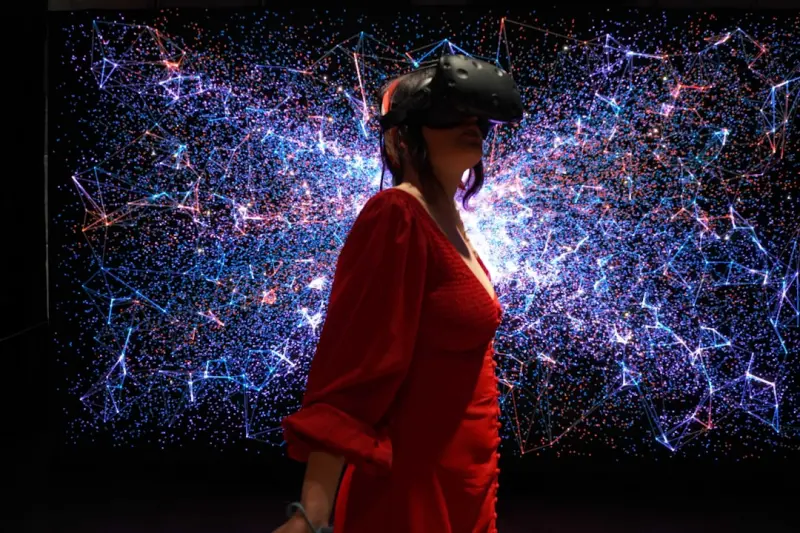
Why Spatial Computing Is the Next Frontier for Collaboration
When I first slipped on a mixed‑reality headset during a product brainstorming session, the line between my laptop screen and the physical conference table dissolved, and I realized we were stepping into a new era of teamwork. Spatial computing fuses augmented reality, virtual reality, and sophisticated sensor arrays to create a shared three‑dimensional canvas that anyone can walk, touch, and manipulate in real time. This shift feels less like an upgrade of video calls and more like an invitation to co‑create in a space that mirrors the physical world while amplifying its possibilities.
The Building Blocks That Make Virtual Spaces Feel Tangible
At its core, spatial computing relies on depth‑sensing cameras, lidar scanners, and eye‑tracking algorithms that translate real‑world gestures into digital actions, letting users place 3‑D models on a coffee table as naturally as they would a coffee mug. These hardware advances pair with cloud‑based rendering engines that stitch together high‑fidelity graphics, ensuring that every participant sees the same object from the same angle, regardless of their device. The result is a seamless blend of the concrete and the conceptual, where a prototype can be rotated, scaled, and annotated by a global team as if it were sitting right in front of them.
From Friction to Flow: How Teams Gain Speed
Traditional remote collaboration often suffers from “screen fatigue” and miscommunication caused by flat, two‑dimensional presentations. By contrast, a spatial workspace lets stakeholders explore data layers, walk around complex schematics, and even simulate physics‑based interactions without leaving their chairs. This immersion reduces the back‑and‑forth of “Can you see that?” emails, replacing them with a shared visual language that accelerates decision‑making and fuels creativity.
Integrating Spatial Layers with Existing Digital Ecosystems
One of the smartest moves early adopters are making is to layer spatial experiences atop familiar productivity suites, allowing a seamless transition between a spreadsheet and a holographic dashboard. For example, teams can pull a live analytics chart from their cloud service and project it onto a virtual whiteboard, where colleagues can annotate directly with hand gestures. This approach mirrors the principles of ambient computing, where technology recedes into the background while empowering users with contextual intelligence.
Real‑World Applications That Illustrate the Power of 3‑D Collaboration
Design studios are already using spatial platforms to prototype consumer gadgets, allowing engineers to test ergonomics by virtually “holding” a device before any physical mold is created. In education, teachers project interactive anatomy models that students can dissect layer by layer, turning abstract concepts into tactile learning moments. Meanwhile, architects walk clients through full‑scale virtual replicas of buildings, instantly swapping materials and lighting conditions to visualize the impact of design choices.
The Hurdles We Must Clear Before Widespread Adoption
Despite its promise, spatial computing faces practical challenges that could slow its rollout. High‑end headsets remain pricey, and the ergonomics of prolonged use are still being refined, which can deter organizations with limited budgets. Moreover, designing intuitive user interfaces for three‑dimensional interaction demands a new set of design heuristics, and privacy concerns arise when cameras constantly map users’ environments. Addressing these issues will require coordinated effort from hardware manufacturers, software developers, and policy makers alike.
Edge AI: Bringing Real‑Time Intelligence to the Spatial Edge
To keep experiences fluid, many spatial applications are offloading heavy processing to edge devices, ensuring low latency and smoother interactions. By embedding AI directly into the headset, the system can recognize gestures, predict user intent, and even generate contextual content on the fly without a round‑trip to the cloud. This trend echoes the shift highlighted in our coverage of edge AI, where localized intelligence is key to unlocking responsive, immersive experiences.
Digital Twins Meet Spatial Collaboration
When a digital twin of a manufacturing plant is rendered in a spatial environment, engineers can walk through the virtual factory floor, diagnose bottlenecks, and simulate upgrades in real time. This convergence of real‑world data and immersive visualization enables proactive maintenance and rapid iteration, turning what used to be a static dashboard into a living, breathing replica that teams can interact with collectively. Our earlier exploration of digital twins hinted at their analytical power; spatial computing now adds the dimension of shared, embodied insight.
What Comes Next: A Call to Embrace the Spatial Shift
The momentum behind spatial computing suggests that the future of teamwork will be less about screens and more about shared spaces that feel as real as the office cubicle. Early adopters who experiment with mixed‑reality prototypes, integrate edge AI, and align their workflows with digital twins will not only gain a competitive edge but also set the cultural tone for how we collaborate across distances. The invitation is clear: step into the spatial arena, and watch your ideas take shape in three dimensions.

In the world of freelance writing, where creativity and adaptability are paramount, Michelle Fisher stands out as a dedicated and versatile professional. With a passion for crafting compelling narratives and a keen eye for detail, Michelle has established herself as a trusted voice.
Related Posts

Why Edge AI Is the Next Frontier for B2B SaaS
Edge AI moves intelligence from the cloud to the data source, cutting latency, enhancing privacy, an... Read More

Ambient Computing: The Invisible Tech Redefining Everyday Life
Discover how ambient computing reshapes homes, offices, and health spaces by embedding smart, privac... Read More

Composable SaaS: Building Modular Platforms for Unstoppable Innovation
A deep dive into composable SaaS, exploring how modular microservices, AI, and edge computing empowe... Read More
Top Posts

Why Consistent Brand Voice Is the Hidden Engine of Digital Success
A unified brand voice cuts through digital noise, strengthens SEO, and builds lasting trust. Learn how to audit, craft, and measure voice consistency for unstop...Read More
Ambient Computing: The Invisible Engine Powering Tomorrow’s Devices
Explore the rise of ambient computing—how subtle, context‑aware technology is reshaping homes, offices, and the way brands interact with users, all while bo...Read More

Micro‑Workouts: Turning Desk Time into Fitness Wins
Micro‑workouts turn brief office pauses into powerful fitness bursts, improving metabolism, mental clarity, and overall well‑being for busy professionals....Read More

Transform Your Home Into a Mindful Sanctuary: Fresh Tips for Everyday Calm
Rose shares actionable home‑improvement ideas—from a calming entryway buffer to two‑minute tidies and sensory reset corners—that turn any house into a d...Read More
0 Comments
Post Comment
You will need to Login or Register to comment on this post!