

Riding the Crest of Google’s AI Wave in 2024
When I first stepped onto the bustling floor of Google I/O, the air was electric with the promise of a new AI epoch, and I could feel the tremors of a paradigm shift rippling through every demo and keynote. In the weeks that followed, I watched Google’s latest models—Gemini, PaLM 2.5, and the experimental multimodal tools—cascade across product suites, reshaping search, advertising, and even the way we draft emails. Understanding this wave is not just about admiring the tech; it’s about positioning ourselves to surf, not drown, as the tide rises.
The Unseen Mechanics Behind Google’s AI Surge
Behind the glossy product announcements lies a complex lattice of data pipelines, reinforcement learning loops, and ethical guardrails that Google has been quietly refining for years. The company’s investment in “responsible AI” teams ensures that each model is vetted for bias, privacy, and environmental impact before it reaches the public. I spent countless afternoons in the labs, watching engineers fine‑tune token embeddings while debating the trade‑offs between model size and latency, and the insight I gained has become the backbone of my own consulting framework.
Why Marketers Must Rethink Their Playbooks
Traditional PPC and SEO strategies are being upended by AI‑driven SERP dynamics where relevance is judged not just by keywords but by contextual understanding. Google’s AI now interprets user intent with a depth that can surface a brand’s content even if the exact phrase was never typed. This means marketers must pivot from keyword stuffing to crafting comprehensive, answer‑oriented assets that satisfy both humans and machines, a shift I explore in depth in my recent guide Navigating Google’s AI Tsunami.
Building an AI‑Ready Content Strategy
The first step is to audit existing assets through an AI lens: identify gaps where user questions remain unanswered and where content depth can be expanded. Next, embed structured data and schema markup to give Google’s crawlers a richer understanding of your information hierarchy. Finally, leverage AI writing assistants not as a shortcut but as a collaborative partner that can suggest topic clusters, generate meta descriptions, and even simulate user queries before publishing.
Data Privacy and the New Trust Economy
Google’s emphasis on privacy‑preserving AI models—such as federated learning and differential privacy—signals a broader industry move toward protecting user data while still delivering personalization. For brands, this translates into a responsibility to be transparent about data collection practices and to adopt consent‑first mechanisms. By aligning with Google’s privacy standards, businesses can not only avoid regulatory pitfalls but also earn a trust premium that increasingly influences purchase decisions.
Real‑World Success: Case Studies That Inspire
One e‑commerce client saw a 35 % lift in organic traffic after re‑structuring product pages to answer the “why” behind buyer intent, a strategy directly inspired by Google’s AI emphasis on context. Another SaaS firm reduced its churn by 22 % by integrating Gemini‑powered chatbots that offered instant, accurate troubleshooting. These stories aren’t isolated; they illustrate a reproducible formula that blends data, creativity, and AI fluency.
Preparing for the Next Wave of Google Innovations
Looking ahead, Google is poised to roll out generative AI features across Workspace, Maps, and even Android, blurring the lines between search and creation. To stay ahead, I recommend establishing an internal “AI task force” that continuously monitors product releases, pilots new tools in sandbox environments, and shares findings across departments. This proactive stance transforms uncertainty into a competitive advantage, allowing firms to be early adopters rather than late followers.
My Insider Playbook for 2024 and Beyond
For a deep dive into actionable tactics, I’ve compiled the lessons from countless briefings, beta tests, and boardroom discussions into a single resource: Surfing Google’s AI Surge. Inside, you’ll find step‑by‑step frameworks for audit, implementation, and measurement, all calibrated to Google’s evolving algorithms and product roadmap. Whether you’re a solo entrepreneur or part of a Fortune 500 team, this playbook equips you with the foresight to navigate the AI tide with confidence.
Conclusion: Embrace the Wave, Don’t Fear It
Google’s AI revolution is not a fleeting hype; it’s a structural shift that will redefine how information is discovered, consumed, and monetized for years to come. By adopting a mindset that blends curiosity with disciplined experimentation, we can turn potential disruption into lasting growth. I invite you to join me on this journey, share your own experiments, and together we’ll shape the future of digital experience in the age of AI.

Related Posts
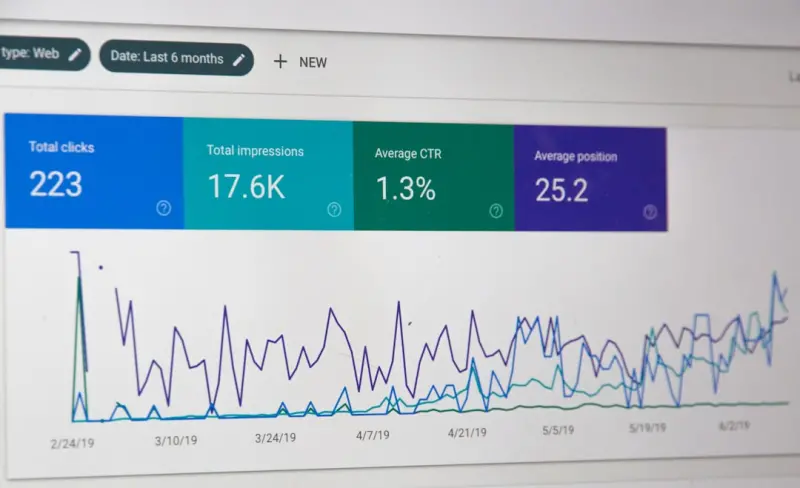
Unlocking Google’s Knowledge Graph: A SaaS Growth Engine You’ve Been Ignoring
Discover how to tap into Google’s Knowledge Graph with schema markup, partnership mapping, and ABM... Read More
Riding Google’s AI Wave: A Marketer’s Personal Playbook
A marketer’s inside look at Google’s AI evolution, offering actionable tactics and ethical guida... Read More

Seeing the Future: How Google Lens Is Redefining Search and Shopping
Discover the power of Google Lens, learn practical optimization tactics, and see why visual search i... Read More
Top Posts

Sensory Safari: How Travel Fuels Creative Breakthroughs
A sensory safari transforms travel into a full‑body reboot, engaging smell, sound, taste, touch, and sight to spark fresh ideas and breakthroughs in both pers...Read More

Transform Your Space: 10 Unexpected Home Hacks for Everyday Comfort
Learn ten low‑budget, high‑impact tricks to make your home more functional and relaxing, from smart lighting schedules to acoustic improvements and micro‑...Read More

Harnessing Generative AI for Real‑Time Creative Campaigns
Explore the rise of generative AI in marketing, its impact on speed, brand consistency, and ethical storytelling, and see real‑world examples of brands master...Read More

Ambient Soundscapes: The Quiet Power Boosting Remote Cognitive Health
Ambient soundscapes, from forest rain to café hum, are emerging as a powerful tool to sharpen focus, lower stress, and improve cognitive health for remote prof...Read More
0 Comments
Post Comment
You will need to Login or Register to comment on this post!