
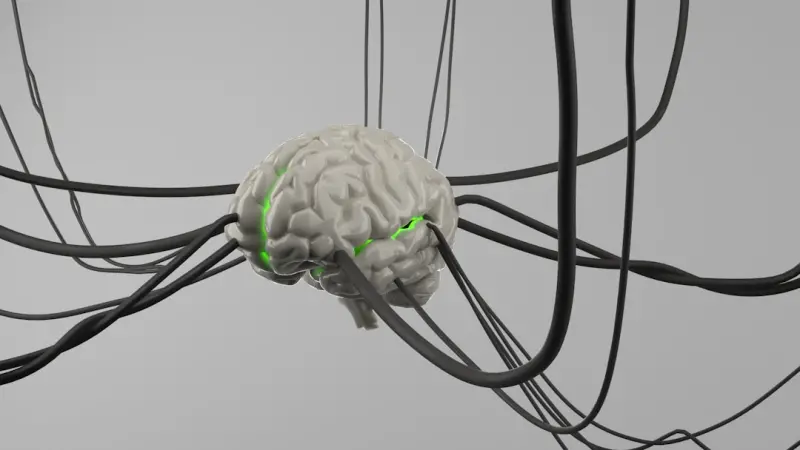
Why Neurotechnology Is No Longer Sci‑Fi
When I first saw a headline about a startup turning thoughts into text, my inner skeptic kicked in, but the demo was impossible to ignore. The device, a sleek headband with dry electrodes, captured brainwave patterns and translated them into simple commands in real time. Neurotechnology has leapt from the lab to the living room, promising a future where you could mute a video, scroll a feed, or even draft an email without lifting a finger. The shift is subtle yet profound: it moves computing from the external world of screens to the internal landscape of our minds. As more developers join the race, the conversation is moving from “if” to “when” and, crucially, “how” we integrate these interfaces responsibly.
The Architecture Behind Brain‑Computer Links
At the core of every neuro‑interface lies a signal processing pipeline that converts raw electroencephalogram (EEG) data into actionable intents. Modern chips, often built on the same Edge AI principles that power your smartwatch, perform real‑time noise filtering, feature extraction, and pattern recognition on the device itself. This on‑device intelligence reduces latency, preserves privacy, and eliminates the need for constant cloud connectivity. The result is a seamless loop where the brain sends a command, the processor decodes it, and the device responds in milliseconds—far quicker than traditional voice assistants. The underlying hardware is becoming as ubiquitous as Bluetooth, with manufacturers embedding neuro‑sensors into earbuds, VR headsets, and even office chairs, turning everyday objects into silent collaborators.
From Accessibility to Everyday Convenience
Historically, brain‑computer interfaces (BCIs) were championed as assistive technology for people with mobility challenges, and that remains a vital use case. However, the momentum is now shifting toward mainstream adoption, where the same tools that empower a user with limited movement become a novelty for anyone craving hands‑free interaction. Imagine walking through a grocery aisle and simply thinking “add milk” to your shopping list, or a presenter gliding through slides with a mental cue. These scenarios blur the line between intentional commands and subconscious thoughts, prompting developers to build robust intent‑recognition models that can distinguish purposeful signals from background brain activity. As the technology matures, it will likely become an invisible layer of interaction, much like ambient computing, enhancing convenience without demanding attention.
Data Privacy in a World That Reads Your Mind
The promise of neurotechnology comes with a parallel set of ethical dilemmas that demand immediate attention. Brain data is arguably the most intimate biometric information, revealing not just actions but emotions, stress levels, and even predispositions. If this data is transmitted to the cloud, it could be vulnerable to interception or misuse, turning personal thoughts into commercial commodities. Companies must adopt a privacy‑first architecture, encrypting raw EEG streams at the source and storing only abstracted intent tokens. Moreover, transparent consent frameworks—akin to the emerging zero‑party data models—should empower users to decide which mental signals are shared and for how long. Without rigorous standards, we risk a future where the line between mental privacy and market insight becomes dangerously thin.
Neuro‑Feedback Loops: Enhancing Human Performance
Beyond command execution, neurotechnology opens the door to real‑time feedback that can improve focus, learning, and mental health. By monitoring patterns associated with attention or stress, a device can nudge the user with subtle haptic cues, encouraging a shift in mindset. This closed‑loop system mirrors the way athletes use bio‑feedback to refine technique, but it operates on a cognitive level. Early adopters in the education sector report that students equipped with neuro‑feedback headsets show increased retention during study sessions, while remote workers cite reduced burnout when their devices gently suggest micro‑breaks during high‑stress periods. These applications illustrate that the true power of BCIs may lie not just in replacing physical input, but in augmenting mental clarity and well‑being.
Integration With Existing Smart Ecosystems
For neuro‑technology to reach mass adoption, it must play nicely with the smart devices already populating our homes and workplaces. Integration points are emerging through open APIs that allow brain‑derived intents to trigger actions across lighting, thermostats, and entertainment systems. A user could think “movie mode” and instantly dim the lights, close blinds, and launch a streaming app—all without uttering a word. This synergy extends to professional tools; designers can navigate 3D modeling software with mental gestures, while analysts might scroll through dashboards by simply visualizing the next chart. By positioning neuro‑interfaces as a universal input layer, developers can create a cohesive experience that feels natural, reducing friction and encouraging broader acceptance.
Economic Implications and Market Forecasts
The neuro‑tech market, once a niche segment, is projected to surge into the multi‑billion‑dollar arena within the next few years. Venture capital is flowing into startups that specialize in dry‑electrode sensors, AI‑driven signal decoding, and secure data pipelines. As hardware costs decline—thanks to economies of scale in semiconductor fabrication—consumer‑grade devices will become as affordable as fitness trackers. This economic momentum is likely to spawn a new ecosystem of app developers, content creators, and service providers focused on brain‑first experiences. Companies that invest early in neuro‑compatible platforms could lock in a competitive advantage, shaping user habits before the technology becomes ubiquitous.
Challenges on the Road to Mass Adoption
Despite the excitement, several technical and societal hurdles remain. Signal fidelity is still limited by the need for comfortable, non‑invasive sensors, which can be prone to motion artifacts. Battery life and form factor also pose design constraints; a device that must be worn all day cannot be bulky or require frequent charging. On the societal side, public perception of “mind reading” technology can evoke privacy fears and ethical concerns, slowing adoption. Regulatory frameworks have yet to catch up, leaving a gray area around data ownership and compliance. Addressing these challenges requires interdisciplinary collaboration—engineers, ethicists, and policymakers must converge to create standards that protect users while fostering innovation.
What the Future Holds: From Thought to Reality
Looking ahead, the convergence of neuro‑technology with other emerging trends—such as quantum‑ready cloud services and advanced AI—will unlock capabilities we can barely imagine today. As processing power accelerates, the latency between thought and action will shrink to imperceptible levels, making mental interaction feel as instant as blinking. This evolution will redefine productivity, creativity, and even social interaction, as conversations could occur through shared mental spaces without spoken words. While the path forward is riddled with technical, ethical, and cultural obstacles, the momentum is undeniable. By embracing a responsible, human‑centric approach now, we can ensure that the next wave of computing enhances—not intrudes upon—our most personal domain: the mind.

Karen Edwards is a seasoned freelance writer with a passion for all things furry, feathered, and scaled. With a dedicated focus on pets, she brings a wealth of knowledge and a keen eye for detail to her writing.
Related Posts
Ambient Computing: The Invisible Helpers Shaping Our Daily Lives
Discover the rise of ambient computing—how invisible sensors and edge AI turn ordinary environment... Read More

Decentralized Identity: Reclaiming Control Online
Discover the power of decentralized identity, a self‑sovereign model that gives you control over y... Read More

Edge Computing for SaaS: Turning Latency Into a Growth Engine
Edge computing is redefining SaaS by bringing compute closer to users, dramatically reducing latency... Read More
Top Posts

Beyond Google: SEO Strategies for TikTok, Amazon, and Voice Assistants
Explore a fresh SEO playbook that extends beyond traditional search, focusing on TikTok, Amazon, and voice assistants. Learn practical tactics to capture traffi...Read More

Solo Trekking: How One‑Person Adventures Sharpen Executive Decision‑Making
Explore how solo trekking develops unstructured thinking, resilience, deep listening, and empathy—key traits that translate into sharper decision‑making and...Read More

Riding the Edge: How Google’s New Cloud Edge Services Are Redefining SaaS Architecture
Google’s edge services let SaaS firms run AI, analytics, and personalized experiences closer to users, delivering faster response times, compliance with dataâ...Read More

Semantic SEO: The Untapped Growth Engine for B2B SaaS
Learn why traditional keyword tactics fall short and how building a semantic architecture can boost rankings, engagement, and qualified leads for B2B SaaS compa...Read More
0 Comments
Post Comment
You will need to Login or Register to comment on this post!