
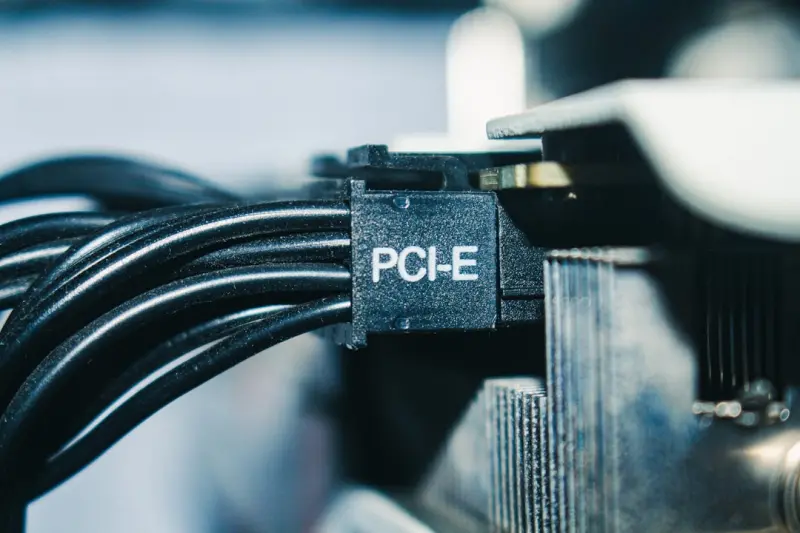
Why Edge Computing Is the Quiet Revolution
When I first started tinkering with cloud APIs, the promise of infinite scalability felt like a silver bullet for every latency‑sensitive problem. Yet, after deploying a real‑time analytics dashboard for a smart‑city project, I realized that even the fastest data centers are still miles away from the sensors buzzing on the street. Edge computing bridges that gap by moving compute power closer to the source, slashing round‑trip times from hundreds of milliseconds to a few. This shift isn’t just about speed; it reshapes how we architect applications, demanding a more distributed mindset where every node can act autonomously. In my own experiments, pushing inference models to the edge turned a sluggish video stream into a responsive, on‑device experience that felt almost magical. The quiet revolution is here, and it’s redefining the very definition of “real‑time.”
Edge Versus Cloud: A Symbiotic Relationship
The old debate of edge versus cloud often paints them as rivals, but the reality is far more collaborative. Cloud platforms still excel at heavy lifting—massive batch processing, long‑term storage, and training colossal AI models. Edge, on the other hand, handles the instant decisions that latency‑critical applications demand, such as autonomous drone navigation or industrial robotics. By offloading inference and preprocessing to the edge, we conserve bandwidth and reduce the cost of shuttling raw data to centralized warehouses. In my recent proof‑of‑concept, a network of edge nodes filtered sensor noise locally, sending only distilled insights to the cloud for deeper analytics, cutting data transfer by more than 70 %. This synergy not only optimizes performance but also frees up cloud resources for tasks that truly require its massive scale.
On‑Device AI: Bringing Intelligence to the Edge
One of the most exhilarating developments I’ve witnessed is the rise of on‑device AI, where sophisticated neural networks run on tiny chips embedded in everyday devices. Modern microcontrollers now boast dedicated NPUs capable of executing convolutional layers in milliseconds, enabling features like facial recognition on a smart lock without ever contacting a server. This autonomy dramatically improves privacy, as personal biometric data never leaves the device’s perimeter. I integrated a quantized object‑detection model into a handheld scanner for inventory management, and the latency dropped from 1.2 seconds in the cloud to under 100 milliseconds on‑device. The user experience transformed from a clunky, wait‑and‑see routine to a fluid interaction that feels native. As developers, we now have the toolkit to embed intelligence directly where it matters most, unlocking use cases that were previously impossible.
Security and Data Sovereignty at the Edge
Moving compute to the edge introduces a new security paradigm that I’ve had to grapple with on several projects. While reducing data transit lowers exposure to network attacks, each edge node becomes a potential attack surface that must be hardened. Secure boot, encrypted storage, and remote attestation are now baseline requirements for any production deployment. Moreover, regulatory frameworks increasingly demand that data generated within a jurisdiction remain locally processed—a concept known as data sovereignty. By processing sensitive information on‑premises, edge solutions help organizations stay compliant without sacrificing functionality. In a recent collaboration with a European healthcare provider, we designed an edge gateway that performed real‑time vitals analysis, ensuring patient data never left the hospital’s secure network, thereby meeting GDPR mandates while still delivering actionable insights instantly.
Game‑Changing Business Use Cases
The commercial potential of edge computing stretches across industries, and I’ve seen firsthand how it fuels innovation in areas like augmented reality, gaming, and autonomous transportation. Imagine an AR headset that overlays contextual information onto a live scene; the latency budget for a seamless experience is measured in tens of milliseconds, something only edge can reliably provide. In the gaming world, edge servers positioned near players reduce lag, creating a level playing field for competitive esports. Autonomous vehicles rely on edge nodes for ultra‑low‑latency sensor fusion, enabling split‑second decisions that can mean the difference between safety and disaster. Each of these scenarios shares a common thread: the necessity for immediate processing at the point of interaction, a requirement that traditional cloud architectures simply cannot satisfy.
Technical Hurdles and Deployment Complexities
Despite its promise, edge computing is not without formidable challenges. Managing a fleet of heterogeneous devices—each with its own CPU architecture, OS, and firmware—requires robust orchestration tools that many teams are still learning to wield. Firmware updates must be rolled out securely and reliably, often over flaky network connections. Additionally, resource constraints demand meticulous model optimization; techniques like pruning, quantization, and knowledge distillation become daily considerations rather than optional enhancements. In my own deployments, the learning curve was steep, especially when integrating edge nodes into existing CI/CD pipelines. However, the emergence of platforms that abstract away much of this complexity—offering containerized edge runtimes and unified monitoring dashboards—has begun to lower the barrier to entry, making it feasible for smaller teams to experiment and scale.
Future Trends: Serverless Edge and Multi‑Access Edge Computing (MEC)
Looking ahead, the convergence of serverless architectures with edge infrastructure is poised to democratize access even further. With serverless edge, developers can deploy functions that automatically scale across distributed nodes without worrying about underlying hardware provisioning. This model aligns perfectly with the emerging Multi‑Access Edge Computing (MEC) standards defined by telecom operators, which promise ultra‑reliable, low‑latency connectivity for 5G‑enabled devices. I’m particularly excited about the prospect of event‑driven edge functions that react to sensor spikes in real time, orchestrating responses across a mesh of devices. As these ecosystems mature, we’ll likely see a surge in innovative services—from real‑time language translation at the border to instant fraud detection in point‑of‑sale systems—each leveraging the seamless blend of serverless flexibility and edge proximity.
Getting Started: Tools, Platforms, and Learning Resources
If you’re eager to dip your toes into edge development, the ecosystem now offers a plethora of starter kits and managed services. Major cloud providers expose edge runtimes that integrate with their existing toolchains, allowing you to write code once and deploy it across a global network of micro‑datacenters. Open‑source projects like EdgeX Foundry provide vendor‑agnostic frameworks for building IoT solutions, while specialized hardware vendors ship development boards pre‑loaded with AI accelerators. To accelerate your learning curve, I recommend exploring case studies that showcase how generative AI in software development can be leveraged to auto‑generate optimized inference models for edge devices. Pair this with hands‑on tutorials that walk you through containerizing a model, deploying it to an edge node, and monitoring its performance in the field.
Conclusion: Embrace the Edge to Stay Competitive
In a world where user expectations are increasingly defined by speed and immediacy, ignoring the edge is no longer an option. The technology stack you choose today will dictate whether your products feel laggy and outdated or crisp and futuristic. By strategically distributing compute, you unlock new business models, enhance security, and future‑proof your architecture against the relentless push for real‑time experiences. As you chart your edge journey, keep an eye on complementary innovations like voice search optimization, which often rely on low‑latency processing to deliver seamless interactions. The edge is not just a peripheral addition; it’s the new core of modern technology—ready for you to harness.

Sanji Patel has dedicated 25 years to the SEO industry. As an expert SEO consultant for news publishers, he emphasizes providing both technical and editorial SEO services to news publishers worldwide. He frequently speaks at conferences and events globally and offers annual guest lectures at local universities.
Related Posts

Decentralized Identity: Rebuilding Trust in SaaS Platforms
Decentralized identity shifts trust from providers to users, offering privacy‑first authentication... Read More

Edge Intelligence: How Computing at the Network Edge is Transforming Real‑Time Experiences
Discover the rise of edge intelligence—how localized processing, new AI models, and advanced hardw... Read More

Ambient Computing: The Quiet Revolution Transforming Enterprise Workflows
Ambient computing is quietly redefining enterprise SaaS by delivering context‑aware insights exact... Read More
Top Posts

How Confidential Computing on Google Cloud Reinvents Data Security for SaaS
Confidential computing on Google Cloud offers hardware‑rooted enclaves that keep data private even during processing, giving SaaS providers a powerful securit...Read More

Creating a Multi‑Sense Retreat in Your Home
Learn how to transform ordinary rooms into multi‑sense retreats with simple lighting, sound, scent, and texture strategies. Small, affordable tweaks turn any ...Read More
Interactive Micro‑Experiences: Turning Every Touchpoint into a Mini‑Demo
Learn why embedding bite‑size, self‑service demos into blogs, emails, and ads can boost engagement, qualify leads faster, and close more SaaS deals—all wh...Read More

Home Choreography: Turning Every Room Into a Performance Stage
Discover a step‑by‑step guide to treating your home like a performance stage—using light, sound, modular furniture, and seasonal décor to boost productiv...Read More
0 Comments
Post Comment
You will need to Login or Register to comment on this post!