
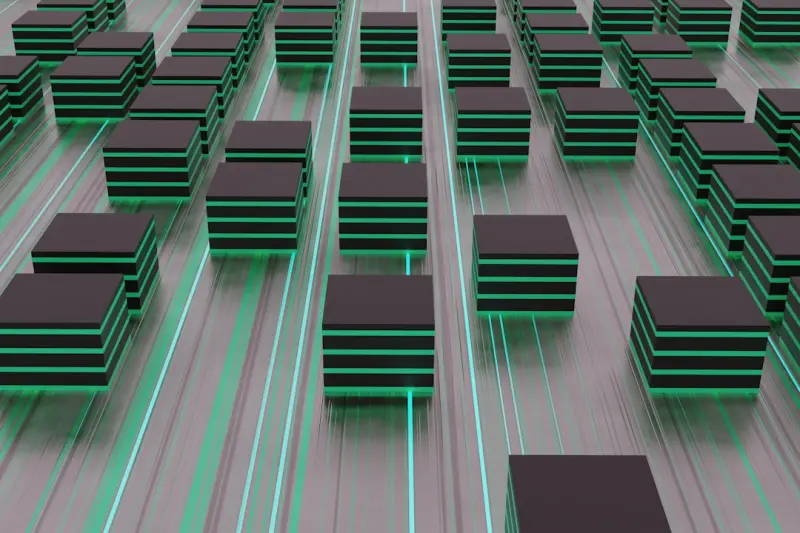
Why Edge Computing Is the Unsung Hero of Modern Tech
When I first unpacked a sleek, voice‑activated thermostat, I felt a familiar thrill—another piece of the digital puzzle clicking into place. Yet the real magic happens not in distant data farms, but in the tiny processor humming quietly behind the glossy surface. This shift, known as edge computing, is rewriting the rules of latency, privacy, and user experience in ways most of us barely notice, even as it powers the gadgets that shape our daily rhythms.
The Latency Leap: From Cloud to Device
Imagine ordering a coffee from an app and watching the barista’s screen light up in real time; the secret is that the request never travels far enough to feel a lag. By processing data at the network’s edge—right on the phone, router, or sensor—applications bypass the round‑trip to centralized servers, shaving milliseconds off response times. This near‑instant feedback not only delights users but also protects sensitive information, as personal data can stay local rather than traversing the public internet.
Real‑World Edge: Cameras, Cars, and Glasses
Smart security cameras now detect motion, recognize faces, and trigger alerts without sending a single frame to the cloud, thanks to on‑device AI chips. Autonomous vehicles rely on edge processors to interpret sensor data in the blink of an eye, making split‑second decisions that keep passengers safe. Even augmented‑reality glasses overlay digital instructions on the world around you, processing visual cues locally to maintain a seamless view.
Home IoT Gets Smarter—and Greener
Edge computing is turning ordinary appliances into energy‑conscious partners. A refrigerator that monitors its own power draw can adjust cooling cycles on the fly, reducing waste without waiting for cloud directives. Similarly, smart lighting systems analyze occupancy patterns in real time, dimming or brightening rooms based on immediate presence rather than scheduled timers. This localized intelligence translates into lower electricity bills and a smaller carbon footprint, proving that efficiency begins at the edge.
AI Inference on the Edge: Empowering Creators
For creators, the ability to run AI models directly on a laptop or tablet opens a world of possibilities. Instead of uploading raw footage to a distant server for rendering, artists can now apply style transfers, background removal, and voice modulation instantly, preserving creative flow. This democratization of AI aligns perfectly with the ideas explored in When AI Becomes Your Creative Partner, where the convergence of on‑device intelligence and imagination reshapes the artistic process.
Security and Standards: The Edge’s Double‑Edged Sword
While processing data locally reduces exposure to external threats, it also expands the attack surface across countless devices. Manufacturers must embed robust encryption, secure boot sequences, and regular OTA updates to keep firmware resilient. Moreover, the industry is racing to adopt interoperable standards that ensure different edge solutions can communicate without friction, a challenge that mirrors the broader quest for universal security protocols in an increasingly connected world.
Emerging Frameworks: From TinyML to Ambient Intelligence
Developers now have a growing toolbox for edge innovation. TinyML enables machine‑learning models to run on microcontrollers with minimal power, while container‑based platforms like KubeEdge simplify deployment across heterogeneous hardware. These advances dovetail with the concepts discussed in Ambient Intelligence, where technology recedes into the background, delivering context‑aware experiences without demanding attention.
Business Opportunities: Edge Marketplaces and Micro‑Communities
Enterprises are beginning to monetize edge capabilities by creating localized marketplaces for data, analytics, and AI services. Small‑scale developers can offer niche algorithms that run directly on a device, tapping into the demand for low‑latency, privacy‑first solutions. This ecosystem mirrors the potential highlighted in Micro‑Communities, where tightly knit user groups drive specialized, high‑value exchanges that traditional platforms often overlook.
Looking Ahead: Embrace the Edge or Be Left Behind
The trajectory of edge computing suggests that tomorrow’s breakthroughs will be measured not by the size of the cloud but by the intelligence embedded at the periphery. Developers, product managers, and even everyday users should start experimenting with on‑device AI, low‑power sensors, and decentralized architectures now, positioning themselves at the forefront of a quiet yet powerful revolution. By doing so, we not only future‑proof our solutions but also champion a more responsive, secure, and sustainable digital ecosystem.

Margaret Thomson is a seasoned freelance writer specializing in the dynamic worlds of marketing and advertising. With a career deeply rooted in the marketing field, Margaret brings a wealth of practical experience and insightful knowledge to her writing.
Related Posts
Zero‑Trust Networks: Backbone for Distributed Workforces
Zero‑trust networking has moved from buzzword to business imperative. This article walks through i... Read More

Ambient Computing: How Everyday Spaces Are Becoming Intelligent
Explore the rise of ambient computing, where AI and edge devices silently transform homes, offices, ... Read More

Federated Learning Unleashed: Privacy‑First AI for SaaS
Federated learning lets SaaS providers train AI models directly on user devices, sending only encryp... Read More
Top Posts
Smart Home Hacks for Everyday Efficiency
Turn your home into a well‑engineered system with low‑tech hacks, data‑driven decluttering, and SaaS‑style automation for smoother, more sustainable liv...Read More

Unlocking Crawl Budget: A Resilient SEO Blueprint
Learn to turn Google’s crawl budget into a strategic advantage with intent‑first mapping, log‑file insights, voice‑ready schema, and AI‑driven automat...Read More
Ambient Computing: The Quiet Engine Powering the Next Generation of SaaS
Ambient computing adds a layer of invisible intelligence to SaaS, delivering context‑aware insights exactly when needed. Learn how to design, implement, and m...Read More

Surfing Google’s 2024 AI Tsunami: Rose DesRochers’ Front‑Row Take
Rose DesRochers shares a front‑row perspective on Google’s 2024 AI wave, highlighting Gemini’s breakthroughs, ethical considerations, and a practical play...Read More
0 Comments
Post Comment
You will need to Login or Register to comment on this post!