
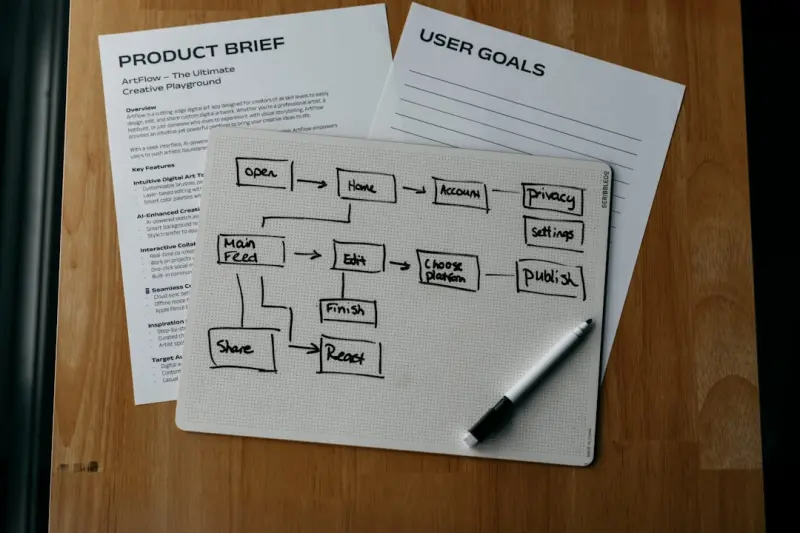
AI as a Co‑Pilot for SaaS Product Strategy
When I first walked into a product planning session armed with a spreadsheet, a whiteboard, and a half‑drunk coffee, the conversation felt like a chess match—moves were deliberate, but the board was often missing pieces. Fast forward a few years, and I’m now sitting at the same table with a different kind of teammate: an AI engine that can ingest market signals, churn data, and even the subtle whispers of customer support tickets. It’s not about replacing the human brain; it’s about giving it a turbo‑charged co‑pilot.
Why a Co‑Pilot, Not a Captain?
The classic metaphor of AI as the “future captain” can set unrealistic expectations. CEOs and VPs love the idea of a single, all‑knowing system steering the ship, but in reality, the most valuable AI contributions are augmentative. They surface insights you might never have considered, challenge your assumptions, and keep you honest about the data you’re feeding them.
- Speed: AI can sift through terabytes of usage logs in seconds, turning raw events into actionable trends.
- Scale: Human analysts are limited by bandwidth; an AI model can monitor thousands of accounts simultaneously.
- Objectivity: While we all have biases, an algorithm’s output is only as biased as its training data—making it a useful mirror to reflect hidden blind spots.
In practice, the AI co‑pilot helps you navigate three core phases of product strategy: discovery, prioritization, and validation.
Phase One: Discovery—Mining the Gold of Unstructured Data
Every SaaS company is a data goldmine. Between feature usage logs, NPS surveys, support tickets, and even social media mentions, you have an ocean of unstructured text waiting to be mined. Traditional BI tools give you the “what” but rarely the “why.” This is where AI’s natural language processing (NLP) shines.
Imagine an AI model that reads every support ticket in the last six months and clusters them into themes. You might discover that “integration latency” is surfacing as a silent pain point across multiple product lines—something that would be buried in the noise of a simple ticket volume chart.
To avoid the dreaded model drift that When AI Models Age: Guarding SaaS Against Drift and Decay warns about, you need a continuous feedback loop: feed the model fresh data, re‑train quarterly, and set up alerts for performance degradation. The result? A living, breathing discovery engine that evolves alongside your product.
Phase Two: Prioritization—From Gut Feel to Data‑Driven Confidence
Prioritizing a roadmap has always been part art, part science. The “art” lives in intuition, market experience, and stakeholder pressure. The “science”—if it exists—has been limited to simple scoring frameworks. AI can bridge that gap by quantifying the impact of potential features across multiple dimensions.
Here’s a practical workflow:
- Define success metrics: revenue lift, churn reduction, NPS improvement, activation rate.
- Feed historical data: past feature releases, associated metric movements, seasonality.
- Run predictive simulations: the AI model estimates the expected delta for each metric if a given feature were released.
- Overlay constraints: engineering capacity, compliance windows, market windows.
- Generate a ranked list: the AI surfaces a prioritized set, complete with confidence intervals.
This approach transforms a gut‑based debate into a conversation anchored by numbers. When the team asks, “Why should we build Feature X?” you can point to a probabilistic forecast instead of a vague “we think it will help.”
Phase Three: Validation—Rapid Experiments Powered by AI
Even the best‑scored ideas need validation. AI can accelerate this through two complementary tactics: AI‑driven A/B testing and synthetic data generation.
In AI‑driven A/B testing, the model continuously monitors key metrics in real time, adjusting traffic allocation on the fly to maximize statistical power while protecting user experience. Traditional static splits can waste weeks of data; a dynamic AI engine can converge on significance in days.
When you lack enough real users for a robust test—common in niche B2B SaaS—you can turn to synthetic data. By training a generative model on existing usage patterns, you create realistic, privacy‑safe mock users. Run your experiments against this synthetic cohort to surface edge‑case failures before any live exposure.
Guarding Against AI Blind Spots
All this sounds like a magic wand, but AI is only as good as the governance surrounding it. A few hard‑won lessons from my own journey:
- Human‑in‑the‑loop: Never let the model’s recommendation be the final decision. Use it as a hypothesis generator.
- Bias audits: Regularly audit feature impact predictions for demographic bias. An AI trained on a historically homogenous customer base can inadvertently marginalize emerging segments.
- Explainability: Choose models that can surface feature importance or SHAP values. When stakeholders ask “why?” you need an answer that’s understandable, not just a probability number.
And remember the AI security perspective: any AI system that influences product direction becomes a high‑value target. Protect the data pipelines feeding your co‑pilot, enforce strict access controls, and monitor for adversarial manipulation.
Culture Shift: From “AI‑Ready” to “AI‑First”
Embedding an AI co‑pilot into product strategy isn’t a one‑off project; it’s a cultural evolution. Here’s how we nudged our organization toward an AI‑First mindset:
- Cross‑functional AI guilds: Bring together product managers, data scientists, engineers, and even sales to share insights and align on AI use cases.
- AI literacy workshops: Demystify concepts like model drift, overfitting, and confidence intervals for non‑technical stakeholders.
- Success stories board: Publicly celebrate wins where the AI co‑pilot directly influenced a profitable feature launch.
When the whole team sees AI as a teammate rather than a tool, adoption accelerates, and the feedback loop tightens.
Looking Ahead: The Next Frontier of AI‑Powered Product Strategy
What’s on the horizon? Three trends I’m keeping a close eye on:
- Multimodal models: Combining text, usage logs, and even UI interaction heatmaps to produce richer insights.
- Federated learning: Training models across multiple tenant data silos without moving raw data, preserving privacy while improving accuracy.
- Real‑time intent detection: Using streaming analytics to sense shifts in customer intent the moment they occur, enabling on‑the‑fly roadmap tweaks.
These advances promise to make the AI co‑pilot even more intuitive, proactive, and safe. The key takeaway is simple: AI isn’t the future of product strategy; it’s the present. By treating it as a co‑pilot—trusted, questioned, and constantly calibrated—you turn uncertainty into a competitive advantage.
If you’re ready to put an AI co‑pilot on your product deck, start small. Pick a low‑risk discovery use case, build a feedback loop, and let the data speak. The journey from “AI‑curious” to “AI‑empowered” is a series of incremental wins, each one building trust and momentum.
Remember, the goal isn’t to hand over the reins; it’s to hand over a powerful lens that lets you see farther, faster, and with far less guesswork. The future of SaaS product strategy belongs to those who learn to fly with an AI co‑pilot at their side.

David Moore is a freelance writer specializing in two dynamic and ever-evolving fields: gambling and the tech industry. With a keen eye for detail and a knack for unraveling complex topics, David delivers insightful and engaging content that keeps readers informed and entertained.
Related Posts

When AI Becomes the Corporate Librarian: Preserving Knowledge and Accelerating Innovation
This post reveals how an AI‑powered knowledge curator can transform scattered insights into a livi... Read More

AI as a Trust Broker: Reinventing Credibility in B2B SaaS
This article explores a fresh angle on AI—using it as a trust broker—to enhance credibility, mee... Read More

Beyond Automation: How AI Can Amplify Human Empathy in SaaS Teams
Learn why integrating empathy‑centric AI into your SaaS workflow is the next competitive advantage... Read More
Top Posts
Micro‑Influencer Partnerships: How Niche Creators Fuel Sustainable Growth
Explore the power of micro‑influencer partnerships, from authentic relationships to AI‑enabled creator matching, and learn how they can become a sustainable...Read More

Unlocking Organic Growth: Transform Your SaaS Help Center into an SEO Engine
Discover a step‑by‑step strategy to turn your SaaS knowledge base into a traffic‑driving engine, leveraging intent clusters, schema markup, AI‑assisted ...Read More

Zero-Click Search: Winning the SERP Without a Click
Zero‑click search is reshaping SEO. Discover practical tactics—from answering queries directly to mastering schema markup—so your brand thrives even when ...Read More

Federated Learning: Decentralized AI for Privacy‑First SaaS
Federated learning enables SaaS companies to train AI models directly on user devices, keeping raw data private while delivering faster, personalized experience...Read More
0 Comments
Post Comment
You will need to Login or Register to comment on this post!