

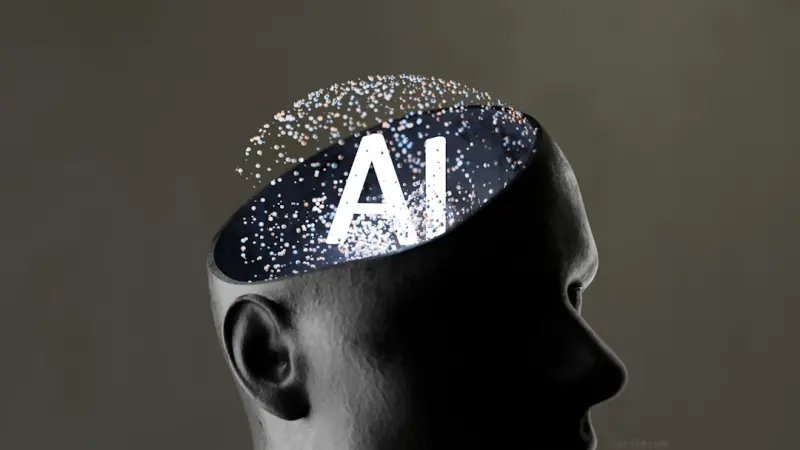
When I first sat down with a prototype language model and asked it to brainstorm a new feature for our SaaS platform, I expected a list of buzzwords and a handful of generic suggestions. Instead, the model handed me a narrative arc—characters, conflict, a resolution—that felt more like a short story than a product spec. That moment cracked open a fresh way of thinking about artificial intelligence: not just as an optimizer of numbers, but as a genuine creative collaborator.
The Rise of AI as a Muse
For years, AI has been cast in the role of the diligent accountant—sorting data, forecasting churn, automating repetitive tasks. The narrative has been useful, but it’s also limiting. In the same way that painters once dismissed the camera as a threat to art, many enterprises view AI as a tool that can only sharpen efficiency. The truth, however, is that AI can also be a source of inspiration.
Creative work thrives on the unexpected. It thrives on juxtaposition, on the collision of ideas that never met before. Modern generative models, trained on massive corpora of text, code, images, and even music, have learned to make those collisions happen on command. When you ask an AI to imagine a solution, it can pull from patterns across disciplines—mixing the logic of a financial algorithm with the storytelling cadence of a novelist—to surface concepts you never considered.
Beyond Data Crunching: The New AI Skillset
There’s a lingering myth that AI’s “intelligence” is confined to regression analyses and classification. In practice, the most valuable AI systems today combine three capabilities:
- Pattern Synthesis: The ability to detect and recombine patterns from disparate domains.
- Contextual Reasoning: Understanding the nuance of a prompt, including tone, constraints, and objectives.
- Iterative Dialogue: Engaging in a back‑and‑forth that refines ideas, much like a human brainstorming partner.
When these capabilities are harnessed together, AI becomes less of a calculator and more of a conversational muse. The result is not a finished product, but a fertile ground where human judgment and machine imagination intersect.
Building a Creative Dialogue with Machines
Creating a fruitful partnership with AI requires a shift in how we ask questions. Instead of demanding a definitive answer, we invite the model into an exploratory conversation:
- Set the Stage: Provide a clear but open‑ended context. For example, “We’re designing a self‑service onboarding flow for enterprise users. Think of it as a narrative journey.”
- Invite Divergence: Prompt the model to generate multiple, even contradictory, ideas. “Give me three wildly different ways to reduce friction in the signup process.”
- Iterate and Refine: Pick a seed idea, ask the model to expand, critique, or combine it with another concept. This loop mimics a human design sprint.
By treating the AI as a teammate rather than a tool, you unlock a richer set of possibilities. The model’s lack of ego means it won’t defend a bad idea; it will gladly explore alternatives until you steer it toward a direction that resonates.
Practical Frameworks for AI‑Human Co‑Creation
Below is a step‑by‑step framework that teams can adopt to embed AI into their creative pipelines without disrupting existing workflows:
- Idea Harvesting Session: Gather a cross‑functional group (product, design, engineering, sales) and feed the AI a concise brief. Capture the raw outputs in a shared document.
- Concept Scoring Matrix: Use a simple rubric—novelty, feasibility, impact, alignment with brand voice—to evaluate each AI‑generated concept. Human judgment remains the arbiter.
- Prototype Sprint: Select the top‑ranked ideas and build rapid, low‑fidelity prototypes. Here, AI can also assist by generating copy, mockup assets, or even code snippets.
- Feedback Loop: Test prototypes with real users, collect insights, and feed the results back into the AI for a second round of refinement. The model learns from the feedback indirectly through your prompts.
- Documentation & Knowledge Capture: Archive the conversation logs. Future teams can revisit the dialogue to understand why certain decisions were made, creating a living record of innovation.
This framework is intentionally lightweight; its power lies in the cadence of human‑AI interaction, not in heavy tooling.
Case Study: From Concept to Market with AI
One of our product teams recently applied this co‑creative approach to redesign a reporting dashboard for a B2B analytics suite. The challenge was to make complex data visualizations intuitive for non‑technical users while preserving depth for power users.
We began with a prompt: “Imagine a dashboard that tells a story about a company's quarterly performance in five minutes, using visual metaphors that a CFO can understand instantly.” The AI suggested three distinct storytelling metaphors:
- A travel itinerary that maps each quarter to a destination, with stop‑overs representing key metrics.
- A garden ecosystem where revenue is the sunlight, churn is the pests, and growth initiatives are the water.
- A financial orchestra where each instrument plays a different KPI, conducted by an interactive timeline.
Our team loved the garden metaphor for its visual richness. Using AI‑generated copy, we drafted micro‑narratives for each “plant” (metric) that explained its health in layman’s terms. The model also produced SVG icon sets that matched the botanical theme.
After a two‑week prototype sprint, we tested the garden‑styled dashboard with a focus group of CFOs. The feedback was overwhelmingly positive: users reported a 30% faster comprehension time and higher engagement scores. The final product launched three months ahead of schedule, saving development resources and delivering a differentiated experience that set us apart from competitors.
This example illustrates how AI’s creative contributions can accelerate time‑to‑market while elevating the user experience.
Pitfalls and Ethical Guardrails
While AI can be an inspiring collaborator, it also brings risks that must be managed deliberately:
- Bias Amplification: If the training data contains cultural or gender biases, the model may produce suggestions that inadvertently marginalize certain user groups. Mitigate this by explicitly prompting for inclusive language and by reviewing outputs with a diverse stakeholder panel.
- Intellectual Property Concerns: AI can remix existing copyrighted material. When using generated assets, verify that they don’t infringe on third‑party rights, especially for visual or textual content that will be published.
- Over‑Reliance on Automation: The most innovative ideas often arise from tension between human intuition and machine suggestion. Preserve the “human spark” by limiting the number of AI‑only iterations before a human review.
- Transparency: Internally, document which parts of a concept originated from AI. This fosters accountability and helps future teams understand the lineage of ideas.
Embedding these guardrails into your co‑creation workflow ensures that the partnership remains responsible, trustworthy, and aligned with corporate values.
The Future Glimpse: AI as an Ever‑Evolving Creative Partner
Looking ahead, the next wave of generative AI will be less about “generating” and more about “co‑evolving.” Imagine an AI that not only suggests ideas but also learns from each interaction, adapting its creative style to match the unique voice of your organization. Such models could serve as a perpetual R&D companion, surfacing emerging trends, proposing pivot strategies, and even drafting early‑stage business cases.
For leaders, the strategic imperative is clear: cultivate a culture that welcomes AI into the creative fold, and invest in the processes that enable seamless human‑machine dialogue. When you do, you’ll find that the line between technology and imagination blurs, unlocking a reservoir of innovation that was previously out of reach.
In the end, the real power of AI isn’t in its raw computational speed; it’s in its capacity to broaden our imagination. By treating machines as muses, we invite a future where every product, service, and strategy is co‑authored by both human insight and algorithmic creativity.
For those interested in diving deeper into how AI can reshape knowledge sharing within enterprises, explore Unlocking the Hidden Power of AI‑Driven Knowledge Hubs. And if you’re curious about the subtle ways generative AI is already influencing B2B workflows, see The Stealth Power of Google’s Generative AI in Modern B2B Workflows.

Dale Peterson is a freelance writer with a passion for technology, travel, law and personal finance. With 10 years of experience crafting compelling and informative content, he's dedicated to delivering high-quality writing for Blogging Fusion that engages audiences and achieves specific goals.
Related Posts

AI as a Compass for Ethical Business Decisions
Discover how integrating ethical AI into business strategy can boost trust, protect privacy, and dri... Read More
Federated Learning: The Privacy‑First Frontier for AI‑Powered SaaS Personalization
Federated learning enables SaaS providers to train AI models directly on user devices, preserving pr... Read More
When Machines Learn Empathy: The Rise of Emotion‑Aware AI
Discover the emerging world of emotion‑aware AI, where machines read mood, adapt responses, and be... Read More
Top Posts

Beyond Cookies: Building a Zero‑Party Data Engine for B2B SaaS Marketing
Zero‑party data—information customers willingly share—offers a privacy‑compliant path to hyper‑personalized B2B SaaS marketing. This post explores col...Read More

Why the Airport Terminal Is the Ultimate Remote‑Work Playground
Discover how to transform airport terminals into high‑impact remote‑work spaces using micro‑breaks, portable tools, and smart connectivity strategies....Read More

Real‑Time Intent Signals: A B2B Marketing Game‑Changer
Real‑time intent signals let marketers act the moment a prospect shows buying interest, turning fleeting digital breadcrumbs into a dynamic revenue engine tha...Read More

The Silent Power of Structured Breathing for Remote‑Work Health
Structured breathing is a low‑tech, high‑impact habit that remote professionals can adopt to lower stress, enhance focus, and improve overall health, with p...Read More
0 Comments
Post Comment
You will need to Login or Register to comment on this post!