
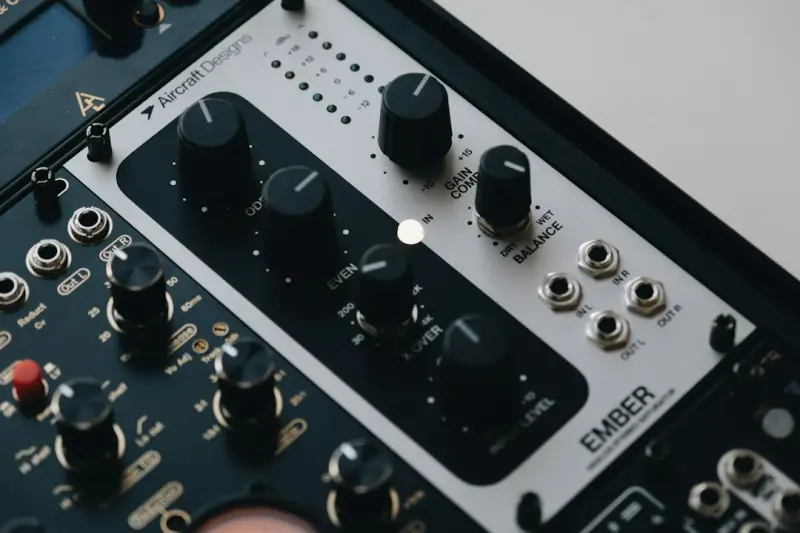
The Sound of Strategy: Why Audio Branding Is the Quiet Revolution in B2B Digital Marketing
When most marketers think of “branding,” the first images that surface are logos, color palettes, and taglines. Yet, there’s an under‑explored sensory channel that’s quietly reshaping how businesses communicate, persuade, and retain professional audiences: sound. From the subtle hum of a brand‑crafted podcast intro to the crisp command of a voice‑activated assistant, audio is becoming a strategic differentiator for B2B marketers who crave deeper, more human connections in an increasingly noisy digital world.
Beyond the Noise: The Business Case for Audio
Audio consumption has exploded across the enterprise landscape. Executives now tune into industry podcasts during commutes, while sales teams rely on voice‑activated CRM tools to pull data on the fly. According to recent research, professionals spend roughly 30 minutes a day listening to audio content that directly informs buying decisions. This isn’t a fleeting trend; it’s a behavioral shift that demands marketers rethink the way they build awareness, nurture leads, and close deals.
For B2B firms, the advantages are threefold:
- Attention Retention: Human ears can process information at a rate up to five times faster than reading text, meaning a well‑produced audio segment can convey complex value propositions in a fraction of the time.
- Trust Amplification: The human voice carries tone, nuance, and emotion that text can’t replicate, fostering a sense of authenticity that’s hard to achieve with static copy.
- Multitasking Compatibility: Audio fits seamlessly into the busy workflows of decision‑makers, allowing them to absorb content while commuting, exercising, or handling routine tasks.
When you combine these benefits with the rising adoption of voice‑first devices in the workplace, it becomes clear: audio isn’t just an add‑on; it’s a core pillar of modern digital marketing strategy.
Mapping Audio Into the B2B Funnel
Just as we segment the buyer’s journey into awareness, consideration, and decision stages, audio can be strategically deployed at each point:
- Awareness – Podcast Guest Spots & Branded Episodes: Partner with industry thought leaders to co‑host episodes that address pain points your solution solves. The conversational format positions your brand as a knowledgeable peer rather than a salesy vendor.
- Consideration – Audio Case Studies & Voice‑Enabled Demos: Transform traditional case studies into short, narrative‑driven audio clips. Pair them with voice‑activated product demos that let prospects ask questions like “What’s the ROI of feature X?” and receive instant, data‑driven answers.
- Decision – Personalized Audio Outreach & On‑boarding Guides: Use AI‑generated voice messages that reference a prospect’s recent activity (e.g., “I noticed you downloaded our whitepaper on predictive analytics”). Follow up with audio onboarding guides that walk new customers through key setup steps.
Each of these tactics can be measured with unique engagement metrics—listening duration, completion rate, and voice command frequency—allowing marketers to fine‑tune their audio mix with the same rigor they apply to click‑through or conversion data.
Crafting a Cohesive Audio Identity
Just as visual branding adheres to style guides, audio branding requires a sound style guide. This includes:
- Voice Persona: Define the tone (authoritative, friendly, conversational) and gender or accent that aligns with your brand’s personality.
- Music & Sound Effects: Select a consistent musical motif or subtle sound signature that appears across all audio assets, creating an auditory logo.
- Production Quality: Invest in professional recording equipment or partner with seasoned audio producers. Poor sound quality erodes trust faster than a typo in a headline.
When you apply these principles consistently, listeners begin to recognize your brand even before they see the logo—a phenomenon known as audio recall. It’s the same psychological trigger that makes jingles unforgettable, but tailored for the nuanced expectations of B2B audiences.
Leveraging Voice Assistants for Real‑Time Engagement
Voice assistants like Amazon Alexa for Business, Google Assistant, and Microsoft Cortana are no longer confined to consumer homes. Enterprises are deploying them to streamline operations, and marketers have a golden opportunity to meet prospects where they’re already interacting with technology.
Imagine a scenario where a prospect asks their office’s smart speaker, “What’s the best way to secure API endpoints?” Your brand’s voice skill responds with a concise, branded answer and offers to email a detailed guide. The interaction feels natural, useful, and, most importantly, in the moment—a key factor in driving conversions.
To get started, follow these steps:
- Identify the most common informational queries your target audience asks.
- Develop concise, value‑driven responses that incorporate your brand voice.
- Partner with a developer to publish a custom voice skill or action that integrates with your CRM for lead capture.
By embedding your expertise directly into the workflow of decision‑makers, you shift from being a distant content creator to an on‑demand advisor.
Data‑Driven Audio: Marrying Trust‑Centric Strategies with Sound
One challenge many marketers face is balancing personalization with privacy. While trust‑centric data strategies have become a buzzword, audio offers a fresh pathway to collect zero‑party insights without invasive tracking.
When a listener opts into a branded podcast series, you can ask them to answer short, voice‑based surveys that capture preferences, challenges, and purchase intent. Because the data is volunteered—spoken directly by the prospect—it carries an inherent level of trust. This approach also sidesteps the limitations of cookie‑based targeting, aligning with broader industry moves toward cookieless ranking tactics while still delivering hyper‑personalized experiences.
Measuring Audio Impact: From Listens to Leads
Traditional digital metrics (CTR, bounce rate) don’t translate directly to audio, but a robust measurement framework can bridge the gap. Consider the following KPI hierarchy:
| Metric | What It Reveals |
|---|---|
| Impressions (plays) | Reach of your audio content. |
| Average Listening Duration | Engagement depth; indicates content relevance. |
| Completion Rate | Effectiveness of storytelling and pacing. |
| Voice Command Conversions | Direct actions taken via voice assistants (e.g., email sign‑ups). |
| Lead Attribution Score | Weighted credit for audio touchpoints in the multi‑channel funnel. |
Integrate these metrics with your existing marketing automation platform to attribute revenue back to specific audio assets. Over time, you’ll identify which podcast formats, voice skill interactions, or audio case studies generate the highest pipeline velocity.
Future‑Proofing Your Audio Strategy
The audio landscape is evolving rapidly. Emerging trends include:
- Dynamic Audio Personalization: AI‑driven platforms that adjust script, tone, and background music in real time based on listener data.
- Spatial Audio Experiences: 3D soundscapes that immerse listeners, particularly useful for virtual product tours.
- Voice‑First SEO: Optimizing spoken queries to appear in voice search results on enterprise devices.
Staying ahead means treating audio not as a siloed experiment but as an integral layer of your omnichannel ecosystem. Align your audio calendar with content releases, product launches, and industry events to amplify reach and reinforce messaging.
Getting Started: A Practical 30‑Day Audio Playbook
Below is a bite‑size roadmap that any B2B marketer can execute without a massive budget:
- Week 1 – Audit Existing Assets: Identify any audio content (webinars, conference recordings) you already own. Catalog them for repurposing.
- Week 2 – Define Audio Persona: Draft a concise voice guide—tone, language, pacing—and get buy‑in from leadership.
- Week 3 – Pilot a Mini‑Podcast: Record a 15‑minute interview with a product manager discussing a common industry challenge. Publish on your website and promote via email.
- Week 4 – Deploy a Voice Skill: Build a simple Alexa skill that answers “What’s our pricing model?” and captures the listener’s email for follow‑up.
At the end of the month, review the listening data, voice skill usage, and any new leads generated. Use these insights to scale the effort—add more episodes, refine the voice persona, and explore dynamic personalization.
Conclusion: Let Your Brand Be Heard
In a digital era dominated by scrolling, clicking, and swiping, audio offers a respite—a space where your brand can speak directly into the ears of decision‑makers, forging connections that feel personal and immediate. By weaving podcasts, voice assistants, and sound design into the fabric of your B2B marketing mix, you’ll not only capture attention but also earn trust, accelerate the buyer journey, and differentiate yourself from competitors still stuck in the visual‑only mindset.
It’s time to stop thinking of sound as a background element and start treating it as a strategic asset. The next wave of B2B digital marketing isn’t just seen—it’s heard. Are you ready to turn up the volume?

Margaret Thomson is a seasoned freelance writer specializing in the dynamic worlds of marketing and advertising. With a career deeply rooted in the marketing field, Margaret brings a wealth of practical experience and insightful knowledge to her writing.
Related Posts
Micro‑Communities: The Untapped Goldmine for Modern Marketers
Explore why small, niche online groups are the most powerful marketing asset today and learn actiona... Read More

Privacy‑First Digital Marketing: Turning Consent Into a Competitive Edge
In a cookie‑less landscape, consent becomes the most valuable signal. This post shows how B2B SaaS... Read More

Zero‑Click Search: How Brands Can Win Without a Single Click
Zero‑click search is changing the game. Learn why clicks matter less, how to secure featured snipp... Read More
Top Posts

Capturing Micro‑Moments: Real‑Time SEO for Instant Intent
Learn to dominate micro‑moments with actionable, real‑time SEO strategies that capture instant user intent, boost visibility, and drive sustained traffic....Read More
Digital Detox Rituals: Small Tech Breaks That Supercharge Your Well‑Being
Learn how brief, intentional tech pauses can recalibrate your nervous system, enhance mood, and increase productivity—plus tips for making these rituals a tea...Read More

Future‑Proof Your SEO Against AI‑Generated Content Overload
Discover how to safeguard your SEO against the flood of AI‑generated content using a hybrid workflow, intent clusters, and structured data for lasting visibil...Read More

Privacy‑First Storytelling: Turning Data Into Dialogue for Modern Marketers
Discover a fresh, privacy‑first approach to digital marketing that leverages zero‑party data, interactive tools, and human‑centric channels to turn raw da...Read More
0 Comments
Post Comment
You will need to Login or Register to comment on this post!