

Redefining the Classroom of Thought
Every time I open a new app, I feel like I’m stepping into a subtly altered classroom where the syllabus is written by algorithms instead of professors. AI subtly reshapes the way I prioritize information, absorb patterns, and even formulate questions, turning everyday decisions into data‑driven experiments without my conscious consent. I’ve begun to notice that my mental shortcuts now mirror the recommendation engines that power my feeds, and that realization has sparked a personal quest to reclaim agency over my own cognition.
The Silent Curriculum of Recommendation Loops
What most people miss is that recommendation loops act as an invisible curriculum, teaching us what is “relevant” by constantly reinforcing certain topics while quietly sidelining others. As I scroll through curated content, I see the same themes echoing back, a phenomenon that feels less like serendipity and more like a curated syllabus designed to keep my attention locked. By tracing these loops, I’ve learned to spot the blind spots they create and to deliberately seek out contrarian sources that broaden my mental horizon.
From Passive Consumption to Active Curation
To break free from passive consumption, I’ve started treating every AI interaction as a chance to practice active curation, much like a librarian who selects diverse books for a community shelf. I set daily “curation windows” where I deliberately pull content from opposite ends of the ideological spectrum, forcing my brain to negotiate multiple viewpoints. This habit not only sharpens critical thinking but also reconditions my neural pathways to value uncertainty over certainty, a skill that AI rarely rewards but humans desperately need.
Designing Personal AI Filters
One practical step I took was building a lightweight, user‑controlled filter that intercepts AI suggestions before they reach my feed. By tapping into open‑source tools, I crafted a rule‑set that flags repetitive themes and injects fresh topics from niche forums, effectively turning my feed into a personalized learning lab. The result is a stream that challenges me, introduces novel concepts, and reduces the echo‑chamber effect that most mainstream algorithms perpetuate.
Learning to Question Algorithmic Authority
When I first trusted an AI‑generated summary for a research project, I assumed it was an unbiased distillation of facts. The experience taught me that algorithmic authority often mirrors the biases embedded in its training data, and that unquestioned acceptance can erode independent judgment. By habitually cross‑checking AI outputs against primary sources, I’ve cultivated a healthy skepticism that keeps my intellectual independence intact.
Balancing Efficiency with Depth
AI excels at delivering efficiency—quick answers, instant translations, and seamless automations—but that speed can come at the expense of depth. I’ve learned to schedule “deep‑dive” sessions where I deliberately turn off AI assistance and engage with raw material, whether it’s a dense journal article or a complex piece of code. This oscillation between assisted speed and manual depth creates a balanced cognitive rhythm, allowing me to reap productivity gains without sacrificing nuanced understanding.
Collaborating with AI as a Thought Partner
Rather than viewing AI as a mere tool, I treat it as a thought partner that can surface hidden connections, much like an enthusiastic co‑author who constantly asks “what if?” By feeding it rough outlines of my ideas and prompting it to generate alternative frameworks, I discover perspectives I would never have entertained alone. This collaborative dance, reminiscent of AI as a creative collaborator, pushes my thinking beyond conventional boundaries while keeping me firmly in the driver’s seat.
Protecting Cognitive Privacy in an AI‑Driven World
Just as we safeguard our financial data, we must also protect the privacy of our thought patterns from being silently harvested. I recently explored methods for constructing a personal privacy shield that limits the data AI systems can glean from my interactions, similar to the approach described in crafting your own AI privacy shield. Implementing such safeguards not only secures personal information but also preserves the authenticity of my mental processes, ensuring that AI recommendations remain a choice rather than a default.
Envisioning an Future Where Humans Remain the Teachers
Looking ahead, the most empowering vision is one where AI serves as a catalyst for human-led learning rather than a replacement for it. By intentionally designing our digital environments to foreground curiosity, dissent, and interdisciplinary exploration, we can harness AI’s computational muscle without surrendering our role as the ultimate teachers of ourselves. The challenge—and the opportunity—lies in continuously renegotiating that balance, keeping the invisible curriculum transparent, and remembering that the most profound lessons still come from the messy, imperfect process of human thought.

Sanji Patel has dedicated 25 years to the SEO industry. As an expert SEO consultant for news publishers, he emphasizes providing both technical and editorial SEO services to news publishers worldwide. He frequently speaks at conferences and events globally and offers annual guest lectures at local universities.
Related Posts

How AI‑Powered Knowledge Hubs Are Redefining Remote Collaboration
AI‑powered knowledge hubs transform fragmented information into a living, intelligent repository, ... Read More

AI‑Powered Decision Labs: Rethinking Strategy in B2B SaaS
AI‑powered decision labs fuse data, predictive models, and collaborative tools to accelerate strat... Read More

AI‑Powered Knowledge Bases: Turning Data Overload into Strategic Insight
AI‑powered knowledge bases turn static docs into conversational, context‑aware assistants, helpi... Read More
Top Posts

Decentralized Identity: Reclaiming Trust and Control in the Digital Age
Discover how decentralized identity empowers users, cuts fraud, and reshapes trust online—offering a user‑centric path to secure digital interactions....Read More
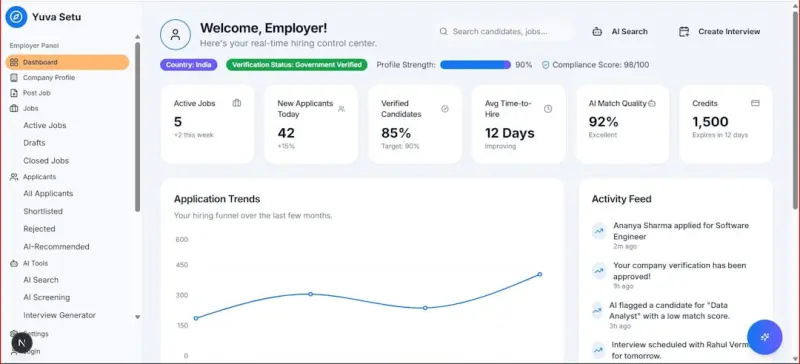
Composable Business Platforms: The New Blueprint for Scalable SaaS
Composable business platforms transform SaaS development by modularizing functionality, enabling rapid feature delivery, resilient scaling, and future‑proof i...Read More
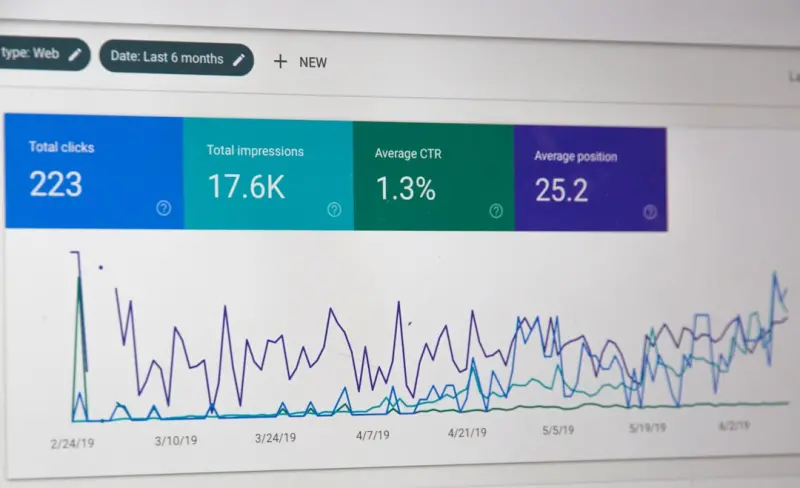
How Voice Search Is Redefining SaaS SEO Strategies
Voice assistants are now primary discovery tools for B2B professionals. This post explains how SaaS companies can restructure technical SEO, content, and AI wor...Read More
The Micro‑Movement Revolution: Tiny Habits That Transform Your Health
Micro‑movements are the new health hack: brief, intentional actions that improve cardiovascular health, mental clarity, and daily energy—no gym required....Read More
0 Comments
Post Comment
You will need to Login or Register to comment on this post!