
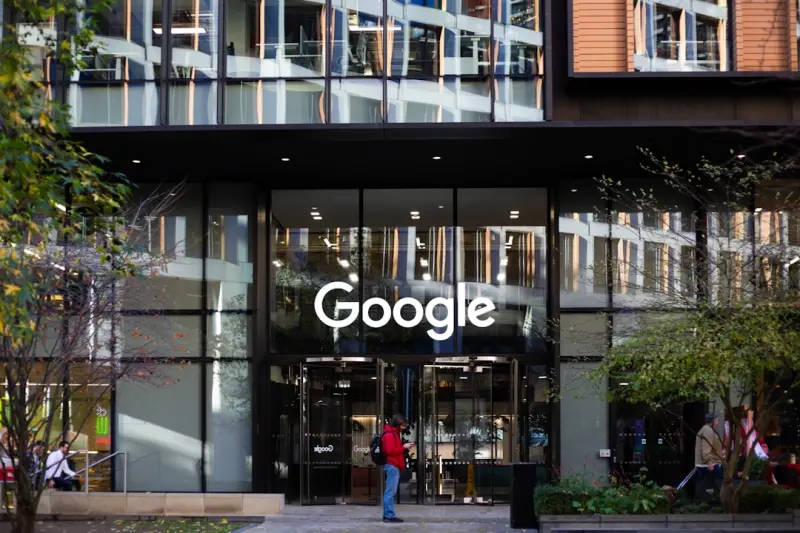
Google’s AI‑Driven Workspace Revolution
Google is quietly re‑engineering the tools we use every day—Docs, Slides, Gmail—by embedding generative AI deep into their core. This isn’t just a feature add‑on; it’s a shift from static document creation to a dynamic, conversational partner that anticipates needs, drafts content, and refines language on the fly. Imagine opening a blank slide and having the AI suggest a full deck layout based on a single sentence prompt, or receiving a polished email draft that matches your personal tone in seconds. The underlying technology, powered by Google’s Gemini models, learns from billions of interactions, yet respects privacy through on‑device processing and differential privacy safeguards. As a result, teams can cut hours of repetitive writing, freeing creative energy for strategic work. The ripple effect reaches beyond individual productivity, influencing how organizations structure collaboration, onboarding, and knowledge sharing in a hyper‑responsive environment.
From Prompt to Polished: How Gemini Powers Real‑Time Drafting
The heart of this transformation lies in Gemini’s ability to turn a simple prompt into a fully formed document. Users type a brief idea—“Quarterly sales forecast for Q3”—and the AI instantly generates a data‑rich table, charts, and narrative insights, all formatted to match corporate branding. This capability rests on two pillars: massive language understanding and seamless integration with Google’s data ecosystem. By pulling real‑time data from BigQuery or Sheets, the AI ensures accuracy while maintaining a conversational flow. The result is a living document that updates as source data changes, eliminating the stale‑report problem that plagued traditional spreadsheets. For marketers, this means faster campaign briefs; for HR, quicker policy updates. The experience feels like collaborating with a knowledgeable teammate who never sleeps, constantly iterating until the output feels just right.
Collaboration Gets Smarter with Context‑Aware Suggestions
Beyond drafting, Google’s AI watches the collaborative dance. As teammates comment, edit, or add new sections, the AI surfaces context‑aware suggestions—perhaps a relevant case study, a citation, or a visual asset from Google Drive. These prompts appear subtly, allowing users to accept, modify, or dismiss them, keeping the workflow fluid. The system also learns individual preferences, tailoring suggestions to each user’s style, whether they favor concise bullet points or detailed prose. By reducing the friction of searching for supporting material, teams stay in the creative zone longer. This approach mirrors the concept discussed in AI as a Co‑Creator, where AI acts as a collaborative partner rather than a tool, amplifying human ingenuity.
Privacy‑First AI: Keeping Data Secure While Enhancing Features
One of the biggest concerns with embedded AI is data privacy. Google addresses this by processing a significant portion of AI workloads on the user’s device, a strategy highlighted in Edge AI. Sensitive drafts never leave the local environment unless explicitly shared, and any cloud‑based processing employs encryption and strict access controls. Moreover, the AI models are trained on anonymized, aggregated data, ensuring that personal or proprietary information isn’t fed back into the system. This design builds trust, especially for industries with stringent compliance requirements like finance or healthcare, allowing them to adopt AI‑enhanced productivity without compromising security.
Boosting Creativity: The New Role of AI in Brainstorming Sessions
Creative teams often struggle with “blank page” paralysis. Google’s AI now serves as an idea catalyst during brainstorming. In a virtual meeting, participants can ask the AI to generate alternative taglines, campaign concepts, or visual themes based on a brief description. The AI quickly produces a spectrum of options, each with a distinct tone and style, sparking further discussion. Because the suggestions are grounded in the brand’s voice and historical assets, they remain relevant while pushing the creative envelope. This dynamic mirrors the shift from static ideation to a fluid, iterative process where AI expands the pool of possibilities, allowing human creators to focus on refinement and storytelling.
Seamless Integration Across the Google Ecosystem
The AI enhancements are not siloed within Docs or Gmail; they flow across the entire Google Workspace. A summary drafted in Docs can be instantly turned into a presentation in Slides, with design recommendations automatically applied. Calendar invites can be enriched with AI‑generated agendas, and Meet calls can receive real‑time transcription and action‑item extraction. This interconnectedness reduces the “context switch” penalty that traditionally slowed workflows. By maintaining a single source of truth across apps, teams experience smoother handoffs and less duplicated effort, driving overall efficiency and fostering a culture of continuous improvement.
Measuring Impact: ROI of AI‑Infused Productivity
Early adopters report measurable gains in both speed and quality. A mid‑size marketing agency noted a 30 % reduction in time spent on client proposals, while a global consulting firm saw a 25 % boost in report accuracy thanks to AI‑driven data validation. These improvements translate directly into cost savings and higher client satisfaction. Beyond quantitative metrics, employees express higher job satisfaction, citing less mundane writing and more strategic engagement. Organizations can track these outcomes through built‑in analytics dashboards that monitor AI usage, time saved, and content performance, providing a clear picture of the return on investment.
Looking Ahead: The Future of Work with Google’s AI Companion
As Google continues to refine its generative models, the line between tool and teammate will blur further. Upcoming features promise deeper multimodal capabilities—combining text, voice, and visual inputs—to create truly immersive work experiences. Imagine dictating a concept, seeing a visual mock‑up appear in real time, and having the AI suggest a narrative arc—all within a single canvas. This evolution points toward a future where productivity is less about managing tools and more about leveraging a constantly learning assistant that adapts to each organization’s unique rhythm. Embracing this shift now positions companies to stay agile, innovative, and competitive in a rapidly changing digital landscape.

In the world of freelance writing, where creativity and adaptability are paramount, Michelle Fisher stands out as a dedicated and versatile professional. With a passion for crafting compelling narratives and a keen eye for detail, Michelle has established herself as a trusted voice.
Related Posts

Riding Google’s AI Wave: A Marketer’s Personal Playbook
Explore a marketer’s hands‑on journey with Google’s AI, from pilot projects to a sustainable p... Read More

Riding the Google AI Wave: Lessons from the Frontline
A marketer’s insider guide to mastering Google’s AI tools—covering data hygiene, creative coll... Read More

Unlocking SaaS Security with Google Cloud Confidential Computing
Google Cloud Confidential Computing lets SaaS providers encrypt data even while it’s being process... Read More
Top Posts

Empathy‑Driven Marketing: Turning Sentiment Into Sales
Learn why listening to your audience’s emotions and turning sentiment data into personalized campaigns is the next frontier of digital marketing success....Read More

AI as the Silent Organizer: Transforming Data Chaos into Strategic Clarity
Learn how to use AI as a silent organizer that ingests, correlates, and narrates your SaaS data streams, giving product, marketing, and ops teams a unified, act...Read More
Immersive Interactivity: The Next Leap for B2B SaaS Marketing
This post reveals why immersive interactive experiences—like AR demos, choose‑your‑own‑adventure videos, and gamified ads—are essential for modern B2B...Read More
Seeing the Future: How Google Lens Is Redefining Search and Shopping
Discover the power of Google Lens, learn practical optimization tactics, and see why visual search is the next frontier for brands looking to convert image‑dr...Read More
0 Comments
Post Comment
You will need to Login or Register to comment on this post!