

The Google Ecosystem Is Evolving Faster Than Most Marketers Realize
When I first started writing about search, I imagined Google as a static library of pages waiting to be indexed; today it feels more like a living organism that learns, reacts, and even anticipates the needs of its users before they articulate them. Every update to the core algorithm, every new UI tweak in Search, and every expansion of the Google suite ripples through the digital economy, reshaping how brands tell stories, how consumers discover products, and how creators earn a living—all while we scramble to keep up with the velocity of change.
Visual and Voice Search Are No Longer Niche Experiments
Google Lens has graduated from a novelty tucked inside the camera app to a primary gateway for product discovery, allowing users to point a phone at a sneaker, a plant, or a storefront and instantly receive purchase links, reviews, and even AR‑enhanced fitting simulations; meanwhile, the omnipresent Google Assistant is morphing from a voice‑activated timer into a conversational search partner that can parse intent across languages, dialects, and contextual cues. This convergence of visual and voice modalities means that the traditional text‑only SERP is becoming a multi‑sensory hub where ambient computing principles dictate how information is surfaced, and marketers must think beyond keywords to visual assets and spoken narratives that align with the new discovery pathways.
Local Businesses Are Gaining an AR‑Powered Street‑Level Advantage
Imagine walking down a city block and seeing a translucent overlay that highlights a coffee shop’s specialty drinks, displays real‑time wait times, and offers a one‑tap reservation button—all powered by Google Maps’ latest AR layer; this is no longer a futuristic demo but a live feature rolling out to millions of Android devices, turning the sidewalk into a searchable canvas where businesses can claim digital real‑estate in the physical world. For small‑scale retailers, the ability to embed rich media, custom icons, and dynamic promotions directly into the map interface democratizes visibility that once required hefty advertising budgets, and the data back‑end—thanks to Google’s robust place‑data APIs—provides actionable insights into foot traffic patterns, search queries, and conversion metrics that were previously only accessible to national chains.
The Creator Economy Is Being Rewired by YouTube Shorts and Community Features
YouTube’s aggressive push of Shorts has turned the platform into a TikTok‑like arena where bite‑sized videos can explode overnight, yet Google has layered this with community posts, polls, and member‑only livestreams that let creators monetize beyond ad revenue, forging a hybrid model that blends subscription, commerce, and fan interaction; the result is a self‑sustaining ecosystem where a single piece of content can drive merchandise sales, drive traffic to a brand’s website, and feed data back into Google’s recommendation engine. In this context, the principles outlined in Turning Purchases into Play become especially relevant, as creators now experiment with gamified loyalty loops—such as limited‑edition digital collectibles unlocked by watching a series of Shorts—to deepen engagement and create new revenue streams that sit squarely within Google’s ad‑tech infrastructure.
Data Democratization Is Turning Insights Into Everyday Tools
Google’s decision to make BigQuery’s sandbox free for up to 10 GB of storage and to integrate Looker Studio (formerly Data Studio) directly with Search Console and Google Ads has effectively lowered the barrier for small businesses and independent marketers to run sophisticated queries, visualize trends, and test hypotheses without hiring a data scientist; this shift from “data is a luxury” to “data is a default” means that anyone can answer questions like which micro‑search terms are driving foot‑traffic to a pop‑up store or how seasonal spikes affect click‑through rates across mobile and desktop. By pairing these free analytics tools with the Mapping User Intent framework, marketers can craft hyper‑targeted content clusters that anticipate user needs before the query is even typed, turning intent mapping from a theoretical exercise into a measurable growth engine.
Google Workspace Is Getting Smarter, Faster, and More Collaborative
The latest AI enhancements in Docs, Sheets, and Slides—such as generative text suggestions, automatic data visualizations, and real‑time translation—are not just productivity niceties; they are redefining how teams co‑create content, iterate on reports, and align on strategy, especially when remote work remains the norm for many enterprises. In Google Meet, live captioning now leverages advanced speech‑to‑text models that can differentiate speakers, tag action items, and export meeting minutes directly into a shared Google Doc, effectively turning every virtual conversation into a searchable knowledge base that can be mined for SEO ideas, brand messaging, and even product development insights.
The Hidden Risks of Relying Too Heavily on a Single Platform
While Google’s expansive suite offers unparalleled reach, its opacity in algorithmic decision‑making and frequent policy shifts create a precarious dependency for businesses that fail to diversify traffic sources; a sudden change in the weighting of visual signals could diminish the impact of a well‑optimized AR overlay, or a new privacy rule might limit the granularity of location data that local businesses rely on for hyper‑targeted ads. Moreover, the concentration of user data within a single ecosystem raises ethical questions about consent, data ownership, and the long‑term sustainability of a model that monetizes attention through ever‑more intrusive personalization.
Actionable Steps to Future‑Proof Your Google Strategy
First, audit your existing assets for visual readiness—ensure product images are high‑resolution, tagged with descriptive alt text, and compatible with Google Lens’s object‑recognition algorithms; second, experiment with short‑form video on Shorts, embedding clear calls‑to‑action that direct viewers to shoppable links or community posts, and track performance using the integrated analytics dashboard; third, leverage the free BigQuery sandbox to run cohort analyses on search queries versus on‑site behavior, identifying gaps where you can introduce AR experiences or voice‑first content; finally, embed AI‑assisted writing tools from Google Docs into your content workflow to maintain a steady output cadence while preserving brand voice.
Looking Ahead: What Google Might Unveil Next
Rumors suggest that Google is piloting a fully immersive search experience that blends 3D spatial mapping with real‑time data overlays, effectively turning every street corner into an interactive SERP that can answer “where can I buy this?” with a single glance; if this materializes, the distinction between search and shopping will blur, demanding that brands think of their digital presence as a living storefront rather than a static webpage. As marketers, staying ahead will require a mindset that treats Google not just as a traffic source but as a platform for experiential storytelling, where every update—whether it’s a new Lens capability, a Shorts algorithm tweak, or an AI‑powered Workspace feature—presents an opportunity to deepen relationships, capture intent, and turn discovery into lasting loyalty.

Shawn DesRochers is a certified Microsoft technician and Programmer with 30+ year's experience. He has written many reviews on computer related products, software, and SEO related topics. When he's not writing reviews he can be found at one of the Oldest Directories Online Business Directory USA which he is the CEO of.
Related Posts
Navigating Google’s Privacy Sandbox: What B2B SaaS Leaders Need to Know
The Privacy Sandbox is redefining targeting, measurement, and data strategy for B2B SaaS. This guide... Read More
Beyond Search: How Google’s Ecosystem Empowers SaaS Innovation
A deep dive into Google’s hidden toolkit reveals how Workspace collaboration, serverless compute, ... Read More
Riding Google’s 2026 AI Wave: A Marketer’s Personal Playbook
Discover Rose DesRochers’ insider strategies for mastering Google’s 2026 AI wave—from zero‑c... Read More
Top Posts
Beyond Google: SEO Strategies for TikTok, Amazon, and Voice Assistants
Explore a fresh SEO playbook that extends beyond traditional search, focusing on TikTok, Amazon, and voice assistants. Learn practical tactics to capture traffi...Read More
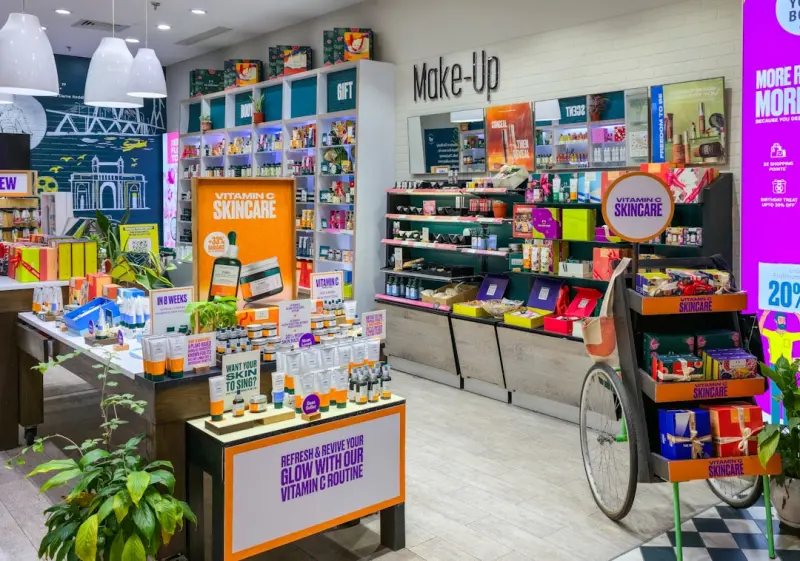
How Experiential Pop‑Up Retail Is Redefining Modern Marketing
Explore the power of experiential pop‑ups as a dynamic, data‑driven marketing tool that merges sensory storytelling with real‑time insights, influencer pa...Read More

Breathe Easy: 10 Everyday Hacks to Improve Indoor Air Quality
A practical guide that walks you through ten simple, budget‑friendly strategies—from houseplants to smart ventilation—to dramatically improve the air you ...Read More

Why Human‑First Marketers Thrive on Google’s AI Wave
Explore the balance of AI tools and genuine human insight in Google marketing, and learn why staying human on the AI wave drives higher rankings and deeper audi...Read More
0 Comments
Post Comment
You will need to Login or Register to comment on this post!