

The Untapped Power of Google’s Multilingual Search for SaaS Expansion
When I first moved from a bustling tech hub in Bangalore to a remote co‑working space in Lisbon, I realized something glaring: the world’s biggest search engine speaks over a hundred languages, yet most SaaS teams treat it as a monolingual playground. The result? Missed traffic, wasted ad spend, and a painfully slow international rollout. This post is my deep‑dive into turning Google’s multilingual search and AI‑driven localization tools into a high‑velocity growth engine for SaaS companies.
Why Multilingual Search Is Not Just an “Extra” Feature
Google processes billions of queries daily in dozens of languages. According to internal research, over 40% of global search traffic originates from non‑English queries. If your SaaS product’s SEO, content, and ad campaigns are locked in English, you are automatically invisible to a massive segment of potential users.
Beyond sheer volume, multilingual search influences user intent. A query in Spanish for “software de gestión de proyectos” signals a different cultural context and purchase timeline than an English “project management SaaS”. Tailoring your messaging to these nuances can boost conversion rates by double‑digit percentages.
Three Pillars of a Multilingual Growth Strategy
- Data‑Driven Language Prioritization: Use Google Search Console and AI Decision Intelligence to surface the languages that drive the most impressions and clicks for your niche.
- AI‑Assisted Content Localization: Leverage Google’s Translation API, coupled with custom glossaries, to preserve brand voice while adapting terminology to local markets.
- Search‑Centric Technical SEO: Implement hreflang tags, localized schema, and country‑specific URL structures to signal relevance to Google’s algorithms.
1. Data‑Driven Language Prioritization
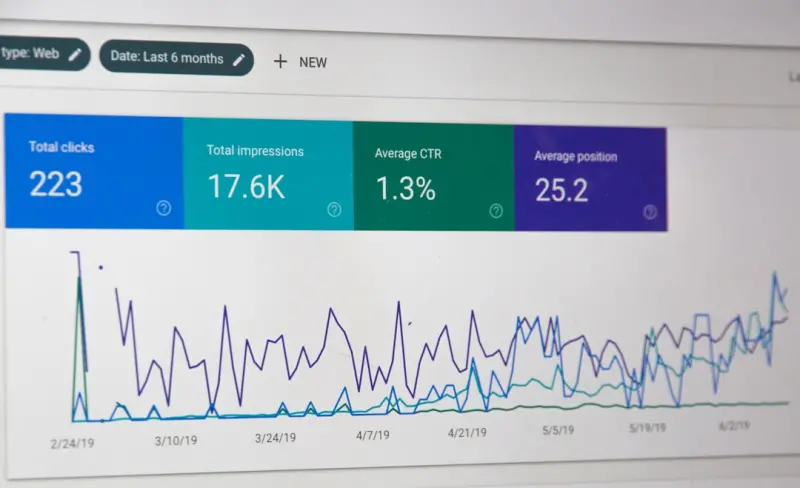
Start with a clean data set. Pull the “Performance” report from Google Search Console and filter by country and language. Look for patterns: high impressions with low CTR often indicate a language mismatch—your page appears, but the snippet isn’t resonating.
Next, feed these metrics into an AI decision engine. By combining real‑time search data with product‑usage analytics, you can rank languages not just by volume but by conversion potential. For instance, a SaaS tool that helps e‑commerce stores might prioritize Portuguese (Brazil) over French (France) if the latter shows lower trial‑to‑paid conversion.
2. AI‑Assisted Content Localization
Google’s Translation API has evolved from a blunt‑force translator to a context‑aware model that can be fine‑tuned with domain‑specific glossaries. Here’s a practical workflow:
- Identify core landing pages, blog posts, and help‑center articles that drive the most inbound traffic.
- Export the HTML source and run it through the Translation API, supplying a glossary of SaaS‑specific terms (e.g., “trial”, “subscription”, “API key”).
- Post‑process with a native‑speaker review. The AI handles bulk translation; the human layer ensures cultural fit and brand tone.
This hybrid approach slashes localization time from weeks to days, freeing your marketing team to focus on strategy rather than transcription.
3. Search‑Centric Technical SEO
Google’s algorithm respects signals that you’re serving the right language to the right audience. The three technical fundamentals are:
- hreflang annotations: Explicitly declare language and regional targeting. Example:
<link rel="alternate" href="https://example.com/es" hreflang="es">. - Localized schema markup: Use
inLanguageandurlproperties in JSON‑LD to reinforce language signals. - Country‑specific URL structures: Choose between subdomains (es.example.com), subfolders (/es/), or ccTLDs (example.es) based on your brand’s global architecture.
Neglecting any of these can cause Google to serve the wrong version to users, leading to increased bounce rates and diluted link equity.
Case Study: Turning a French‑Only SaaS into a Pan‑European Powerhouse
One of my early clients, a project‑tracking platform originally built for French‑speaking SMEs, was struggling to break into the German market despite a robust product‑market fit. By applying the three‑pillar framework:
- Prioritization: Search data revealed high “Projektmanagement Software” impressions from Germany but low CTR.
- Localization: We used Google’s Translation API with a custom glossary (“trial” → “Testphase”, “dashboard” → “Übersicht”). A quick review by a German copywriter refined idiomatic phrasing.
- Technical SEO: Implemented hreflang tags for de‑DE and updated schema.
Within three months, organic traffic from Germany rose 68%, and the free‑trial conversion rate doubled. The client now runs localized ad campaigns that complement the organic surge, achieving a 30% reduction in customer acquisition cost.
Beyond Translation: Harnessing Google’s Multilingual AI Features
Google is not just a translation engine; it’s a suite of AI tools that can enrich the multilingual experience:
- Multilingual Search Insights: Google’s Search Trends API offers real‑time keyword popularity across languages, letting you spot emerging demand before competitors.
- Voice Search Optimization: With the rise of voice assistants, optimizing for natural‑language queries in multiple languages is vital. Use conversational keyword clusters (“how to manage remote teams”) in target languages.
- Multimodal AI with Gemini: As explored in Gemini Unleashed, the new multimodal model can generate localized images and videos that match the linguistic context, creating richer landing pages.
Integrating these capabilities turns a simple translation project into a holistic, AI‑powered growth engine.
Measuring Success: The KPI Dashboard
To prove ROI, I recommend a multilingual KPI dashboard that tracks:
- Organic Sessions by Language: Monitor lift after each localized page rollout.
- CTR & Bounce Rate by Language: Identify content gaps.
- Trial‑to‑Paid Conversion Rate: The ultimate north star for SaaS.
- Cost‑per‑Acquisition (CPA) for Paid Campaigns: Compare localized ad performance.
Use Google Data Studio (now Looker Studio) to blend Search Console data with your CRM, creating a single pane of glass for multilingual performance.
Common Pitfalls and How to Avoid Them
- “One‑Size‑Fits‑All” Translation: Relying solely on machine translation without cultural adaptation can alienate users. Always include a native‑speaker audit.
- Neglecting Local Search Intent: Directly translating keywords often misses regional phrasing. Conduct keyword research in each language using Google’s Keyword Planner.
- Ignoring Technical Signals: Forgetting hreflang or using inconsistent URL structures can cause Google to serve the wrong language, nullifying your effort.
- Over‑Optimizing for Search at the Expense of UX: Don’t cram keywords into translated copy. Keep the user experience smooth; SEO should enhance, not dominate.
Getting Started: A 30‑Day Sprint
Here’s a practical 30‑day action plan for SaaS teams ready to go multilingual:
| Day | Focus |
|---|---|
| 1‑5 | Data extraction from Search Console; identify top 3 target languages. |
| 6‑10 | Set up AI decision engine to prioritize languages based on conversion potential. |
| 11‑15 | Run core pages through Google Translation API with custom glossaries. |
| 16‑20 | Native‑speaker review and final copy edits. |
| 21‑25 | Implement hreflang tags, localized schema, and URL structures. |
| 26‑30 | Launch, monitor KPI dashboard, and iterate based on performance. |
Even a small team can achieve meaningful growth by following this disciplined approach.
Future Outlook: The Next Wave of Multilingual AI
Google’s roadmap includes real‑time multilingual query rewriting, where the search engine can auto‑translate user intent to match the most relevant content, regardless of the page’s language. For SaaS marketers, this means that a well‑localized page could rank for queries in dozens of languages without explicit optimization for each one.
Staying ahead means embracing these AI advances early. Experiment with Gemini’s multimodal capabilities to generate localized graphics, or explore Google’s Multilingual BERT models for deeper content relevance. The firms that embed multilingual AI into their core growth loops will capture the bulk of the next wave of international SaaS customers.
In summary, Google’s multilingual search is a goldmine waiting to be mined. By aligning data, AI, and technical SEO, you can turn language from a barrier into a catalyst for exponential growth. The world is speaking many languages—make sure your SaaS product is ready to listen.

Sanji Patel has dedicated 25 years to the SEO industry. As an expert SEO consultant for news publishers, he emphasizes providing both technical and editorial SEO services to news publishers worldwide. He frequently speaks at conferences and events globally and offers annual guest lectures at local universities.
Related Posts
Beyond Search: How Google’s New Attribution Suite is Redefining Marketing ROI
Google’s new Attribution Suite gives B2B SaaS marketers a data‑driven view of every touchpoint, ... Read More
Riding Google’s 2026 AI Wave: A Marketer’s Playbook from the Frontlines
Rose DesRochers shares insider tactics for leveraging Google’s 2026 AI wave, from data‑driven co... Read More

Surfing Google’s AI Wave: How I Keep My Brand Human in an Automated World
Learn how to ride Google’s AI wave without losing your brand’s authentic voice—practical tips,... Read More
Top Posts

The Stealth Power of Google’s Generative AI in Modern B2B Workflows
Google’s new generative AI is reshaping B2B operations by automating repetitive tasks, enhancing collaboration, and delivering measurable productivity gainsâ€...Read More

Why Google’s AI Wave Calls for a Human‑First Marketing Mindset
Learn why embracing Google’s AI wave doesn’t mean losing your brand’s voice. Rose shares a human‑first roadmap for marketers to stay authentic while lev...Read More

Unlocking Hidden Comfort: Unexpected Home Hacks for Modern Living
Explore innovative home tips that blend functionality with style, from layered lighting and eco‑friendly materials to invisible tech and adaptive zones, creat...Read More

Turn Your Home Into an Energy‑Smart Hub Without Breaking the Bank
A practical guide that blends habit changes, budget‑friendly smart devices, and simple audits to transform any home into a low‑cost, energy‑smart hub....Read More
0 Comments
Post Comment
You will need to Login or Register to comment on this post!