
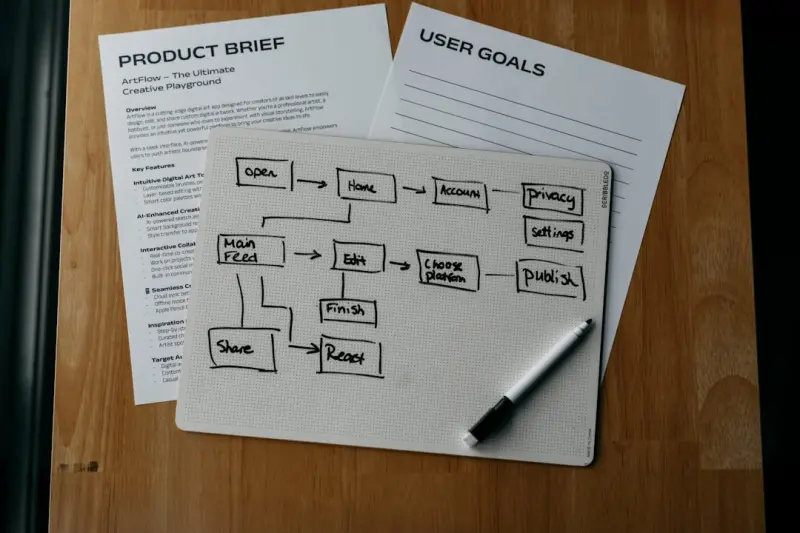
Why Product Discovery Needs an AI Upgrade
When I first joined a fast‑growing SaaS startup, the biggest friction was not building features—it was figuring out which features actually mattered to our customers. Teams would spend weeks, sometimes months, gathering anecdotal feedback, running surveys, and then still guessing about market fit. The result? Missed opportunities, wasted engineering cycles, and a product roadmap that felt more like a wish list than a strategic plan. The good news is that today’s AI tools can turn that guesswork into data‑driven clarity, giving product teams a reliable compass for discovery.
From Gut Instinct to Algorithmic Insight
Historically, product discovery relied heavily on intuition and fragmented data sources—support tickets, sales calls, and occasional user interviews. While those signals are still valuable, they’re noisy and often incomplete. Modern AI models excel at stitching together disparate data points—usage telemetry, churn patterns, even publicly available market reports—into a coherent narrative. By training a model on this multi‑modal information, product managers can surface hidden pain points before customers even articulate them.
The Core Pillars of an AI‑Enhanced Discovery Process
- Signal Amplification: AI can identify subtle usage trends that escape human analysts, such as a 3% uptick in a rarely used feature that correlates with higher renewal rates.
- Predictive Prioritization: Leveraging historical rollout data, algorithms forecast the revenue impact of potential features, allowing teams to rank ideas by ROI before any code is written.
- Contextual Validation: Natural language processing (NLP) parses open‑ended feedback, tagging sentiments and linking them to specific product modules, giving a richer picture of user intent.
Building the Data Foundation
Before AI can become a trustworthy ally, you need a clean, well‑structured data lake. This means consolidating event streams from your product, CRM records, and even third‑party market intelligence. Don’t underestimate the importance of the hidden power behind AI models. When real‑world data is sparse or biased, synthetic datasets can fill gaps, ensuring your algorithms learn from a balanced view of user behavior. Investing in data hygiene at this stage pays dividends later, as the AI’s recommendations become more accurate and less prone to echo chambers.
Turning Insights into Actionable Roadmaps
Once the model surfaces high‑impact opportunities, the next step is translating them into a concrete roadmap. A practical approach is to create “impact buckets” that combine predicted revenue uplift, implementation effort, and strategic alignment. Teams can then run scenario simulations—asking the AI, “What if we prioritize Feature X over Feature Y?”—to see how each choice reshapes the projected growth curve. This iterative loop keeps the roadmap fluid, allowing for rapid pivots as market conditions evolve.
Human‑Centric AI: Keeping the Conversation Open
AI should never replace the human element; it should amplify it. The best product teams treat AI recommendations as a starting point for deeper discussions with stakeholders. For instance, a sales leader might challenge a model’s forecast, prompting a deeper dive into the underlying assumptions. This collaborative tension ensures that the final decisions are both data‑backed and contextually grounded, preserving the nuanced understanding that only seasoned practitioners bring.
Case Study: A Mid‑Market SaaS Firm’s Turnaround
Consider a mid‑market SaaS provider that struggled with high churn in its collaboration suite. By integrating an AI discovery platform, they uncovered a hidden pattern: users who engaged with the API layer were 27% more likely to renew. The AI also highlighted a set of undocumented integrations that were driving this engagement. Armed with this insight, the product team built a lightweight integration builder, marketed it directly to the API‑heavy segment, and saw churn drop by 15% within two quarters. The turnaround wasn’t magical—it was the result of a systematic, AI‑augmented discovery process.
Addressing Ethical Concerns and Bias
When you hand over product decisions to an algorithm, you inherit its blind spots. Bias can creep in through skewed training data, leading the AI to over‑prioritize certain customer segments while neglecting others. To mitigate this, adopt a transparent governance framework: regularly audit model outputs, involve diverse stakeholder groups in validation, and maintain a “human‑in‑the‑loop” checkpoint before any roadmap changes are committed. This not only safeguards fairness but also builds trust across the organization.
Scaling the AI Discovery Engine
Start small—pilot the AI on a single product line or feature set. Once you prove value, expand the scope to cover the entire portfolio. Automation can handle the heavy lifting of data ingestion and model retraining, while product managers focus on interpreting insights. Over time, the AI becomes a living repository of market knowledge, continuously learning from new releases, customer interactions, and competitive moves.
Integrating Sustainability Into the Equation
While the primary goal of AI‑driven discovery is growth, there’s an emerging opportunity to embed sustainability metrics into the decision matrix. By feeding carbon‑footprint data of various tech stacks into the model, product teams can prioritize features that not only drive revenue but also minimize environmental impact. This dual‑lens approach aligns with broader corporate responsibility goals and resonates with increasingly eco‑conscious buyers. For a deeper dive into marrying AI and sustainability, explore building greener AI pipelines.
The Future: Hyper‑Personalized Product Experiences
Looking ahead, the convergence of AI discovery with real‑time personalization will blur the line between product development and delivery. Imagine a SaaS platform that, based on each organization’s usage patterns, auto‑generates a custom feature set on the fly—guided by the same predictive models that inform your roadmap today. This vision hinges on the same data foundations and ethical guardrails we’ve discussed, but it promises a radical shift: products that evolve dynamically alongside their users.
Practical Steps to Get Started
- Audit Your Data Landscape: Identify gaps, clean inconsistencies, and consider augmenting with synthetic data where needed.
- Select an AI Platform: Choose a solution that supports multi‑modal inputs and offers transparent model interpretability.
- Run a Pilot: Target a specific product challenge—like feature prioritization—and measure impact against a control group.
- Establish Governance: Define review cycles, bias checks, and stakeholder sign‑offs to keep the process accountable.
- Iterate and Scale: Use early wins to champion broader adoption, continuously refining models with fresh data.
Conclusion: Embrace AI as a Discovery Partner, Not a Replacement
AI has matured beyond novelty; it’s now a strategic partner that can cut through the fog of product discovery. By grounding decisions in algorithmic insight while preserving human judgment, B2B SaaS companies can accelerate time‑to‑market, reduce waste, and deliver solutions that truly resonate with customers. The journey starts with clean data, thoughtful governance, and a willingness to let the AI ask the tough questions you’ve been avoiding. The payoff? A roadmap that’s as dynamic and data‑rich as the market itself.

Margaret Thomson is a seasoned freelance writer specializing in the dynamic worlds of marketing and advertising. With a career deeply rooted in the marketing field, Margaret brings a wealth of practical experience and insightful knowledge to her writing.
Related Posts
AI as a Co‑Pilot for SaaS Product Strategy
An AI co‑pilot isn’t a replacement for product leaders—it’s a trusted teammate that surfaces... Read More

AI‑Powered Decision Labs: Rethinking Strategy in B2B SaaS
AI‑powered decision labs fuse data, predictive models, and collaborative tools to accelerate strat... Read More

AI as Your Personal Knowledge Engine: Turning Information Overload into Insight
Learn how to build a privacy‑first AI knowledge engine that captures, connects, and surfaces your ... Read More
Top Posts

Composable SaaS Architecture: Unlocking Agility and Scale
Learn how adopting composable SaaS architecture can break monolithic constraints, accelerate releases, and enable targeted scaling, giving your product the agil...Read More

Harvesting Sunlight: Home Tips for Brighter, Healthier Living Spaces
Learn how to transform any room using sunlight, mirrors, and clever design choices that lift mood, cut bills, and create a welcoming atmosphere....Read More

Beyond Search: How Google’s Ecosystem is Reshaping Digital Strategy
Discover the hidden ways Google’s integrated tools—from Search Console to Cloud—are redefining how marketers build authority, optimize content, and harnes...Read More

The Rise of Zero‑Click SEO: How SaaS Companies Can Capture Value When Users Never Click
Zero‑click SEO is reshaping how B2B SaaS companies capture organic traffic. This guide walks you through auditing, schema markup, snippet‑friendly content, ...Read More
0 Comments
Post Comment
You will need to Login or Register to comment on this post!