
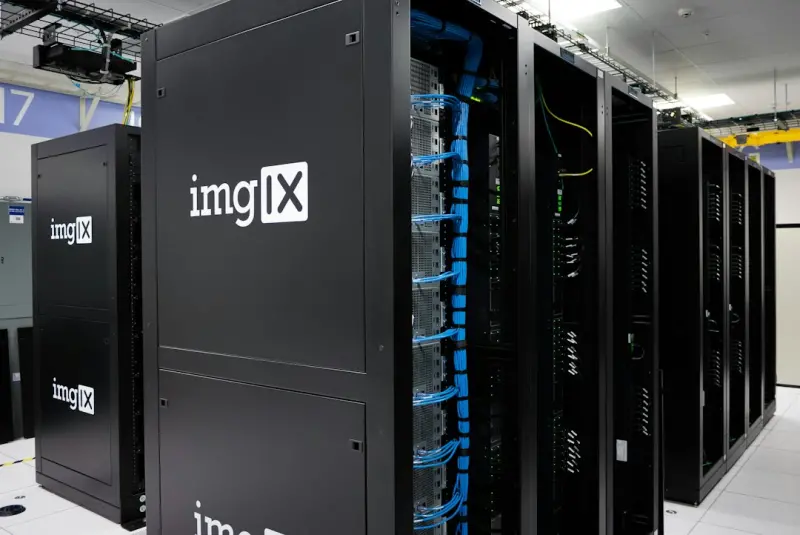
When I first heard the term “edge AI,” my mind sprinted to the image of a tiny robot perched on the roof of a data center, shouting, “I’ve got the answer!” In reality, the concept is far more nuanced—and far more powerful—for SaaS companies that are hungry for speed, privacy, and cost‑efficiency. Edge AI isn’t a buzzword; it’s a strategic shift that lets intelligent workloads run where the data lives, dramatically reshaping how we design, deliver, and monetize software services.
The Why: Latency, Bandwidth, and Trust
Traditional SaaS architectures funnel raw data from a user’s device to a centralized cloud, wait for heavy‑weight models to process it, and then ship results back. That round‑trip can add milliseconds—or even seconds—of latency. For latency‑sensitive applications like real‑time video analytics, augmented reality collaboration, or fraud detection during a checkout, those delays translate directly into lost revenue and frustrated users.
Beyond raw speed, moving data to the cloud raises compliance and privacy concerns. Regulations such as GDPR and CCPA demand that personally identifiable information (PII) stay within certain jurisdictions or be processed in a way that limits exposure. Edge AI lets you perform inference locally, keeping raw data on the device or at the network edge, thereby reducing the attack surface and simplifying compliance audits.
What Exactly Is “Edge AI”?
At its core, edge AI combines two pillars:
- Edge Computing: Computing resources (CPU, GPU, TPU, or specialized ASICs) deployed close to the data source—think IoT gateways, 5G base stations, or even smartphones.
- Artificial Intelligence: Trained machine‑learning models that can run inference (and sometimes even lightweight training) on those edge nodes.
When you blend them, you get a distributed intelligence layer that can make decisions without ever contacting the central cloud. The result? Faster response times, lower bandwidth costs, and a more resilient architecture that can survive intermittent connectivity.
Architectural Patterns for SaaS Edge AI
Adopting edge AI isn’t a one‑size‑fits‑all proposition. SaaS providers typically gravitate toward three patterns:
- Hybrid Inference: The edge device runs a compressed version of a model for “good‑enough” results, while the cloud houses the full‑fidelity model for periodic re‑validation.
- Federated Learning: Edge nodes train on local data and only share model updates (gradients) with the central server, preserving privacy while continuously improving the global model.
- Event‑Driven Edge Orchestration: Edge devices act as smart routers, deciding which events merit cloud processing and which can be resolved locally.
Each pattern brings trade‑offs in complexity, latency, and data governance. Picking the right one depends on your product’s core value proposition and the expectations of your customers.
Real‑World SaaS Use Cases That Benefit from Edge AI
Let’s walk through a few scenarios where edge AI can be a game‑changer:
- Predictive Maintenance for Industrial IoT: Sensors on a manufacturing line send vibration data to a local gateway. An on‑device model predicts equipment failure within seconds, triggering an alert before a costly breakdown occurs.
- Personalized Video Conferencing: A SaaS platform that applies background removal, real‑time translation, or emotion detection directly on a user’s laptop, reducing bandwidth and preserving video quality even on flaky connections.
- Compliance‑First Document Processing: Legal SaaS tools scan contracts on the client’s machine, extracting clauses without ever uploading the raw PDF, thereby satisfying strict confidentiality requirements.
- Smart Retail Analytics: Edge cameras count foot traffic, recognize repeat customers, and adjust digital signage on the fly—all without streaming raw video to the cloud.
Getting Started: From Cloud‑Centric to Edge‑Centric
Transitioning a mature SaaS product to incorporate edge AI can feel like moving a skyscraper onto a raft. Here’s a practical roadmap:
- Identify High‑Impact Touchpoints: Map out user journeys and flag interactions where latency or privacy are decisive factors.
- Profile Existing Models: Determine which models can be quantized, pruned, or otherwise compressed to fit edge hardware constraints.
- Choose the Right Edge Runtime: Options range from TensorFlow Lite, ONNX Runtime, to vendor‑specific SDKs for NVIDIA Jetson, Google Edge TPU, or Apple Neural Engine.
- Prototype a Hybrid Inference Loop: Deploy a lightweight model on a sample device, keep the full model in the cloud, and measure accuracy drift.
- Implement Secure Model Distribution: Use signed containers, hardware‑rooted trust, or TPMs to ensure only vetted models run on edge nodes.
- Monitor and Iterate: Collect telemetry on inference latency, error rates, and power consumption to fine‑tune the balance between edge and cloud.
Tooling and Platforms That Accelerate Edge AI Adoption
Thankfully, the ecosystem is maturing faster than the hype cycle. A few noteworthy services include:
- Google Edge TPU Pods: Offer on‑premise accelerator clusters that integrate with Vertex AI, making it easy to push models from the cloud to the edge.
- Azure IoT Edge: Provides a container‑based runtime, allowing SaaS teams to ship custom AI modules alongside Azure Functions.
- AWS Snowball Edge: Ideal for batch processing of large datasets where connectivity is intermittent.
- Open‑Source Frameworks: Projects like Edge Impulse and FATE (Federated AI Technology Enabler) help developers prototype and scale edge AI pipelines without vendor lock‑in.
Edge AI Meets Existing SaaS Innovations
Edge AI doesn’t exist in a vacuum; it amplifies other trends we’ve been discussing across the blog. For instance, the principles behind AI‑Driven Adaptive UI can be extended to edge devices, allowing interfaces that adapt in real time based on locally inferred user intent. Similarly, AI becomes your data whisperer can operate at the edge, turning raw logs into actionable alerts without ever leaving the premises.
Monetization Models for Edge‑Enabled SaaS
Introducing edge capabilities opens fresh revenue streams:
- Edge Compute Credits: Charge per inference executed on edge hardware, similar to serverless compute billing but with a locality premium.
- Hardware‑as‑a‑Service (HaaS):** Partner with device manufacturers to bundle your AI models with their edge appliances, earning a share of hardware sales.
- Compliance‑Assurance Packages: Offer tiered plans that guarantee on‑device processing for regulated industries, turning privacy into a premium feature.
- Model Marketplace: Enable third‑party developers to sell optimized edge models that integrate directly with your SaaS platform.
Challenges and Mitigation Strategies
No technology is without friction. Here are the most common hurdles and how to address them:
| Challenge | Mitigation |
|---|---|
| Hardware Fragmentation | Adopt hardware‑agnostic runtimes (ONNX) and maintain a compatibility matrix for popular edge chips. |
| Model Drift | Implement continuous federated learning pipelines that update models on‑device without central data exposure. |
| Security Risks | Leverage secure enclaves, signed model bundles, and regular attestation checks. |
| Operational Complexity | Invest in unified observability tools that aggregate edge and cloud metrics into a single dashboard. |
Future Outlook: From Edge to “Fog” and Beyond
As 5G rolls out and ultra‑low‑latency networks become the norm, the distinction between edge and fog (a distributed layer of micro‑data centers) will blur. SaaS providers will orchestrate workloads across a spectrum—from the user’s device, through local edge nodes, up to regional fog clusters, and finally the central cloud. This hierarchical approach promises unprecedented scalability, resilience, and contextual awareness.
Imagine a collaborative design tool that automatically switches from local sketch recognition on a tablet (edge) to high‑resolution rendering on a nearby fog node, and finally syncs the final artwork to the global cloud for version control. The user experiences seamless performance, while the provider optimizes resource usage across the entire continuum.
Conclusion: Edge AI as a Competitive Differentiator
In the hyper‑competitive SaaS landscape, speed, privacy, and cost efficiency are no longer nice‑to‑have—they’re baseline expectations. Edge AI equips product teams with a lever to exceed those expectations, turning latency into latency‑free experiences and turning data compliance from a checkbox into a selling point. By thoughtfully integrating edge intelligence, SaaS companies can not only future‑proof their architectures but also carve out new market niches that reward real‑time, on‑device insight.

Sanji Patel has dedicated 25 years to the SEO industry. As an expert SEO consultant for news publishers, he emphasizes providing both technical and editorial SEO services to news publishers worldwide. He frequently speaks at conferences and events globally and offers annual guest lectures at local universities.
Related Posts

Why Digital Twins Are the Secret Weapon for Scaling B2B SaaS
Digital twins let B2B SaaS firms simulate their platforms in real time, enabling proactive performan... Read More

Edge-First SaaS: Why Proximity Is the New Competitive Edge
Edge computing is turning proximity into a strategic advantage for SaaS firms. This article explains... Read More

Ambient Computing: The Silent Revolution Shaping Everyday Life
Discover the rise of ambient computing—a seamless, AI‑driven tech layer that anticipates needs, ... Read More
Top Posts

Micro‑Content SEO: Turning SaaS Feature Pages into Intent‑Driven Discovery Engines
Discover a step‑by‑step framework for optimizing SaaS feature pages, using semantic cores, structured data, and interactive elements to boost organic traffi...Read More

Ambient Computing: The Silent Engine Powering Modern Enterprises
Ambient computing embeds intelligent services into everyday tools, creating seamless, context‑aware experiences that boost efficiency and innovation across th...Read More

Prompt Engineering: The Low‑Cost, High‑Impact Lever SaaS Teams Need
Prompt engineering turns generic AI models into tailored business assets. This post outlines a practical framework for SaaS teams to adopt prompt discipline, bo...Read More

Unlocking the Power of Google’s Generative AI for SaaS Knowledge Management
Learn how to harness Google’s generative AI to turn fragmented documentation into instant, context‑aware insights, improving support, sales, and development...Read More
0 Comments
Post Comment
You will need to Login or Register to comment on this post!