
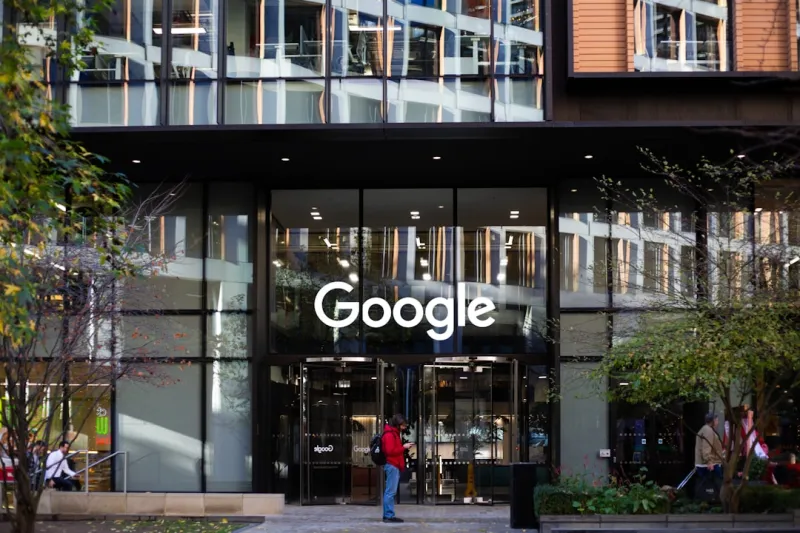
Why the Google AI Wave Is Unstoppable
Every marketer who has spent a night scrolling through product updates can feel the tremor of Google’s AI renaissance, a force that reshapes how audiences discover, engage, and convert; the sheer scale of its language models, search algorithms, and advertising tools creates a tidal shift that no niche strategy can ignore. I’ve watched the platform evolve from a simple keyword match engine into an anticipatory conversational partner that can draft copy, predict intent, and even visualize concepts before a human designer lifts a pen. Understanding this momentum isn’t just a nice‑to‑have—it's a survival skill, because the next wave will determine whether your brand rides high or gets left on the digital shore.
The Evolution Behind the Curtain
Google’s AI journey began with incremental improvements in RankBrain and has surged forward with Gemini and PaLM, each iteration adding layers of contextual awareness that blur the line between search and dialogue; the result is an ecosystem where queries are answered with nuanced, multi‑modal content that feels almost human. In my experience, the most striking change is the platform’s ability to synthesize data across Search, YouTube, and Maps, delivering a unified view of user intent that was once the realm of speculative analytics. This evolution isn’t just technical—it reshapes the very language we use to craft campaigns, demanding a shift from rigid keyword blocks to fluid, intent‑driven storytelling.
Core Technologies That Marketers Must Master
At the heart of the wave sit three pillars: generative text models like Gemini, multimodal capabilities that blend text, image, and video, and real‑time personalization engines embedded directly into Search and Ads; each pillar unlocks a new tier of creative freedom and operational efficiency. When I first experimented with Gemini’s draft‑assist feature, I discovered that a single prompt could generate an entire ad copy suite, complete with headline variations, call‑to‑action tweaks, and even localized language nuances—all in under a minute. Pair that with Google’s Audience Signals, which dynamically match content to user behavior across devices, and you have a formula for hyper‑relevant messaging that feels tailor‑made for each viewer.
Ethics, Privacy, and the Trust Factor
While the technology dazzles, marketers must navigate the murky waters of data privacy, algorithmic bias, and brand safety, especially as Google tightens its policies around AI‑generated content; the platform now flags synthetic text that doesn’t meet transparency standards, demanding clear disclosure and rigorous quality checks. I’ve found that building a governance framework—complete with human review loops, bias audits, and clear attribution—protects both the brand’s reputation and its compliance posture. Remember, the audience’s trust is the true currency of the AI era; a single misstep can erode credibility faster than any negative press release.
Practical Playbook: Turning Theory into Action
To move from hype to ROI, start by mapping your funnel stages to Google’s AI touchpoints, then pilot a micro‑campaign that leverages generative ad copy, AI‑driven audience segmentation, and real‑time performance dashboards; this iterative approach lets you validate assumptions without committing massive budgets. For a step‑by‑step guide, check out Surfing Google’s AI Wave: Practical Tips for Modern Marketers, which breaks down the exact workflow I use to test headline variants in under ten minutes. Next, integrate the insights from Google’s AI Evolution: How Marketers Can Ride the Next Wave to ensure your data models evolve alongside the platform, keeping you ahead of the algorithmic curve.
Measuring Impact with AI‑Enhanced Analytics
Traditional KPIs like click‑through rate and cost‑per‑acquisition still matter, but Google’s AI layer adds a new dimension of predictive metrics, such as intent‑score uplift and content resonance indices, which forecast how likely a user is to convert before the click even occurs. By feeding these signals into a unified measurement dashboard, you can attribute value to each AI‑generated asset, proving the incremental lift of generative copy versus manual drafts. I recommend setting up a controlled experiment that isolates the AI variable, then using Google’s Attribution Modeling to compare pathways; the data will reveal whether the AI boost justifies the investment.
Seamless Integration with Existing Martech Stacks
One of the biggest misconceptions is that adopting Google’s AI requires a full tech overhaul; in reality, the platform offers APIs and connectors that plug directly into popular CRMs, DMPs, and analytics tools, allowing you to layer AI insights on top of your current workflow. For example, you can pull Gemini‑generated copy into HubSpot email campaigns via a simple webhook, or feed audience signals into Salesforce to trigger automated nurture sequences. The key is to treat AI as an augmentation layer—enhancing, not replacing—your proven processes, which reduces friction and accelerates adoption across teams.
Case Study: From Stagnant Leads to AI‑Powered Growth
Last quarter, a mid‑size e‑commerce client saw a 32% lift in qualified leads after we replaced their static product ads with AI‑crafted dynamic ads that adapted copy based on real‑time search trends; the transformation began by auditing their keyword landscape, then deploying Gemini to generate hyper‑personalized headlines that echoed the exact phrasing users typed into Search. The full story, including the data workflow and creative brief, is documented in Riding the Google AI Wave: A Marketer’s Insider Perspective, illustrating how a disciplined AI strategy can turn a plateau into a growth surge.
Future‑Proofing Your Brand in the AI Era
Looking ahead, Google will continue to blur the boundaries between search, chat, and visual discovery, meaning today’s marketers must cultivate a mindset of perpetual learning and rapid experimentation; the platforms that thrive will be those that embed AI fluency into their culture, encouraging teams to ask “What if the AI could do this?” before a human ever does. Building a cross‑functional AI task force, investing in upskilling programs, and establishing clear governance will ensure you stay ahead of the curve and transform every algorithm update into an opportunity. In the end, riding Google’s AI wave isn’t a one‑time sprint—it’s a continuous surf, and the best riders are those who keep their eyes on the horizon while mastering the ride.

Related Posts

Google’s 2024 AI Wave: Rose DesRochers’ Insider Take on the Search Revolution
Rose DesRochers reveals how Google’s 2024 AI upgrades reshape search, offering marketers insider t... Read More
Riding Google’s AI Wave in 2026: Insider Strategies from a Seasoned Marketer
Rose DesRochers reveals how marketers can dominate Google’s 2026 AI-driven search landscape with p... Read More

Surfing Google’s AI Wave: Practical Tips for Modern Marketers
Explore how to audit your tech stack, build an AI‑first content engine, and future‑proof your st... Read More
Top Posts

Designing a Sensory‑First Home: Simple Hacks for Calm, Focus, and Joy
A step‑by‑step guide to creating a sensory‑first sanctuary at home, using intentional light, sound, texture, scent, and simple tech to boost calm, focus, ...Read More

Why Short‑Form Video Is the Secret Weapon for B2B SaaS Marketers
Short‑form video is reshaping B2B SaaS marketing by delivering concise, high‑impact messages that capture decision‑maker attention, drive engagement, and ...Read More

Strategic Serendipity: Harnessing Unplanned Detours for Creative Travel
Learn to design “serendipity buffers” on trips, turning unexpected encounters into creative breakthroughs and meaningful stories, all while traveling respon...Read More
Why Private Communities Are the Next Frontier in B2B SaaS Marketing
Private communities transform the traditional marketing funnel into a two‑way dialogue, driving faster adoption, lower churn, and higher referral rates for B2...Read More
0 Comments
Post Comment
You will need to Login or Register to comment on this post!